Report Unveils Tech Potential to Overhaul UK Recycling Policy and Boost Sustainable Businesses

As the Welsh Government launches a consultation that could see packaging producers funding litter and public bin management from 2027-28, a major new industry report argues that the entire UK’s approach to waste policy must become smarter, using data to reward genuine environmental performance.
The consultation, highlighting a divergence in scope from England’s Extended Producer Responsibility (EPR) regime, seeks views on how the scheme can account for ‘on the go’ packaging waste. It emerges alongside a pivotal moment for EPR across the UK, with fee modulation based on recyclability data set to begin from 2026.
Against this backdrop, a coalition of leading retailers and compliance agencies is calling for a significant evolution of the system. A white paper titled “EPR That Works: Incentivising Real Recycling with Data and Innovation,” presented by the technology platform Polytag and supported by Waitrose, M&S, Ocado Retail, Ecosurety, and Valpak, warns the current framework has a critical flaw.
Since its launch in 2025, EPR has required producers to pay fees based on packaging volumes. However, two companies placing the same amount of material on the market pay similar fees, even if one achieves far higher real-world recycling rates than the other.
“The system doesn’t currently reward businesses that actively drive recycling performance,” said Alice Rackley, CEO of Polytag. She argues that emerging innovations in data and tracking are forming the foundation for what she terms “circular economy intelligence.”
The report proposes a “Green Plus” framework to sit within the existing EPR modulation system. This optional tier would financially reward producers who can demonstrate verified improvements in recyclability, recovery, transparency, and circular design, moving beyond minimum compliance.
“As EPR evolves, there is an opportunity to go beyond minimum compliance and actively recognise brands that invest in measurable circular solutions,” said Steve Gough, CEO of the compliance agency Valpak, which was acquired by Reconomy in 2018. “A ‘Green Plus’ framework ensures that innovation, transparency and real-world recycling outcomes are recognised and incentivised, creating a system where doing the right thing also makes business sense.”
The Technological Foundation for Change
The white paper details how a suite of emerging technologies could make such a sophisticated framework possible, linking producer responsibility directly to measurable outcomes.
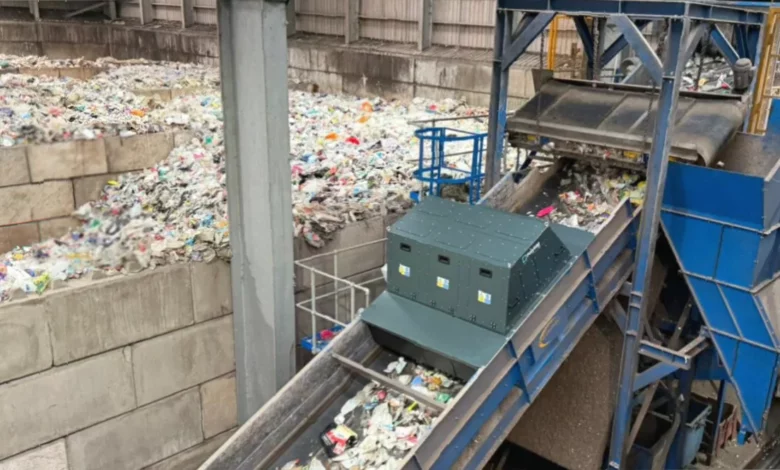
These include data-powered insights to predict recycling flows, advanced plastic sorting that identifies materials by polymer and brand, and end-to-end tracking using invisible UV tags to give barcode-level data on whether a specific item was recycled. This verified recycling data could then be linked to corporate carbon accounting and ESG disclosures.
“Innovation and data give us the chance to connect design, behaviour and real recycling outcomes in a way that simply wasn’t possible before,” said Will Ghali, CEO of Ecosurety. Ecosurety recently sold its WEEE and Batteries compliance schemes to focus on packaging compliance and data services, aiming to rid the world of unnecessary packaging.
Retailers backing the plan emphasize the need for reliable, real-world evidence. “Access to reliable, real-world data helps retailers understand which packaging models deliver genuine environmental benefit,” said Laura Fernandez, Senior Packaging and Sustainability Manager at Ocado Retail. “That evidence supports confident decision-making, whether improving recycling performance or exploring reuse and return models at scale.”
A Broader Drive for Circularity
The push for data-driven EPR reform aligns with several other major initiatives in the UK’s packaging sector. Catherine David, CEO of the environmental NGO WRAP, noted digital technology’s “transformative role” in advancing packaging circularity and informing EPR eco-modulation.
WRAP is itself launching the UK Packaging Pact in April, aiming to unite businesses, government, and sector partners in driving system-wide change across all packaging materials, building on the legacy of the UK Plastics Pact.
This comes as PackUK, the official scheme administrator for EPR, prepares its operational plan for 2026-2027, which includes setting modulated fees and deploying the recyclability assessment methodology (RAM). Under this, ‘Green RAM’ packaging will incur lower fees while ‘Red RAM’ material faces surcharges.
From 2026, all UK businesses will also be required to comply with a new government Digital Waste Tracking (DWT) system, creating a comprehensive digital record of waste movements. This infrastructure could facilitate the granular tracking proposed by the white paper.
The focus on technological innovation is further supported by initiatives like the Smart Sustainable Plastic Packaging (SSPP) Challenge, a UK Research and Innovation programme running until 2025, which has invested in projects to reduce waste and develop new recycling systems. Major retailers like Tesco have also trialled advanced recycling technologies, aiming to make all its packaging recyclable by 2025.
With the UK’s AI and data centre boom concurrently highlighting challenges like rising e-waste, the report’s authors argue that integrating intelligence into the waste system itself is not just an opportunity, but a necessity for creating a truly circular economy.