The public inquiry examining the Nottingham attacks of June 2023 has laid bare a disturbing chain of missed opportunities, revealing how Valdo Calocane, a man with a known violent history and severe mental illness, was able to slip through multiple safety nets before killing three people.
The Fatal Spree and Admission
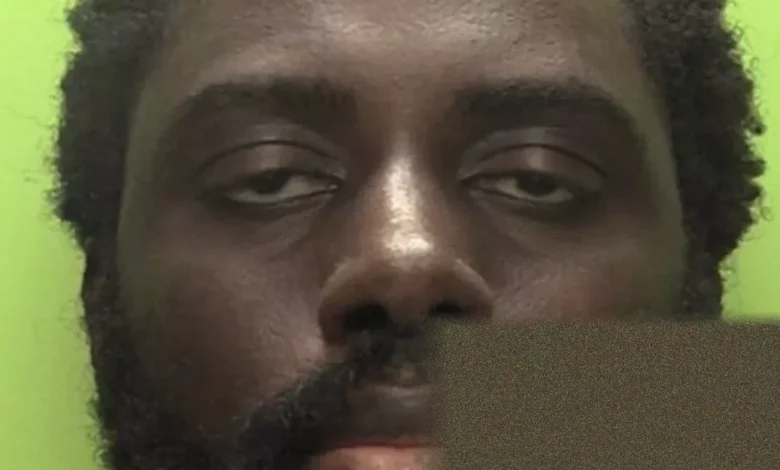
Valdo Calocane, 34, fatally stabbed university students Grace O’Malley-Kumar and Barnaby Webber, both 19, and school caretaker Ian Coates, 65, during a knife attack in Nottingham on 13 June 2023. He also attempted to kill three other people by running them over with Mr Coates’s stolen van. Calocane later admitted to manslaughter on the basis of diminished responsibility and was sentenced to indefinite detention in a high-security hospital.
An Early Cry for Help Ignored
Two years before the attacks, in May 2021, Calocane presented himself at the Thames House headquarters of MI5 in central London, attempting to hand himself in for arrest. The inquiry heard he rang the intercom and informed security personnel that he wanted to be arrested and speak to the police.
PC Graham Foster of the Metropolitan Police, who confronted Calocane outside, described him as “calm, compliant and coherent”. PC Foster told the inquiry he aimed to “build a rapport” to see if Calocane would offer more information. Despite this bizarre incident, Calocane was referred to the Fixated Threat Assessment Centre (FTAC), a unit that examines threats from fixated individuals, but did not meet their threshold for further assessment.
Supt Lorraine Busby-McVey told the inquiry that an intelligence report from the FTAC was passed to Nottinghamshire Police the following day. She stated that the force did not then carry out its own assessment, something she “would have quite liked” to have happened. She added that the report was not available to all officers, though a new system to improve information sharing between forces has since been implemented.
A Pattern of Violence and Police Inaction
The inquiry heard compelling evidence of earlier, unheeded warnings from those who encountered Calocane. His former flatmate, identified only as Sebastian, described an incident where Calocane grabbed his shirt and arm, pushed him against a wall, and uttered confusing words including that “someone would contact me” and he should tell them “VC would find them”.
Sebastian reported this to Nottinghamshire Police, and an officer told him a report would be filed and flagged to an agency, without specifying which. He also reported suspecting Calocane of stalking him and attempting to enter his bedroom at night, leading him to lock his door, but received no response to this further concern. Sebastian told the inquiry that when he heard of the Nottingham attacks, he immediately suspected Calocane.
These were not isolated reports. Nottinghamshire Police have since admitted to mistakes in handling incidents involving Calocane, including a case in May 2020 where a woman jumped from a window to escape him, suffering spinal injuries. Officers at the time did not treat various incidents as connected.
Systemic Failures in Mental Health Care
Calocane had been diagnosed with paranoid schizophrenia and had received mental health treatment prior to the attacks. However, an independent review found the care and treatment offered were not always sufficient to meet his needs. He had admitted to professionals in 2021 that he was no longer taking his medication, and reports indicate he did not consider himself to have a mental health condition, therefore not understanding the importance of medication. He was also allowed to avoid injectable antipsychotic medication because he disliked needles. Despite being sectioned under the Mental Health Act multiple times, he was often discharged back into the community.
The Outstanding Warrant and Final Oversight
A critical failure identified was the handling of an arrest warrant issued for Calocane in September 2022, after he failed to attend court for assaulting an emergency worker. This warrant remained outstanding at the time of the fatal attacks. Nottinghamshire Police have apologised for not executing it in a timely manner, describing this as a “serious failure”. Leicestershire Police also admitted to shortcomings, as officers did not check Calocane’s records when responding to an incident involving him weeks before the attacks, which would have revealed the active warrant.
Seeking Accountability and a Full Picture
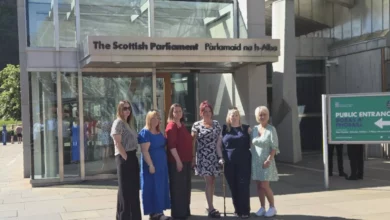
The ongoing public inquiry aims to establish a detailed timeline of Calocane’s interactions with public services, review the management of his risk, and assess the effectiveness of multi-agency information sharing. It has heard evidence from police officers, mental health professionals, and Calocane’s former flatmate. The victims’ families are participating in the process, seeking accountability for the cascade of failures that left a dangerous individual at large.
The inquiry continues.