The world’s youngest nation stands on a precipice once more. In South Sudan, a dramatic surge in violence over recent weeks has displaced hundreds of thousands of civilians, seen hospitals bombed and looted, and left international observers warning that a return to full-scale civil war is now a tangible threat.
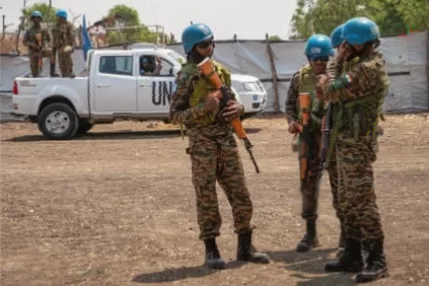
This escalation has unfolded on multiple fronts. In the northern Ruweng Administrative Area near the Sudan border, an attack on a village in Abiemnom county this past Sunday left at least 169 people dead, according to local minister James Monyluak Majok. The victims included women, children, and members of government security forces. The area’s chief administrator, Stephano Wieu de Mialek, has alleged the assault was carried out by armed youth from neighbouring Mayom county linked to the White Army—a militia historically allied to opposition leader Riek Machar—alongside forces from Machar’s political party and rebel group, the Sudan People’s Liberation Movement-in-Opposition (SPLM-IO). The SPLM-IO has denied responsibility for the attack. The United Nations mission in the country, UNMISS, is now sheltering more than 1,000 civilians from the area and providing medical care to the approximately 23 wounded.
A Deepening Humanitarian Catastrophe
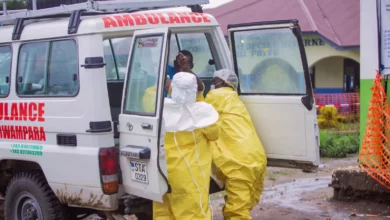
Far to the south, the situation in Jonglei state is dire. Intense fighting between government and opposition forces since December has displaced an estimated 280,000 people, the majority women and children. This violence has directly targeted the lifelines of the population. The humanitarian organisation Doctors Without Borders (MSF) reported that on 3 February, its hospital in Lankien was hit by an airstrike carried out by government forces, before being burned and looted. A separate MSF health facility in Pieri was also looted. The organisation says it has now lost contact with 26 of its staff amid the ongoing insecurity and has been forced to suspend medical activities in both locations, stripping approximately 250,000 people of healthcare. MSF facilities have been attacked ten times in the past year alone.
The collapse of civilian protection is stark. The UN has documented killings, abductions, and gender-based violence. Military discipline in Jonglei and Eastern Equatoria states is reported to have broken down, with troops showing a blatant disregard for civilians. Between 7 and 16 February, three humanitarian personnel were killed in Jonglei and Upper Nile states, underscoring the extreme dangers facing aid workers.
The Fractured Peace and a Unifying Trial
Observers directly link this violent spiral to the severe strain on the country’s fragile peace agreement. The 2018 Revitalized Agreement on the Resolution of Conflict in the Republic of South Sudan (R-ARCSS) ended a bloody civil war that killed over 400,000 people, largely along ethnic lines between President Salva Kiir’s Dinka community and Machar’s Nuer community. It created a unity government and returned Machar to the vice-presidency. Yet its implementation has barely begun, constantly derailed by power-sharing disputes and, critics say, by armed actors systematically consolidating power.
The current crisis crystallised last year. In March 2025, Machar was charged with murder, treason, and crimes against humanity in connection with an attack by the White Army on a government garrison in Nasir county. He was subsequently suspended from his post as First Vice President and placed under house arrest, where he remains as his trial continues. His supporters maintain the charges are politically motivated, and analysts warn the prosecution risks torpedoing the entire peace deal.
Paradoxically, the government’s targeting of Machar appears to have unified a fractured opposition. Daniel Akech, a senior analyst for South Sudan at the International Crisis Group, notes that not only groups loyal to Machar but also past splinter factions are now rallying to him as a “symbolic unifying figure.” “Even if he’s detained or is incommunicado or cannot issue orders, he has become very effective,” Akech said.
The political tensions between Kiir and Machar have deep roots. Both were leaders in the Sudan People’s Liberation Army that fought for independence from Sudan, achieved in 2011. The rivalry exploded in 2013 when Kiir fired Machar, accusing him of plotting a coup, triggering the civil war from which the 2018 deal emerged.
International Alarms and Regional Ripples
The international community is sounding increasingly desperate alarms. The UN High Commissioner for Human Rights, Volker Türk, told the Human Rights Council that the world is at “a dangerous point,” with rising violence combined with “deepening uncertainty over South Sudan’s political trajectory.” A UN Commission has warned that the country’s leaders are driving it toward renewed full-scale war, citing ongoing war crimes and crimes against humanity.
The instability also risks spilling over borders. There are reports that elements of the Sudanese Armed Forces may be providing military equipment to the SPLM-IO, illustrating how the conflict is enmeshed with regional dynamics. Furthermore, the violence exacerbates an already catastrophic humanitarian situation for millions, worsened by climate shocks and an economy weakened by disrupted oil production due to the war in neighbouring Sudan.
South Sudan’s history is scarred by conflict, having endured two major civil wars with Sudan before its independence. The promise of the 2011 secession, following a referendum with overwhelming support, has been eroded by the internal strife between its founding fathers. As the 2018 peace agreement teeters and violence claims more lives, the fear is that the nation is tragically circling back to the bloodshed it was created to escape.