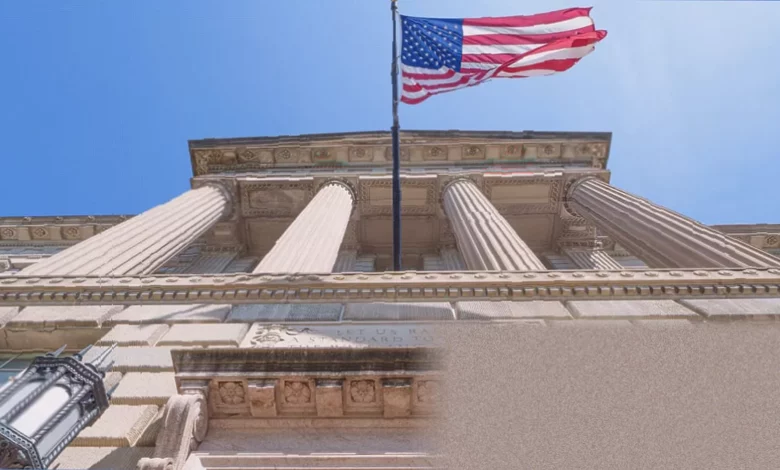
The US government has struck agreements with Google DeepMind, Microsoft and xAI to review early versions of their frontier artificial intelligence models before they are released to the public, in a move designed to shore up national security and keep pace with the rapid advance of the technology.
The Center for AI Standards and Innovation (CAISI), a division of the US Department of Commerce, announced the deals on Tuesday, saying the reviews are essential to understanding the capabilities of powerful new AI systems and to protecting US national security. The agency said the collaborations will help the federal government “scale (its) work in the public interest at a critical moment”.
“Independent, rigorous measurement science is essential to understanding frontier AI and its national security implications,” said Chris Fall, CAISI’s director. Fall, who previously served as a Department of Energy official during the first Trump administration and held senior roles at the Office of Naval Research and the White House Office of Science and Technology Policy, leads a centre that is explicitly tasked with bridging the tech industry and the federal government to develop standards and assess risks for commercial AI systems.
Pre-deployment evaluations and the national security focus
The agreements concentrate specifically on identifying national security risks tied to cybersecurity, biosecurity and chemical weapons. CAISI’s mission includes leading unclassified evaluations of AI capabilities that could pose such threats, and it coordinates with the Department of Defense, the Department of Homeland Security and the Intelligence Community to develop evaluation methods and conduct assessments. The centre was established in June 2025, replacing the former US AI Safety Institute, and was rebranded under the Trump administration after being originally set up under President Biden in 2023.
These new deals build on earlier agreements struck with OpenAI and Anthropic under the Biden administration two years ago. CAISI says it has already completed more than 40 such evaluations, including on unreleased models. Developers frequently provide models that have had their safety guardrails reduced or removed, allowing the government to “thoroughly evaluate national security-related capabilities and risks”, the agency noted in a press release.
The most detailed concerns centre on the potential misuse of cutting-edge AI systems such as Anthropic’s Mythos model. Mythos has demonstrated a significant ability to identify and exploit software vulnerabilities, sparking fears that malicious actors could use it to conduct large-scale cyberattacks. In response, Anthropic limited the rollout of Mythos to a handful of companies and initiated Project Glasswing, a collaborative effort that brings together tech companies to deploy these AI capabilities for defensive cybersecurity purposes, aiming to “secure the world’s most critical software”.
Beyond cyber threats, CAISI’s evaluations also target risks in biosecurity and chemical weapons. There are broader apprehensions that AI could accelerate the development of biological weapons or enable attacks on critical infrastructure such as water treatment facilities and research labs. The agreements are designed to support information-sharing, drive voluntary product improvements, and give the government a clear understanding of AI capabilities and the state of international AI competition.
Broader safety and oversight concerns
The announcements come amid a shifting regulatory landscape. Media reports have indicated that the Trump administration is exploring a potential executive order to create a formal government oversight process for AI tools, though the White House has characterised such reports as “speculation”. This would mark a change from Trump’s earlier hands-off approach to AI development; on his first day in office in 2025, he revoked a 2023 executive order by President Biden that had required developers of AI systems posing risks to national security, the economy, public health or safety to share safety test results with the government.
The backdrop also includes a dispute between the Pentagon and Anthropic over the use of its AI models in autonomous weaponry and domestic surveillance. The Pentagon has designated Anthropic a supply chain risk, leading to a requirement for federal agencies to offload the company’s products.
Separately, Microsoft announced a similar agreement in the UK on Tuesday with the government-backed AI Security Institute, which also focuses on safe AI development. The UK institute is part of an international effort called the Alignment Project, funded by OpenAI and Microsoft, which aims to ensure advanced AI systems are safe, secure and act as intended. In a blog post addressing both the US and UK deals, Microsoft wrote: “While Microsoft regularly undertakes many types of AI testing on its own, testing for national security and large-scale public safety risks necessarily must be a collaborative endeavor with governments.” The company is also collaborating with CAISI and the National Institute of Standards and Technology (NIST) on improving methodologies for adversarial assessments – stress-testing AI systems to probe unexpected behaviours and failure modes.
The agreements with Google DeepMind, Microsoft and xAI build on previously announced partnerships that have been renegotiated to align with directives from the Secretary of Commerce and America’s AI Action Plan, released in July, which tasks CAISI with leading national security-related AI model assessments. Google and xAI did not immediately respond to requests for comment.