Canada has imposed a mandatory 21-day self-isolation period for all travellers arriving from regions affected by the ongoing Ebola outbreak, with the measure taking effect immediately and set to remain in place until 29 August.
The Public Health Agency of Canada confirmed the new border controls, which the director-general of its Centre for Border and Travel Health, Luc Brisebois, described as a precaution taken out of an “abundance of caution”. The severity of the disease and the evolving international situation were cited as driving forces behind the decision, even as officials maintain that the health risk to Canadians remains low and no travel-related cases have been reported inside the country.
The 21-day self-isolation period directly reflects the maximum incubation time for the Ebola virus, a choice intended to ensure that any traveller who may have been exposed before departure will show symptoms while still isolated. This approach is particularly critical for the current outbreak, which involves the Bundibugyo strain of Ebola – a rare subtype first identified in Uganda in 2007 that has no licensed vaccine or specific treatment. Unlike the Zaire strain that caused the 2014–2016 West Africa epidemic, response efforts for Bundibugyo rely almost entirely on public health measures such as isolation, contact tracing, and safe burials.
Canadian authorities also pointed to the upcoming FIFA World Cup, for which Canada is hosting matches, as a key reason for tightening border controls. The measures align with steps already taken by the United States, which has suspended entry for travellers who have been in Congo, Uganda, or South Sudan within the previous 21 days, with limited exceptions for citizens and permanent residents. Other nations, including Bahrain, Jordan, and Rwanda, have also imposed entry restrictions on travellers from affected countries.
Enforcement and support for isolation
Travellers who display symptoms of Ebola upon arrival will be transferred directly to hospital for medical assessment, the Public Health Agency said. For those who do not have a suitable place to self-isolate, the Canadian government will provide accommodation. The measures are being enacted under the Quarantine Act, which grants federal authorities the power to impose isolation requirements at the border.
Alongside the border controls, Canada’s immigration authorities have announced a 90-day pause, beginning Wednesday, on final decisions for applications from citizens of the Democratic Republic of Congo, Uganda, and South Sudan. The pause, which could be adjusted depending on how the outbreak develops, covers permanent residence visas, temporary resident visas, electronic travel authorisations, study permits, and work permits. However, applications from individuals who are already inside Canada will continue to be processed, and those who are mid-travel will also be exempt.
Immigration, Refugees and Citizenship Canada confirmed the suspension, with its director-general of integrity policy and programmes, Tara Lang, noting that this is the first time the federal government has used its powers under Bill C-12, which allows for the mass pausing or cancellation of visas. The immigration pause is separate from the border health measures but reflects the same precautionary stance.
Outbreak spiralling in northeastern Congo
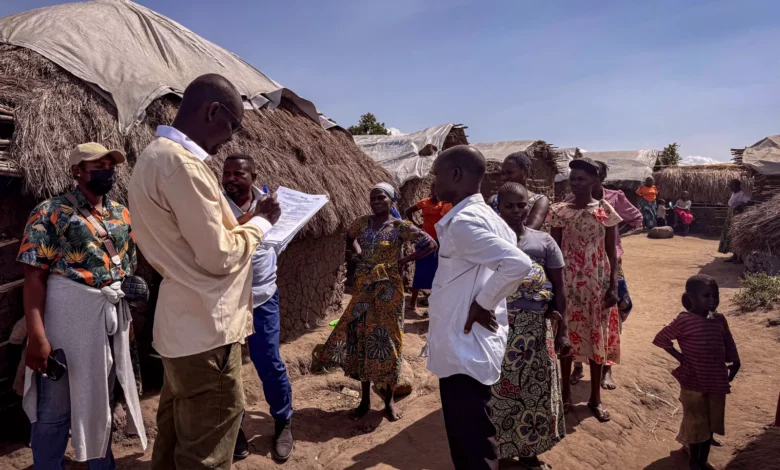
The World Health Organization has declared the Ebola outbreak a Public Health Emergency of International Concern, warning it is spreading rapidly and poses a “very high” risk at the national level in the DRC. As of late May, the WHO reported more than 900 suspected cases and over 220 deaths, with 82 confirmed cases and 7 confirmed fatalities. The outbreak is concentrated in northeastern Congo, particularly in Ituri province, and cases have also been confirmed in Uganda, with suspected cases reported in South Sudan.
This is the DRC’s 17th Ebola outbreak since the virus was first identified in 1976. Response efforts are being seriously hampered by attacks on health facilities, driven by misinformation and clashes with local customs, especially burial rites. In one incident, patients fled an isolation tent after it was set on fire. Médecins Sans Frontières and the International Federation of Red Cross and Red Crescent Societies are involved in patient isolation and scaling up response, but fragile health systems in the affected areas make containment difficult.
The WHO has warned that without a licensed vaccine or specific treatment for the Bundibugyo strain, the outbreak could continue for months despite intensified international aid.