First suspension in five years of Liberal MP from lower house as last IS-linked women and children return to Australia

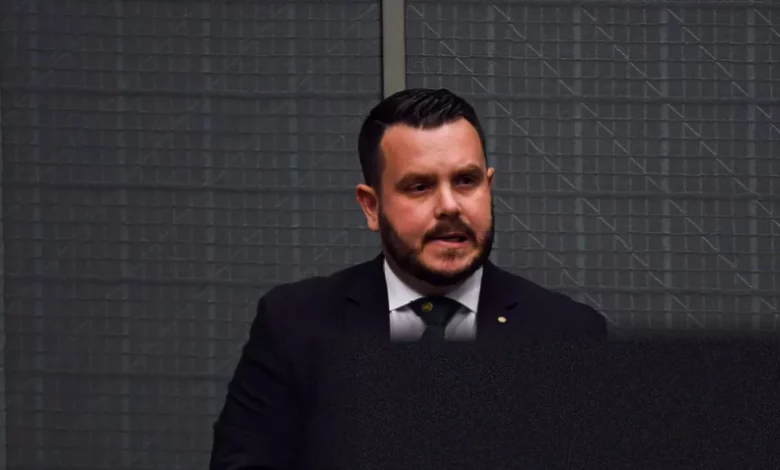
A Liberal MP has been suspended from the House of Representatives for 24 hours after repeatedly refusing to withdraw remarks in which he called the Albanese government “liars”. Phil Thompson, the member for Herbert and shadow minister for defence industry and defence personnel, was “named” by the Speaker, Milton Dick, after declining to retract the comments three times during Question Time. The House then voted to suspend him – the first such suspension in nearly five years. Earlier in the session, the Speaker ejected Liberal MP Ben Small for three hours, a punishment longer than the standard one hour, for talking back to the Speaker.
MP suspended for calling government ‘liars’
Thompson’s suspension followed a heated Question Time in which the Coalition focused its attacks on the budget and proposed changes to capital gains tax, setting out a series of scenarios in which Australians would be left worse off. The Prime Minister told the shadow treasurer, Angus Taylor, to “watch his back”, while both the Prime Minister and the Treasurer, Jim Chalmers, sought to use shadow treasurer Tim Wilson’s own words against him. The Prime Minister also fielded a question from the Greens about whether gas lobbyists attended Labor’s budget night fundraiser – taking the question despite the Speaker, Milton Dick, ruling it out of order. The last MP to be suspended was Labor’s Julian Hill in 2021; Anthony Albanese and Jim Chalmers have also been suspended in earlier parliaments. Thompson, an ex-serviceman injured in Afghanistan, is sometimes given leeway in the chamber because of his background, but on this occasion the Speaker judged his refusal to withdraw as a serious breach.
Victoria rejects firearms cap recommendation
The Victorian government has refused to implement a key recommendation from an independent rapid review of the state’s gun laws, commissioned after the Bondi terror attack. The review, led by former Victoria Police commissioner Ken Lay, made 16 recommendations, including a cap of four firearms per licence holder, with exemptions allowing an additional six for primary producers and sport shooters who could demonstrate a “compelling need”. For any firearms above 10, Lay recommended that licence holders must show a “genuine and exceptional need” for each additional weapon and be subject to oversight by the chief commissioner. The government accepted the other 15 recommendations – including updating firearms classifications and introducing a citizenship requirement for licence holders – but did not give a reason for rejecting the cap.
Premier Jacinta Allan defended the decision, telling reporters she was “not convinced that caps work”. “Victoria already has some of the strongest firearm laws in the country,” she said. “The vast majority of firearm owners, the overwhelming majority are law-abiding. What we have to really target our focus on and our effort on are those evil actors, the criminals who get their hands on one single gun.” The police minister, Anthony Carbines, confirmed the state would not take part in the federal gun buyback scheme because it is linked to caps. He noted that “there are many different positions and determinations being made by jurisdictions across the country” and that Victoria had made its own determination. Tasmania and Queensland had earlier ruled out introducing caps.
The Victorian Greens have strongly criticised the move. Leader Ellen Sandell accused the Allan government of “capitulating to the gun lobby”. “Victorians are right to ask why anyone needs dozens or even hundreds of firearms and why Labor is letting them,” she said. “This was Labor’s chance to show leadership on gun reform and community safety, but they blinked because they’re more worried about upsetting powerful gun lobby groups in marginal seats ahead of this year’s election.”
Lay’s review provided detailed data on firearms ownership and harm in Victoria. It found there are 240,300 firearms licence holders and 974,550 registered firearms – fewer than in Queensland (1.17 million) and New South Wales (1.13 million). Hunting is the most common reason for possession, with 131,000 licence holders listing it as their purpose – about five times the number for primary production and seven times that for sports shooting. Hunters possess an average of 4.1 firearms each, while nearly 35,900 individuals hold more than four firearms solely for hunting, including one person with 135 firearms. The review also revealed that in the ten years to December 2025, firearms suicides (342 deaths) outnumbered firearms assaults (104 deaths) by more than three to one. It noted that “firearms-related harm is concentrated in private and domestic settings, not public places”, and is more prevalent in regional Victoria than in Melbourne, disproportionately affecting men and older people. “These patterns tell us that effective firearms regulation is as much about preventing self-harm and family violence as it is about preventing the kind of public mass casualty events that drive political and media attention,” the report stated. (Lifeline 13 11 14, Beyond Blue 1300 224 636, and Suicide Call Back Service 1300 659 467 are available for 24/7 crisis support.)
State funeral for Neale Daniher
Premier Jacinta Allan also announced that Neale Daniher, the former Australian rules footballer and coach who became a leading campaigner against motor neurone disease, will be honoured with a state funeral. Allan said she had spoken to Jan Daniher, Neale’s wife, to express condolences and offer the service. “The family have accepted that offer,” she said. Daniher, who was diagnosed with MND in 2013, was named Australian of the Year in 2025 for his fundraising and advocacy through the FightMND charity. He died just two weeks before the annual Big Freeze event.
Last Australians leave Syrian camp
The last remaining Australian women and children held in the al-Roj detention camp in north-east Syria have bought plane tickets to return to Australia, sources have confirmed. The group is believed to include seven women and 14 children, all Australian citizens with travel documents. One woman is subject to a temporary exclusion order preventing her re-entry. Most are wives, widows or children of jailed or dead Islamic State fighters, and some could face terror-related charges on landing. Many of the women say they were coerced or tricked into entering Syria, or trafficked into IS territory; some children were born in the camp and have never left it. The home affairs minister, Tony Burke, said the government “will not repatriate or provide assistance to this group”, adding that Australian Federal Police operations preparing for returns from Syria have been in place since 2015. This is the fifth group of Australians to leave Syrian detention camps since 2019. In May 2026, four women and nine children returned; three of those women were subsequently arrested and charged by the AFP. The United States government, which funds the camp, has been pressing Australia to take back its citizens. Human Rights Watch reports that many children repatriated from such camps are successfully reintegrating with proper support.
National anti-corruption commissioner resigns
Paul Brereton has resigned as Australia’s first commissioner of the National Anti-Corruption Commission after nearly three years in the role. The attorney general, Michelle Rowland, thanked him for his “invaluable contribution” to the establishment of the watchdog.
Royal commission hears of policing failures before Bondi attack
The royal commission into antisemitism and social cohesion has heard detailed evidence about security preparations for the Hanukkah by the Sea event at Bondi in December 2025, where two gunmen killed 15 people in an attack believed to have been inspired by Islamic State ideology and rooted in antisemitism. The Community Service Group (CSG), a private organisation that has provided security to the Jewish community since the 1970s, had issued its own threat assessments before the event. A senior CSG officer, appearing under the pseudonym ABO, told the commission that CSG sent emails to NSW police warning that the “likelihood of violent and/or antisemitic incidents is elevated” and that, according to CSG’s metric, the security alert level for the Jewish community was five out of six – meaning “a terrorist attack against the New South Wales Jewish community is likely”. The documents estimated about 1,000 guests at the Bondi event and said the threat environment “remains heightened”. CSG requested assistance from NSW police but did not receive a direct response; police attended in a roving capacity. The officer said there were 12 CSG volunteers at the event, none of them armed.
Another CSG witness, the chief operating officer of CSG New South Wales, who used the pseudonym ABP, told the commission that he had a phone call with the eastern suburbs police command in December in which he requested a static police presence at Chanukah by the Sea and in the park. He said the operations inspector told him that, based on their own risk assessment, a static presence was not required. “I said that there would be a lot of unease from the community not having a static police presence on the ground and I would have tried to convince him,” the witness said.
The assistant commissioner of Counter Terrorism and Special Tactics at NSW police, Leanne McCusker, told the commission that no threat assessment had been prepared for the Hanukkah event. She said threat assessments had historically been limited to “major” events such as New Year’s Eve, Australia Day and Mardi Gras. Asked whether it would have been a “good idea” to prepare one, she said she saw “no reason” why that could not be done and was “aware” of recommendations for future Hanukkah events. McCusker also provided data from the NSW police force’s engagement and hate crimes unit, showing that hate crime incidents targeting Jewish groups have surged from 40 in 2020 to 841 in 2025, with 287 incidents already recorded in the first quarter of 2026. She described the numbers as a “concerning level” and said the surge coincided with the attack on Israel in 2023 and the subsequent war in Gaza. The commission also heard that NSW police threat assessment documents, updated after the national terrorism threat level was raised to “probable” in August 2024, identified crowded places – including “sport stadiums, transport infrastructure, shopping centres, tourist attractions, places of worship and civic spaces … parks, major streets and pedestrian traffic” – as likely targets for a lone actor or small group using rudimentary tactics, particularly during “events of significance”. McCusker said she expected those documents to inform operational policing decisions for the Hanukkah event.
Counsel assisting the commission stated that there is “no evidence that any intelligence agency or law enforcement agency had any actual knowledge or specific information to suggest that there might be an armed attack on the Hanukkah celebration at Bondi”, describing it as a “surprise attack”. The Australian Federal Police had previously expressed fears that antisemitism could escalate into terrorism after the October 7 Hamas attacks, noting an “altered national security environment”. Public hearings will continue on Tuesday and Wednesday, after which several witnesses will return for closed sessions.