G7 Ministers Agree Emergency Measure to Deploy Oil Stockpiles and Combat Looming Economic Crisis

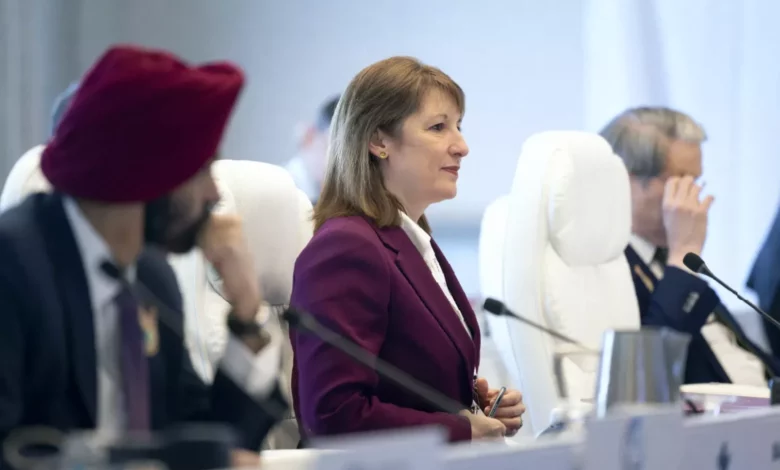
The world’s major economies are preparing to open their emergency taps in a bid to contain an oil price explosion that threatens to derail global growth and hit household budgets worldwide. Finance ministers from the G7 nations, including the UK’s Rachel Reeves, will hold emergency talks today to coordinate a massive release of strategic petroleum reserves, a direct response to market chaos triggered by the widening war with Iran.
The proposed action, backed by at least three G7 members including the United States, would see the International Energy Agency (IEA) coordinate a release from the stockpiles its 32 member countries are required to hold for exactly this kind of crisis. Some American officials have suggested a release of between 300 million and 400 million barrels could be suitable, representing roughly a quarter of total public reserves.
Unprecedented Price Surge
The urgency is driven by one of the most violent price shocks in decades. Since the US and Israel launched joint strikes on Iran on February 28, the cost of oil has surged by approximately 50%. The conflict escalated dramatically over the weekend, with Iran retaliating by effectively halting shipping through the critical Strait of Hormuz, a chokepoint for about one-fifth of the world’s oil supply.
This triggered pandemonium in Asian trading on Monday. The global benchmark, Brent crude, rocketed 24% at one point to $116.71 a barrel—its highest level since the peaks of mid-2022—before settling around $110.85, still up nearly 19%. The American marker, West Texas Intermediate, followed a similar trajectory, climbing 28% to $116.45 before dropping back to around $108. Last week alone, US oil prices surged roughly 35%, the largest weekly increase since futures trading records began in 1983.
Supply Chains Grinding to a Halt
The price spike reflects a rapidly tightening physical market. Major Gulf producers are already shutting down. Kuwait has reduced oil and refinery production, declaring force majeure on shipments due to the threats in the Strait of Hormuz. Bahrain followed suit on Monday morning.
They are not alone. Iraq began holding back production earlier in the week as storage tanks filled up with oil that could not be shipped. Saudi Arabia shut its biggest refinery and Qatar closed a liquefied natural gas export plant after drone attacks. Further afield, China’s government has instructed its largest refiners to halt exports of diesel and gasoline to conserve domestic supply, a sign of the disruption rippling through global supply chains.
The disruption is quantified by energy analysts: approximately 20% of global oil supplies that transit the Strait of Hormuz are now in jeopardy. Qatar’s Energy Minister, Saad al-Kaabi, warned on Friday the conflict could “bring down the economies of the world,” a sentiment echoed in frantic market movements.
Emergency Measures and Market Panic
Against this backdrop, the scheduled 1.30pm GMT call between G7 finance ministers and IEA Executive Director Fatih Birol represents a critical attempt to stabilise the situation. The IEA system, established in 1974 after the Arab oil embargo, has been activated only five times before, most recently in 2022 following Russia’s invasion of Ukraine.

The tool is designed to add supply to a starved market. IEA countries currently hold over 1.24 billion barrels in public stocks, plus roughly 600 million barrels in industry reserves, enough to meet nearly a month of total IEA oil demand. A release on the scale being discussed would be historic.
Financial markets are braced for severe strain. Asian stock markets fell sharply on Monday, with South Korea’s KOSPI down 7.3% and Japan’s Nikkei falling over 6%. US futures pointed to steep losses at the open, with Dow Jones Industrial Average futures down more than 1,000 points.
The immediate pain is being felt by consumers. The average US petrol price jumped to $3.45 per gallon by Sunday, up sharply from $2.98 just a week earlier. Analysts at GasBuddy predict an 80% chance the national average will hit $4 per gallon by next month. The International Monetary Fund estimates that every sustained 10% rise in oil prices results in a 0.4% rise in inflation and a 0.15% reduction in global economic growth.
Political Stances and Strategic Reserves
The Trump administration’s willingness to consider a coordinated release marks a significant shift from its stance just last week, when officials insisted it was unnecessary. President Trump himself has dismissed concerns about the rising costs. On his Truth Social platform on Sunday, he wrote that “short term oil prices, which will drop rapidly when the destruction of the Iran nuclear threat is over, is a very small price to pay for U.S.A., and World, Safety and Peace. ONLY FOOLS WOULD THINK DIFFERENTLY!”
If agreed, the drawdown would come from reserves like the US Strategic Petroleum Reserve (SPR). Authorised to hold up to 714 million barrels in caverns along the Gulf Coast, the SPR was last significantly drawn down in 2022. As of the end of 2025, it held 411 million barrels, equivalent to approximately 125 days of US crude oil net imports.
The outcome of today’s G7 discussions will be watched as a crucial test of the world’s ability to prevent a severe energy-driven economic shock. With supply physically blocked and prices at decade highs, the coordinated use of strategic stockpiles represents one of the few levers policymakers have left to pull.