Two senior Republican lawmakers in the United States have expressed deep unease over the Pentagon’s decision to withdraw 5,000 troops from Nato ally Germany, warning that the move risks undermining deterrence and sending a dangerous signal to the Kremlin.
Senator Roger Wicker of Mississippi and Representative Mike Rogers of Alabama, who chair the Senate and House armed services committees respectively, issued a joint statement on Saturday voicing their concern. They argued that any significant change to the US military posture in Europe must be properly reviewed and coordinated with Congress and allied nations.
“We are very concerned by the decision to withdraw a US brigade from Germany,” they said. Even if Nato allies raised defence spending to 5 per cent of GDP, building the capabilities to assume conventional deterrence would take time, they added. “Prematurely cutting US forces in Europe risks undermining deterrence and sending the wrong signal to Vladimir Putin.”
The lawmakers also suggested that relocating the troops eastward within Europe might be a more prudent option than a full withdrawal, echoing a similar stance they took in a joint statement in March 2025 regarding potential changes to US combatant commands.
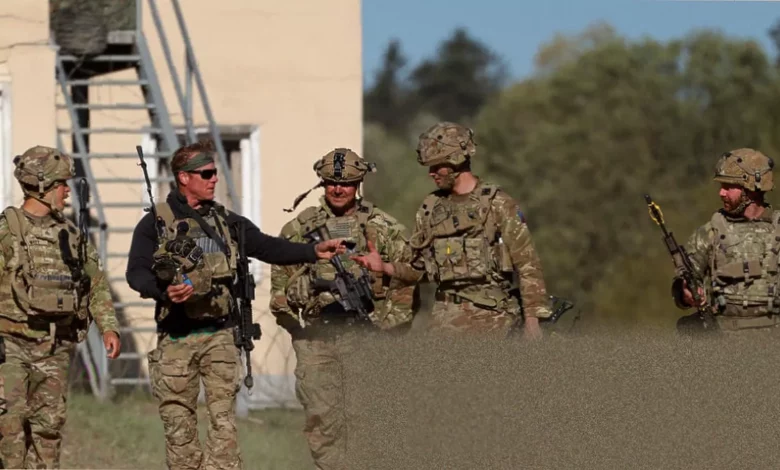
The Pentagon announced the withdrawal late on Friday, stating it would reduce the US military presence in Germany by roughly 5,000 personnel – nearly 15 per cent of the total American force there – and that the redeployment would be completed over the next six to 12 months. As of 31 December 2025, there were 36,436 active-duty US troops stationed in Germany, along with 12,662 in Italy and 3,814 in Spain. Once the withdrawal is complete, the US force posture in Europe will fall to levels not seen since before Russia’s full-scale invasion of Ukraine in 2022.
President Donald Trump had threatened the withdrawal earlier in the week after German Chancellor Friedrich Merz said on Monday that the Iranians were “humiliating” the United States in talks to end the ongoing war and that he could not see Washington’s exit strategy. A senior Defense Department official, speaking on condition of anonymity, described Merz’s remarks as “inappropriate and unhelpful”, and said the withdrawal was in line with the administration’s goal of shifting focus away from Europe towards the Western Hemisphere and the Indo-Pacific. The administration has urged European allies to adopt a “practical, businesslike approach to building a Europe-led Nato”.
German Defence Minister Boris Pistorius responded by saying the withdrawal was “foreseeable”. He stressed that the presence of American troops in Germany serves the security interests of both countries, citing collaboration at bases such as Ramstein, Grafenwöhr and Frankfurt for peace, support for Ukraine and joint deterrence. He also noted that the US presence supports American security interests in Africa and the Middle East. “If the transatlantic alliance is to remain strong, Europe must strengthen its own defence capabilities,” Pistorius said, adding that Germany was “on the right track” by expanding its armed forces. Even after the withdrawal, more than 30,000 US troops will remain in the country.
Implications for transatlantic security and deterrence
The strategic implications of the withdrawal extend well beyond the numbers. Nato spokesperson Allison Hart confirmed on Saturday that the alliance was “working with the US to understand the details of their decision on force posture in Germany”. She added that the adjustment “underscores the need for Europe to continue to invest more in defence and take on a greater share of the responsibility for our shared security”.
Polish Prime Minister Donald Tusk has been outspoken in his criticism, denouncing what he described as the “ongoing disintegration” of Nato. “The greatest threat to the transatlantic community are not its external enemies, but the ongoing disintegration of our alliance,” Tusk wrote on X. “We must all do what it takes to reverse this disastrous trend.” His remarks came shortly after the troop withdrawal was announced, and after Trump also voiced anger at Italy and Spain for refusing to allow US military planes to use their bases. Trump told reporters in the Oval Office on Thursday: “Italy has not been of any help to us, and Spain has been horrible, absolutely horrible.” He said he “probably will” pull US forces out of those countries as well.
The row has highlighted deeper strains in US–Europe relations, exacerbated by Trump’s demands for higher defence spending from allies and ongoing trade disputes, including planned tariff increases on EU cars. Wicker and Rogers, in their statement, insisted that the Pentagon must “engage with its oversight committees in the days and weeks ahead on this decision and its implications for US deterrence and transatlantic security”. The lawmakers’ warning about the risks to deterrence against Russia is particularly pointed: even if Nato allies raise defence spending to the ambitious 5 per cent target, building the conventional capabilities to replace American forces will take considerable time. In the meantime, a premature reduction in US troop numbers, they argued, could be read by Moscow as a weakening of the alliance’s resolve.