Reform UK is poised to seize control of St Helens Borough Council from Labour in next week’s all-out local elections, according to internal party projections and a senior Merseyside Labour source who described the outcome as “inevitable”. The party led by Nigel Farage could win an outright majority, taking 25 of the 46 seats up for election, with Labour reduced to just nine, figures from the polling website PollCheck suggest. The source, speaking to The Independent, said the “best-case scenario” for Labour was that it remained the largest party without a majority, but the “much more likely” worst case was a Reform clean sweep that would “clean out the Labour Party and the Green Party”.
St Helens has been a Labour stronghold for most of its modern history, with the party holding 28 of 48 seats on the current council. The only break came during a period of no overall control in the 2000s. But Reform has already made inroads, winning by-elections in the Blackbrook and Sutton South East wards to take three seats. A swing of the scale predicted by PollCheck would hand Reform the 25 councillors required for a majority, marking the first time a Merseyside council has fallen to the insurgent party. Mr Farage told the BBC during a visit to nearby Southport that his party would give Labour a “run for their money” across the region, and later named St Helens specifically in an interview with the Daily Mail, vowing to win in “red wall” areas where Boris Johnson failed to gain ground in 2019. “This is going way beyond anything that remarkable Brexit election produced,” he said. “This is a fundamental shift away from the Labour Party.”
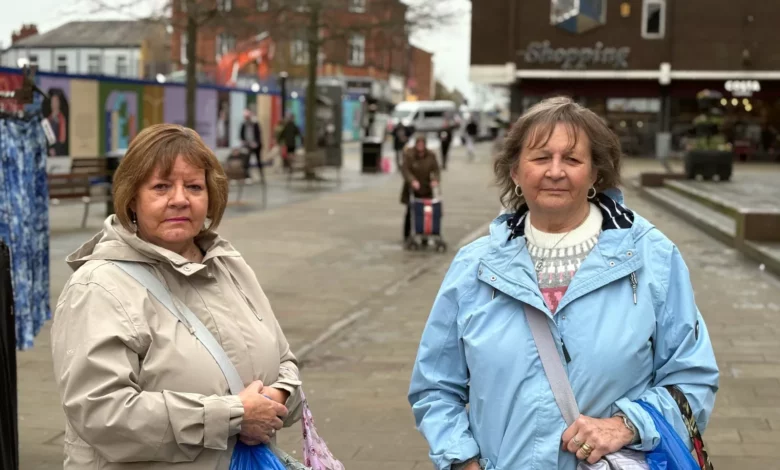
The borough’s deep industrial heritage once guaranteed Labour’s dominance, but decades of post-industrial decline have frayed that loyalty. Founded in 1826, the glass manufacturer Pilkington powered St Helens’ growth alongside coal mining and pharmaceuticals. Today, Pilkington remains the only large employer, now a subsidiary of a Japanese firm and much reduced. The town centre, punctuated by empty units, takeaways and vape shops, reflects the struggles of a post-industrial economy. Market trader Paul Donovan, 61, said: “All the big boys have left, all the big shops have gone to the retail park. Each time the town has gone boom, onto the floor.” St Helens ranks among the most deprived local authorities in the country: one measure places it 29th, while the government’s 2019 Index of Multiple Deprivation ranked it 26th out of 317 English authorities. Almost a quarter of residents live in the 10% most deprived neighbourhoods nationally, with health, employment and income deprivation the most acute concerns.
The disconnect between Labour and its traditional base is stark. Residents who have voted Labour all their lives now express disillusionment in terms that go far beyond simply feeling let down. Janet Wylde, 79, a retired Pilkington employee, said: “We were always Labour. Definitely no – and don’t get me wound up on them. It’s not Labour. That’s a cover. It’s not the old Labour we had.” Her sister Sandra Hilton, 75, added: “What have they done? We’ve got family waiting for houses and they can’t get one. I’m sorry, but they put all the immigrants in the new houses and they’re still waiting.” The sisters’ view is echoed by others in a town where 93.5% of the population were born in England, according to the last census. Market trader Ray Watt, 58, who travels from Liverpool, said: “The country can’t cope with it. Labour are just soft in my eyes.” Though he said he “probably wouldn’t vote for Reform”, he offered a blunt explanation for the party’s historic dominance: “I don’t even think some people think too much about it. I think they’re on autopilot – well we’re working class so we’re Labour. We’re just Labour. Well, they’re f***ing useless.”
National anger, local consequences
The sense that Labour no longer speaks for towns like St Helens has been sharpened by a series of government U-turns that Labour politicians themselves acknowledge have done real damage. Steve Rotheram, the Liverpool City Region mayor, told The Independent: “There’s definitely a feeling that the ‘own goals’, the number of U-turns that the party made, have reflected really badly on everything else.” He argued that the national noise was drowning out local campaigning and that the party needed to fight the election on hyper-local terms – “knocking on every single door and explaining that it’s not currently an election for national issues. It’s who’s going to run your town hall.” Yet even Mr Rotheram conceded the scale of the challenge, describing a Reform victory as a “big if” that would threaten the “trajectory” of major regeneration projects backed by his combined authority. Reform UK has meanwhile recalibrated its own campaign, instructing activists to move away from specific local tax-cutting pledges, which are difficult to deliver within statutory spending obligations, and instead focus on national talking points such as immigration and crime – issues that clearly resonate with St Helens voters.
The feeling of being forgotten is exacerbated by a comparison with Liverpool, just 15 miles away. While the city’s docks suffered a similar post-war slump, urban regeneration, culture and a thriving hospitality industry powered its recovery. St Helens, firmly a rugby league town with its own distinct identity, has not seen the same investment. “I think Liverpool gets the most money,” Janet Wylde said. “There’s no joy coming here – we look at the markets because there’s no shops.”
Regeneration, but will it be enough?
That sense of neglect is what makes the regeneration now under way in the town centre so significant – and so precarious. Much of the area is a building site as work continues on a new market hall, a hotel, homes, shops and a £35 million transport interchange, backed by £32 million from the Liverpool City Region Combined Authority and additional funding from the government’s Towns Fund, the council and developers. The first phase includes a 120-bedroom Hampton by Hilton hotel, 56 apartments, eight townhouses and new public spaces, with the Hardshaw Centre due for demolition. Yet traders remain sceptical. Paul Donovan said the town “needs people” and “more shops”, not a hotel. “It’s got a bakery, bookies and barbers,” he said. The mayor warned that a Reform-controlled council could place a question mark over the entire regeneration programme, because a party that “doesn’t believe in the same things that Labour in St Helens does” might not continue the same investment priorities.
Sitting on a bench in the town centre, 68-year-old Keith Twist summed up the dilemma facing Labour. “I vote Labour but I don’t think I’ll be doing so this time,” he said. Asked why, he gestured around him. “Well, can you see what’s happening here?”