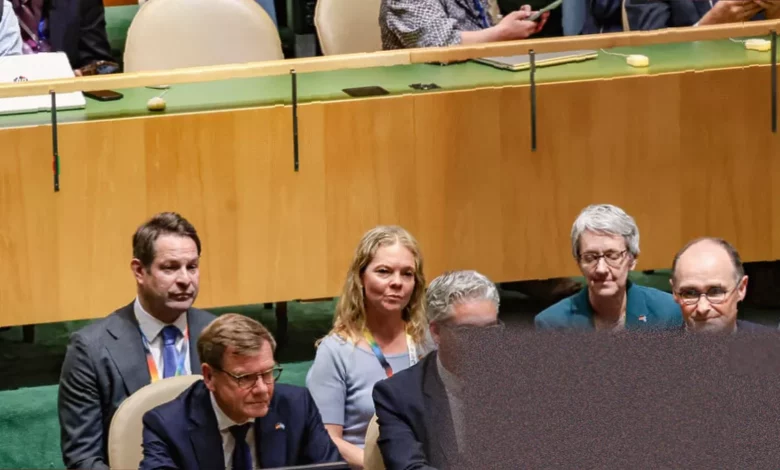
Germany has suffered the humiliation of losing a bid for a non-permanent seat on the United Nations Security Council for the first time in its history, despite being the second-largest contributor to the UN budget after the United States. The result, which delivered a sharp rebuke to Chancellor Friedrich Merz’s ambitions to project German leadership on the global stage, has sparked an intense bout of political recrimination in Berlin.
The Election Outcome
In a secret ballot held on Wednesday (3 June), Austria and Portugal won the two rotating seats allocated to the “Western European and Others” regional group for the 2027–2028 term. Portugal secured 134 votes, Austria 131. Germany, which needed 127 votes to reach the two-thirds majority, received only 104 – a figure significantly below the threshold and well short of the confidence Berlin had expressed just hours before the vote. Kyrgyzstan, Zimbabwe and Trinidad and Tobago were elected to the other non-permanent seats.
The result marks a dramatic reversal for a country that has served six previous terms on the 15-member council, most recently in 2019–20, and had never before lost a competitive race for a seat.
Reasons for the Defeat
German Foreign Minister Johann Wadephul, who had lobbied heavily for the seat, described the outcome as a “bitter defeat” and pointed directly to Germany’s foreign policy stances as the cause. “We have always taken a clear stance on certain issues, and these are positions that not all member states share,” he told reporters. He said it was “no secret” that Russia had actively campaigned against Germany – now Kyiv’s largest national provider of military aid – because Moscow did not want such a voice at the Security Council.
Wadephul also acknowledged that Germany’s “special responsibility for Israel in the Middle East conflict may have cost votes”. Berlin’s unconditional support for Israel, rooted in its historical atonement for the Holocaust, has included reluctance to take a tougher stance on alleged war crimes in Gaza, West Bank settlements and military strikes in Lebanon. “The fact that Germany must always assume a special responsibility for Israel … may also have cost votes,” Wadephul said, adding that Germany would stand by Israel even if it voiced criticism of its government’s actions.
The minister also cited a late entry into the race as a disadvantage. Germany announced its candidacy in 2019 – a relatively late start compared to the meticulous, long-term campaigns of the winners. Austria’s foreign ministry stated that its election capped a 15-year effort built on neutrality and consensus-building. Portugal, meanwhile, leveraged deep cultural and diplomatic ties across Africa and Latin America and had officially recognised Palestine as a state at the UN General Assembly the previous year.
For decades, Germany has relied on its status as a major financial contributor to the UN – it allocated 4.4 billion euros to the organisation in 2024 – to secure influence through what has been called “chequebook diplomacy”. The defeat suggests that financial weight no longer translates into consensus within a deeply divided international community. Critics have also pointed to perceived double standards in Berlin’s foreign policy. The Social Democrats (SPD), junior partners in Merz’s right-left coalition, accused the government of hypocrisy. Adis Ahmetović, the party’s foreign policy spokesperson, told Spiegel magazine: “Anyone who claims to be the guardian of the rules-based international order must not apply double standards when it comes to international law.” He noted that Germany had shown restraint in criticising allies such as Israel and the United States, including in relation to US military strikes in Venezuela and Iran that Merz initially declined to judge.
Political Fallout
Chancellor Merz, whose popularity has slumped during his first year in office, congratulated the winners of the ballot and insisted that Berlin’s commitment to the UN would remain “unwavering”. Germany, he said, would continue to act as a “reliable pillar of multilateralism” with “determination and a sense of responsibility”. Yet the defeat has deepened questions about his leadership at home and abroad.
The opposition Greens called it an “embarrassing defeat”. Deputy parliamentary group leader Agnieszka Brugger said the government had failed to “underpin this bid with modern ideas” on climate protection, the international rules-based order and development aid. Alice Weidel, co-leader of the far-right Alternative für Deutschland (AfD) – now leading in opinion polls and a fierce critic of support for Ukraine – posted on X that the result confirmed a narrative of national decline. “One embarrassment follows the next: while Merz had intended to bring our country ‘back on to the international stage’ at the start of his chancellorship, Germany now finds itself without a seat on the UN security council,” she said.
Even the SPD joined the criticism, with Ahmetović calling the vote “not a mere hiccup, but a warning sign”. The result has fuelled speculation that Merz could be replaced as chancellor by a fellow conservative, Hendrik Wüst, the premier of North Rhine-Westphalia, if he fails to turn around his government’s fortunes. While such a scenario remains highly unlikely, Manuel Fröhlich, a political scientist at the University of Trier, said the high-profile campaign lost right down to the wire would be a “significant setback” for Merz’s drive for a political comeback. “The government would certainly have celebrated it as a success, and in that sense it will no doubt have to take responsibility for this defeat,” he told public broadcaster Phoenix.