Holding their final team meeting at a Gold Coast hotel, the Iranian women’s national football team finds itself at the heart of an escalating international standoff, caught between a regime that brands them traitors and a world watching to see if they will be allowed to seek safety.
The immediate concern for players, coaches, and officials is what happens next. With their final Asian Cup match played on Sunday, their scheduled departure from Australia is imminent. According to Daniel Ghezelbash, director of the Kaldor Centre for International Refugee Law at UNSW, this conclusion of the tournament creates a critical urgency. “The Iranian officials accompanying the team would be wanting to get them out of Australia as quickly as possible,” he said.
The Protest That Lit the Fuse
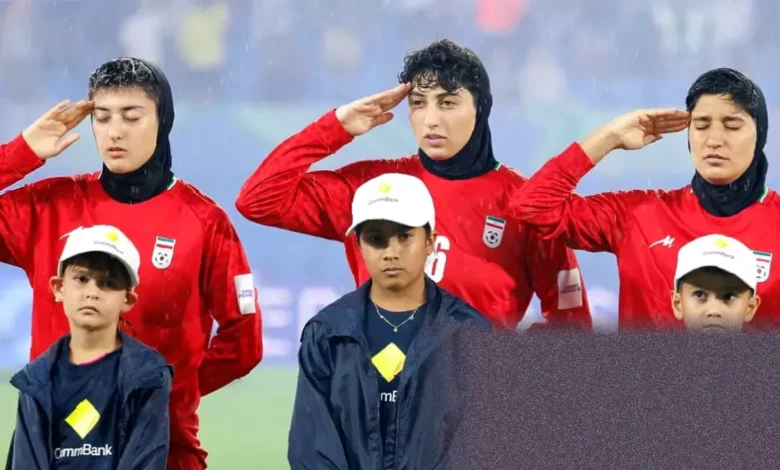
The crisis was triggered by the team’s silent protest during their opening match, when they pointedly refrained from singing the national anthem. In the context of escalating regional conflict, with the US and Israel conducting airstrikes, this act of defiance was portrayed as a profound betrayal by Tehran. State-linked media denounced the players as “wartime traitors” and called for them to be “dealt with more severely”. Under Iran’s legal code, treason is a capital offence.
In subsequent matches, the players were seen singing—or mouthing the words—and saluting during the anthem, a shift observers believe may have been under duress. The team’s coach, Marziyeh Jafari, has previously voiced worries about the players’ families back home and their own feelings of disconnection. The personal stakes are immense: one forward was once suspended after her headscarf slipped during a goal celebration; the youngest player is 18; another previously worked as a personal trainer overseas.
A Country’s Obligation, A Legal Labyrinth
Calls for Australia to offer protection have grown deafening. A public petition has gathered over 60,000 signatures, while the Liberal opposition’s shadow attorney general, Julian Leeser, has urged the Labor government to provide asylum and “not turn a blind eye to the danger these women face”. The exiled son of Iran’s last Shah, Reza Pahlavi, used his substantial social media platform to call on Canberra to ensure the team’s safety.
Australian Foreign Minister Penny Wong has stated that Australia “stands in solidarity” with the team, acknowledging the Iranian regime’s oppression of women. However, the practical pathway is fraught. Assistant Foreign Affairs Minister Matt Thistlethwaite has cautioned that any player seeking asylum would need to meet standard visa conditions, including security and health checks, and would not receive special treatment.
Legal experts point to Australia’s obligations under the Refugee Convention, which it ratified in the 1950s. Daniel Ghezelbash notes the obligation to protect people from being returned to persecution exists regardless of whether a formal claim is lodged. “But in practice,” he adds, “the procedures are set up in a way that to initiate that assessment, the applicant needs to raise concerns about being sent back home. But we’re in a position now where it appears the women are being monitored and controlled, and they’re unable to do that.”
A more complex legal avenue is also being explored. Jennifer Burn, director of Anti-Slavery Australia at UTS, points to “exit trafficking” offences in the federal criminal code, which prohibit facilitating a person’s exit from Australia through coercive or deceptive means. “If there is a reasonable belief that an offence is taking place, arguably there could be a duty to inquire,” Burn said. However, she warned of uncertain jurisdiction for the AFP and the core problem: “We have no information from the footballers about what they want.”
Voices of Support, A Wall of Silence
The global football players’ union, FIFPRO, is deeply involved but faces a fundamental barrier. Beau Busch, president of FIFPRO Asia/Oceania, confirmed the organisation is in communication with the Australian government, FIFA, and the Asian Football Confederation to apply pressure to protect the players’ human rights. Crucially, however, FIFPRO has been unable to establish direct contact with the players themselves.
“They must have agency around what happens next,” Busch emphasised, stating FIFA has a statutory human rights obligation to exert its leverage. He also criticised tournament organisers, noting that while a human rights impact assessment was done for the 2023 Women’s World Cup, none was undertaken for this Asian Cup. “It should have been,” he said.
On the ground, the Iranian-Australian community has made its support visible. Protestors briefly blocked the team bus after their final match, waving the international hand signal for help—a closed fist with the thumb tucked under the fingers, then opened. Some players appeared to return the gesture. Chants of “let them go” and “save our girls” have echoed outside their hotel.
The Asian Cup organising committee has issued a general statement assuring a “safe and secure environment” for all teams during the competition. Yet for these players, the real danger begins the moment the competition ends. Their dilemma is torturous: returning risks severe punishment and could endanger their families; seeking asylum means cutting ties and potentially exposing those same loved ones to regime retaliation.
With their bags packed and their futures hanging in the balance, the women of Iran’s football team are waiting. The world is now watching to see whether Australian authorities will interpret their silent protest on the pitch as a cry for help, and what, if anything, they will do to answer it.