NASA’s Artemis II readies for lift-off as first crewed lunar flight in 50 years gets live broadcast

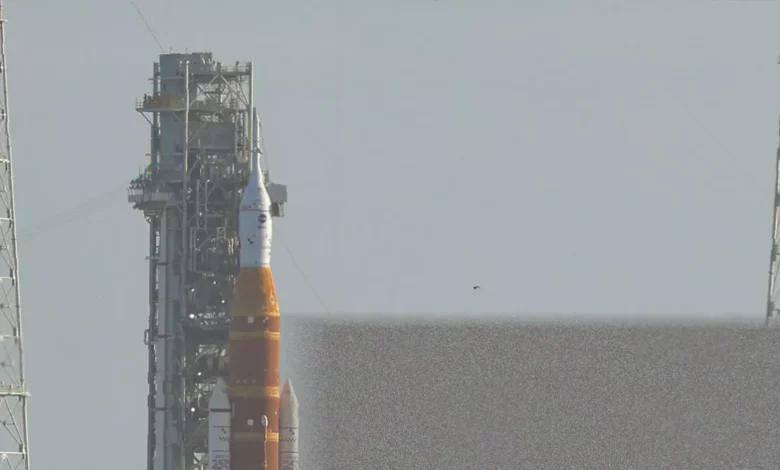
Four astronauts will soon travel farther from Earth than any humans before them, venturing nearly a quarter of a million miles into space on a historic flight around the Moon. The Artemis II mission represents the most audacious crewed spaceflight in over half a century, marking the beginning of a new era of lunar exploration with ambitions stretching all the way to Mars.
A Crucial Test for Deep Space Exploration
The primary purpose of the 10-day Artemis II mission is to rigorously test every critical system needed to keep humans alive and safe in deep space. As the first crewed flight of NASA’s Orion spacecraft, it is a vital proving ground, similar in its role to the Apollo 8 mission that preceded the Moon landings. The mission is the second flight, and first crewed mission, of the core component of NASA’s Moon to Mars initiative, which aims to build a permanent, habitable lunar base as a prelude to eventual human flights to the red planet.
Its objectives are to test crucial spacecraft and life support systems, monitor extensively the astronauts’ health during a long-duration spaceflight—specifically the enhanced effects of radiation and microgravity—and confirm the ability of the Orion capsule to withstand temperatures up to 3,000F (1650C) at re-entry. This is not merely a spectacle; it is an essential stress test. The crew will experience higher radiation levels than on the International Space Station as they travel beyond Earth’s protective magnetic field, with real-time dosimeters monitoring their exposure. Research will also include collecting saliva samples to understand immune system function and using innovative ‘organ-on-a-chip’ technology to study individual responses to the space environment.
While the mission duration reduces some long-term health risks, astronauts may still face space motion sickness, fluid shifts, and muscle deconditioning. They will exercise daily using a compact device to mitigate bone and muscle loss. Every piece of data gathered on their wellbeing and the performance of Orion’s life support, navigation, and communication systems is a critical step towards longer journeys. The significance of this testing cannot be overstated: it is the foundational work required to establish a sustained human presence on the Moon and, ultimately, to send astronauts to Mars.
The Pioneering Crew
The four-person international crew embodies the historic nature of the flight. Commander Reid Wiseman, a 50-year-old retired US Navy captain and former chief of NASA’s astronaut office, will lead the mission. He is joined by Pilot Victor Glover, 49, who will become the first astronaut of colour to fly beyond lower Earth orbit. Mission Specialist Christina Koch, 47, already holds the record for the longest single spaceflight by an American woman and will become the first woman to travel to the Moon. Rounding out the team is Mission Specialist Jeremy Hansen, 50, a fighter pilot with the Royal Canadian Air Force and the first Canadian to participate in a lunar mission.
“Dad, we can’t leave the rocket without a .5 together!!” I love these two ladies, and I’m boarding that rocket a very proud father. pic.twitter.com/N6NKNaeUXF
— Reid Wiseman (@astro_reid) March 31, 2026
Each astronaut brings extensive experience, with three being NASA veterans of extended stays on the International Space Station. Hansen, selected by the Canadian Space Agency, is the sole crew member without previous spaceflight experience. Their personal items for the journey reflect their individual characters, from Hansen’s maple syrup and cookies to Glover’s Bible and wedding ring. Together, they will form the largest crew ever to travel into deep space at one time, surpassing Apollo 8’s record of three.
Technology Built for the Long Haul
Propelling this mission is some of the most advanced engineering ever developed for human spaceflight. The 322ft (98m) Space Launch System (SLS) rocket, one of the most powerful ever built, will generate 8.8 million pounds of thrust to send the Orion capsule on its way. After lift-off from Kennedy Space Center’s Launchpad 39B, the real journey begins on flight day two with the translunar injection burn, sending Orion on a free-return trajectory around the Moon.
The Orion spacecraft itself, built by Lockheed Martin, is the only human-rated vehicle designed for journeys beyond low-Earth orbit and safe return. It incorporates ten reused components from the uncrewed Artemis I test flight. Its European Service Module (ESM), manufactured by Airbus, provides propulsion, power, and life support. The highlight of the voyage will come on flight day six, when Orion will slingshot around the Moon, passing between 4,000 and 6,000 miles from the lunar surface and providing opportunities to photograph the lunar south pole—a key region for future landings.
After a four-day return journey, the mission will conclude with a high-speed re-entry into Earth’s atmosphere and a splashdown in the Pacific Ocean, completing a 685,000-mile test flight that paves the way for humanity’s return to the lunar surface and beyond.