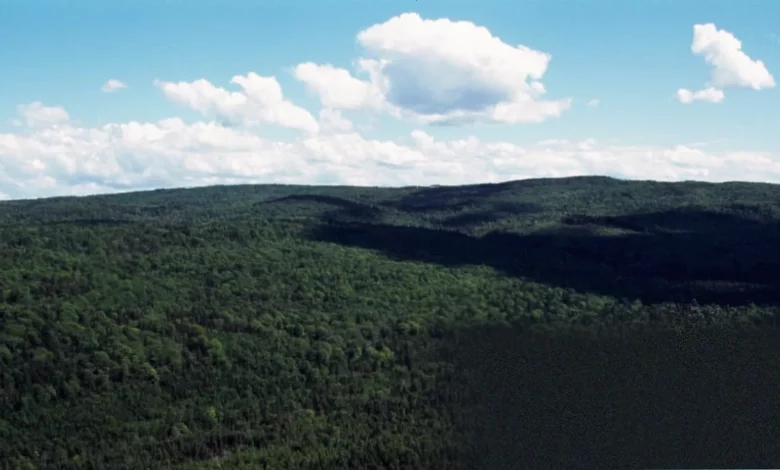
A judge has ruled that Nova Scotia’s provincewide ban on entering the woods during last summer’s wildfire crisis violated the mobility rights of its citizens, delivering a sharp rebuke to the government’s emergency powers and the ill-defined prohibition that left residents guessing what constituted “the woods”.
Justice Jamie Campbell of the Nova Scotia Supreme Court issued his decision on 17 April, finding that the ban – imposed on 5 August 2025 and initially scheduled to last until mid-October – was “unreasonable” and “unlawful” because the provincial government failed to properly weigh the impact on Charter rights when it ordered everyone to stay away from forested areas. Campbell ruled that the restriction breached Section 6 of the Canadian Charter of Rights and Freedoms, which guarantees mobility rights – described by courts as “the heart of what it means to be a free person”. While governments can limit such rights during emergencies, the judge found the province had not done so with the required “reasonable” consideration of the effects on ordinary people.
“The government just wanted people to use common sense,” Campbell wrote. “But the ban seemed to defy commonsense definitions.” The ruling did not strike down the measure because it had already expired, but it serves as a legal warning for any future emergency orders.
The vagueness of the ‘woods’ definition
Central to the challenge was the sheer ambiguity of the ban’s prohibition on “entry into the woods”. Under the order, “woods” were defined to include not only forests but also rock barrens, scrubland and marshes – and even areas where trees had once stood but were no longer present. Residents could still travel, as long as it was not “any great distance” through the woods. Justice Campbell remarked that “someone who wanted to stay out of the woods had to put in some interpretive effort”.
The definition meant that a hiker in a parking lot facing a patch of scrubland could not be sure whether they were about to break the law. The fine for violating the ban was C$25,000 – more than half the average worker’s yearly salary in Nova Scotia – though one offender, army veteran Jeffrey Evely, was subsequently issued a ticket for C$28,872.50 once fees and surcharges were added. Campbell suggested the ban may have been unconstitutionally vague and overbroad, applying to areas where wildfire risk was minimal.
The legal challenge was brought by Evely, who deliberately walked into the woods near Sydney, Cape Breton, after informing bylaw officers of his intentions. He filmed the act for social media and was promptly fined. Supported by the Justice Centre for Constitutional Freedoms (JCCF) – a libertarian-leaning group that has previously taken on cases involving government overreach, including an active role in the 2022 self-described Freedom Convoy – Evely and his lawyers argued that the ban punished ordinary people rather than specific dangerous activities, and that the definition of “woods” was incomprehensible.
Campbell’s ruling zeroed in on the decision-making process. He noted that the province had issued permits for commercial users – such as forest operators, utilities and telecom companies – to keep using the woods, yet failed to give the same consideration to the mobility rights of recreational users. “Those responsible for safeguarding … had to do something. They had to do it quickly and their options were limited,” the judge wrote. “But if individual rights aren’t protected, they can be eroded in a way that eventually affects everyone.”
Reactions and implications
Premier Tim Houston defended his government’s actions, telling reporters this week that the ban was “completely appropriate” given the circumstances. “I did what I thought was necessary as premier to support our firefighters, to keep people safe, to keep property safe,” he said, adding that he respected the judge’s decision but would impose a similar ban again if necessary. Houston disputed the finding that Charter rights had not been considered.
Evely called the ruling “a win for the future of Canada”, while the JCCF’s legal counsel, Marty Moore, described the decision as “egg on the face of the government” and said it would probably deter other provinces from pursuing similar measures. Moore drew a historical line back to the Magna Carta and the Charter of the Forest of 1271, which granted common people rights to use forests. “Unless you’ve been to Nova Scotia and touched the forest there, it’s hard to understand the impact of what the travel ban looks like,” he said. “Nova Scotia is the woods.”
The ban was rooted in the province’s worst wildfire season on record in 2023, in which more than 200 homes were destroyed and 22,000 people were displaced. The Long Lake wildfire burned for a month, destroying 20 homes and 4,100 hectares; the Lake George wildfire forced the evacuation of 350 civic addresses over two weeks. When the provincewide order was imposed in August 2025, no rain was forecast for ten days and every area faced high to extreme wildfire risk. Yet for the judge, the urgency of the crisis did not excuse the government’s failure to craft a clear, rights-respecting prohibition.