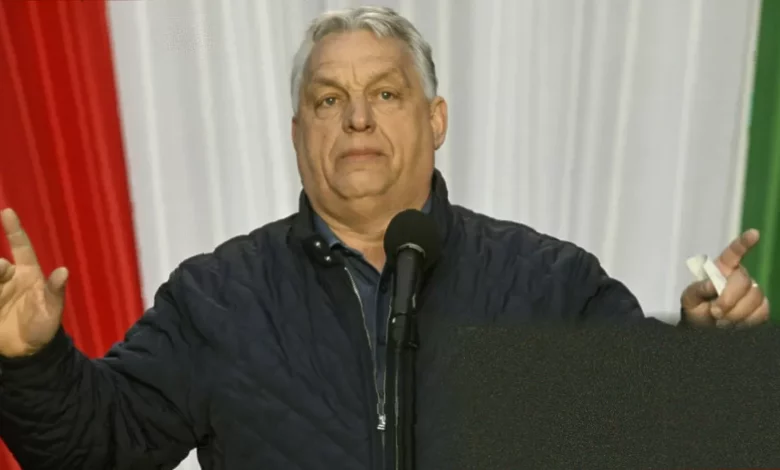
Viktor Orbán, the European Union’s longest-serving leader, faces a challenge to his 16-year rule not from the fragmented opposition he has long outmanoeuvred, but from within his own fortress. The most serious threat in Sunday’s parliamentary election comes from Péter Magyar, a former Fidesz insider whose dramatic defection and meteoric rise have upended Hungarian politics.
A Vote with Global Stakes
The outcome will resonate far beyond Hungary’s borders, potentially reshaping its alliances with Brussels, Washington, and Moscow. Orbán’s tenure has been defined by bitter conflicts with the EU over rule of law, leading to the freezing of substantial EU funds. Budapest has consistently opposed Ukraine’s EU accession, refused to phase out Russian energy imports, and, most recently, is blocking a €90 billion EU loan to Kyiv, using its veto to undermine Western support.
This pro-Russian alignment has drawn intense scrutiny. Leaked audio recordings, which Orbán’s government cites as evidence of foreign interference, appear to show Hungarian officials, including Foreign Minister Péter Szijjártó, sharing confidential EU information with Moscow. Reports further allege a Kremlin-dispatched team of political technologists is operating from the Russian embassy in Budapest, modelling interference on previous campaigns in countries like Moldova.
Conversely, Orbán enjoys robust backing from influential figures in the United States. Former President Donald Trump has repeatedly endorsed him, vowing on social media to bring US “economic might” to Hungary if Orbán wins. Trump’s vice-president, JD Vance, visited Budapest this week, stating his aim was to “help” Orbán secure re-election. This international dimension frames an election where Orbán argues the war in Ukraine is the nation’s paramount threat and he alone can keep peace, while his global far-right admirers, including the MAGA movement, watch closely, having long cited his political playbook as an inspiration.
The Domestic Battle and Orbán’s ‘Illiberal’ System
At home, Péter Magyar has focused his campaign squarely on domestic grievances. He pledges to crack down on systemic corruption, repair relations with the EU, and direct funds to Hungary’s crumbling public services, accusing Orbán’s government of cronyism and hypocrisy. His rise was catalysed by a presidential pardon scandal in February 2024, which forced the resignations of President Katalin Novák and Justice Minister Judit Varga—Magyar’s ex-wife—propelling him into the spotlight.
Sunday’s vote is ultimately a test of how deeply Orbán’s political system is embedded. Since returning to power in 2010, Orbán has transformed Hungary into what critics call a “petri dish for illiberalism.” This radical restructuring involved rewriting election laws to benefit Fidesz and redrawing districts, complexities that mean Magyar’s Tisza party may need a six-point lead in the national vote to secure a parliamentary majority. The government has also manoeuvred to put loyalists in control of an estimated 80% of the country’s media, bringing the landscape under state control.
Dissent has been systematically curbed. A new “Sovereignty Protection Act” has created a chilling atmosphere for critics, and the state’s power is demonstrated in cases like that of investigative journalist Szabolcs Panyi, who faces espionage charges after reporting on the alleged Russian interference—a move widely condemned as politically motivated. These actions, critics argue, point to the dismantling of democratic checks and the rule of law.
The electoral playing field itself is contested. A recent documentary, “A szavazat ára” (The Price of a Vote), alleges widespread vote-buying, intimidation, and coercion primarily benefiting Fidesz, particularly in poorer rural regions where the party’s strength lies. It suggests up to 500,000-600,000 votes could be influenced through cash, goods, or threats. Meanwhile, a record number of Hungarians abroad have registered to vote—a surge expected to benefit the opposition—and a high number of “transfer votes” are also anticipated, favouring Tisza.
After Magyar crisscrossed the nation holding multiple rallies daily, most independent polls show his centre-right, pro-European Tisza party in the lead, some by a double-digit margin. However, pro-government pollsters indicate a tighter race, and with high undecided numbers and the alleged vote-buying, analysts remain cautious. The record 59% turnout seen in the 2024 European Parliament elections suggests a highly engaged electorate. For Hungarians, the choice is between Orbán’s vision of an illiberal state and Magyar’s promise of a corrective, making this the most consequential ballot in over a decade.