Parents issue violent threats to educator after disclosure of Putin propaganda in primary schools

The industrial town of Karabash in Russia’s Urals has become the unlikely epicentre of a documentary film phenomenon that is shaking the foundations of state propaganda from the outside, while being forcibly ignored from within. “Mr Nobody Against Putin,” a clandestinely filmed exposé of the patriotic indoctrination of primary school children, has ascended to the heights of global cinema, winning a BAFTA for Best Documentary and securing an Oscar nomination for Best Documentary Feature. Yet for the pupils of Karabash School No 1, who are its subjects, viewing it requires bootlegged copies passed hand-to-hand and watched in private on phones and laptops.
The Co-Director in Exile
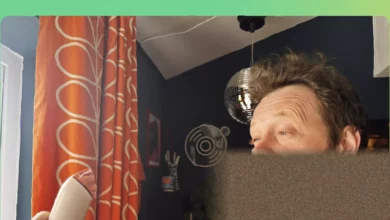
At the heart of the film is Pavel Talankin, a 34-year-old former teacher and videographer at the school, who co-directed the documentary with American filmmaker David Borenstein. Talankin, who grew up in Karabash where his mother worked as the school librarian, used his official role—coordinating and filming school events—as cover. For two-and-a-half years, he documented the rollout of a new government-mandated patriotic education programme, all while secretly smuggling footage out of the country to Borenstein for editing. The project carried extreme personal risk; updated, repressive anti-treason laws introduced during filming meant discovery could have led to life imprisonment.
In June 2024, the day after the school graduation ceremony, Talankin told his family he was going on a week’s holiday to Turkey. Instead, he packed a suitcase with seven hard drives containing all his recordings and fled Russia for good. He has since secured political asylum in Europe, knowing he cannot return home. “It’s better to talk about problems than be silent about them,” he stated, believing the sacrifice was necessary.
Inside the Classroom of Conflict
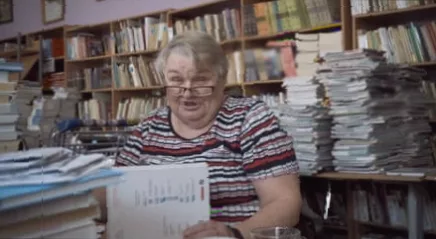
The documentary provides a chilling, granular look at how a school is transformed. Initially, children appear bored and confused by the new lessons. Footage from before the full-scale invasion of Ukraine shows them singing cheerful choruses like “May there always be sunshine.” Months later, they are seen holding their heads in worry as teachers read government scripts about the war, stumbling over unfamiliar terms like “denazification” and “demilitarisation.”
The programme’s escalation is stark. School corridors echo with children marching, backs straight and arms swinging. The paramilitary Wagner Group, a state-funded private military company known for promoting an extremist ideological brand of Russian ultranationalism, sends representatives to teach pupils how to identify mines. Grenade-throwing competitions replace regular sports classes. At home, children watch TV chatshows where soldiers discuss the war, uttering phrases such as, “We mustn’t kill them [Ukrainians] out of hate, we must kill them out of love for our own children.”
“The propaganda is very effective,” Talankin said in London after the BAFTA win. “The state spends a lot of money on it; they wouldn’t bother if it didn’t work.” He hopes the film will show Russians what is happening inside their schools and help the children themselves understand in the future that “they were the victims of all this.”
A Systemic National Programme
What Talankin captured in Karabash is not an isolated case but part of a sweeping national policy. Since 2022, Russia’s Education Ministry has introduced programmes like “Conversations about Important Things,” designed to instil patriotism and respect for Russian history in children as young as three. Discussions of the “special military operation” are included from the fifth grade onwards. Military-patriotic education has been expanded to include compulsory “basic military training” in physical education and a new subject, “Fundamentals of Security and Defence of the Fatherland.”
The film underscores the tangible cost of this ideological push. In one crucial scene, an emergency staff meeting is convened to discuss a sharp drop in grades. Some teachers suggest the extensive time devoted to patriotic classes is to blame. The head teacher wearily responds that she would be sacked if she stopped teaching that material. “It’s impossible to get inside Russian schools with a camera, so to be able to hear her say that makes this the film’s most important scene in my view,” Talankin said.
International Acclaim Versus Domestic Silence
The film’s journey to recognition began at the Sundance Film Festival in 2025, where it won the World Cinema Documentary Special Jury Award. It has since earned a 100% rating on Rotten Tomatoes and a Metacritic score of 78. Its BAFTA win and Oscar nomination place it in a lineage of acclaimed conflict documentaries, following films like “20 Days in Mariupol,” which won the BAFTA in 2024.
This international fanfare is met with a wall of official silence in Russia. State media ignored both its Sundance prize and BAFTA victory. When local officials in Karabash became aware the film was being widely viewed via pirated copies—circulated like samizdat, the clandestine literature of the Soviet era—FSB state intelligence agents were sent to the school. They gathered the leadership and instructed them that Talankin “did not exist and does not exist,” and the film “did not exist and does not exist,” and no comment was to be made.
The domestic reaction among those who have seen it is divided. “Some people have written to me with gratitude, others have said we will break your knees next time we see you,” Talankin revealed.
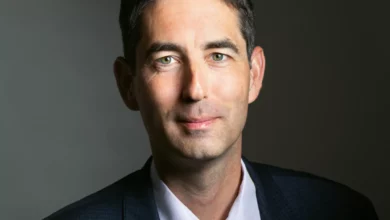
In his BAFTA acceptance speech, David Borenstein highlighted Talankin’s extraordinary courage. “When a treason law threatened him with imprisonment, he kept filming. When a police car started parking outside his house, he kept filming… He wanted to show how quickly totalitarianism can take over a school, a workplace, a government.” Borenstein concluded, “No matter who we are, there is always power in our actions. Courage is found in unlikely places. We need more Mr Nobodies.”
For Talankin, the film’s ultimate impact inside Russia remains a hopeful imperative. He believes Putin’s government is creating “a generation loyal to his politics,” and that the documentary highlights how in 10 or 15 years, “a new generation of pro-Putin loyalists will have been created.” His clandestine footage stands as a stark record of that engineered transformation, a message sent out from the heart of the system at great personal cost.