Iran’s Strait of Hormuz maritime assault triggers oil price surge amid broader economic fears

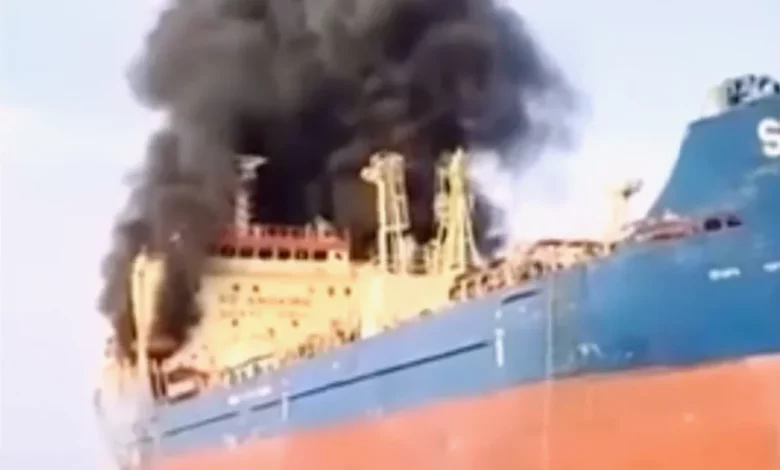
Global energy markets are braced for a severe and sustained shock after a dramatic escalation of conflict in the Middle East triggered what analysts are calling a de facto closure of the world’s most important oil chokepoint, the Strait of Hormuz. The immediate surge in oil prices and the flight of investors to safe-haven assets mark the beginning of a crisis that experts warn could eclipse the oil shocks of the 1970s and tip the global economy into recession.
A Chokepoint Choked
The catalyst was a series of attacks on shipping and a stark warning broadcast over VHF radio. Iran’s Islamic Revolutionary Guard Corps (IRGC) claimed to have struck three US and UK oil tankers in the Gulf and the Strait of Hormuz, and an EU naval mission official confirmed vessels had received transmissions from the IRGC stating that “no ship is allowed to pass the Strait of Hormuz.” While Tehran has not formally confirmed issuing such an order, its actions have had the same effect: shipping data shows traffic through the narrow waterway has slowed to a trickle as major oil companies, tanker owners, and insurers withdraw.
Insurance premiums have hit six-year highs, making transit economically unviable, and the International Maritime Organization has urged ships to avoid the region. “The most immediate and tangible development affecting oil markets is the effective halt of traffic through the Strait of Hormuz,” Jorge Leon, head of geopolitical analysis at Rystad Energy, told Reuters. With limited traffic now largely confined to Iranian and Chinese-flagged ships, the strait is experiencing a de facto closure for most commercial shipping.
Immediate Market Carnage and Historical Echoes
The financial impact was instantaneous and severe. Brent crude rose sharply in early trade, with forecasts suggesting it could open in the $85-90 range and potentially exceed $100 a barrel if the disruption continues. US crude futures also jumped. The shockwaves radiated beyond oil: European natural gas prices are predicted to surge, with Goldman Sachs analysts warning they could more than double—rising up to 130%—if shipping is halted for a month. A disruption lasting more than two months could push European prices above €100 per megawatt hour.
The scale of the potential crisis dwarfs historical precedents. Alan Gelder of Wood Mackenzie told Reuters the nearest parallel was the Middle East oil embargo of the 1970s, when prices surged 300 per cent, but noted the current situation could easily eclipse that. The Strait of Hormuz carries an average of 20 million barrels of oil per day—roughly one-fifth of global seaborne crude—and about 20% of global liquefied natural gas (LNG) trade, much of it from Qatar. Analysts estimate the potential disruption is five times larger than the 1973 embargo.
Geopolitical Trigger and Regional Fallout
The attacks and threats are part of a rapid and dangerous escalation following coordinated military strikes by the United States and Israel on Iran. In retaliation, Iran launched missile and drone attacks on military bases and civilian infrastructure across the region, targeting Gulf neighbours including the United Arab Emirates and Saudi Arabia. The economic strain was immediately visible in the Gulf, where the UAE ordered its stock markets closed, Saudi Arabia’s benchmark index fell sharply, and Kuwait suspended trading.
In a weekend meeting, OPEC+ countries agreed to a modest output boost of 206,000 barrels per day from April, but analysts are sceptical. Much of that additional supply would still need to pass through the Gulf, and the group’s spare capacity is concentrated in countries now facing direct attacks. “A significant portion of this spare capacity cannot reach global markets if the Strait remains inaccessible,” analysts noted, meaning the increase is unlikely to calm febrile markets.
Global Recession Warning and Asian Exposure
The ramifications of a prolonged closure would be catastrophic. “A prolonged closure of the Strait of Hormuz is a guaranteed global recession,” warned Robert McNally of Rapidan Energy Group. The shock would tighten financial conditions, fuel inflation, and push fragile economies closer to recession. The global automotive industry is already facing soaring energy and petrochemical costs, disrupted supply chains, and shipping delays.
Asia is acutely exposed. China, a major buyer of an estimated 1 to 1.5 million barrels per day of Iranian crude, relies heavily on Middle Eastern oil, as do Japan and South Korea. The idea of totally shutting the passage is “totally unacceptable,” said John Gong, a professor at the University of International Business and Economics in Beijing, warning of high costs for these major importers.
India faces particularly acute vulnerability. Approximately 50% of its crude oil imports and 54-55% of its LNG supplies transit the strait. Vivek Y Kelkar, a researcher focusing on geo-economics, noted that with nearly 90% import dependence, “every $10 per barrel rise increases the annual import bill by about $13–14bn.” The outcome, he said, would be “tighter global balances, higher prices and diminished negotiating leverage.”
Limited Options and a Precarious Future
The world has few alternatives to offset such a disruption. Some pipeline routes exist, like Saudi Arabia’s East-West Pipeline and the UAE’s Fujairah pipeline, but they cannot fully compensate for a strait closure. Regional storage infrastructure among Gulf producers totals approximately 343 million barrels, which could buffer only about 22 days of stranded production.
All eyes are now on the duration of the crisis. If naval forces can secure the lanes and traffic resumes, prices may ease. But if hostilities widen, the consequences will extend far beyond the Middle East. As Vaibhav Chaturvedi of the Council on Energy, Environment and Water stated, the conflict “doesn’t bode well for the global energy economy.” In the short run, higher oil prices are assured; in the medium term, a dragging conflict would inflict severe damage on global economic growth, leaving policymakers with few tools to respond.