Pollution incidents in England: thousands downgraded without site visits, analysis finds

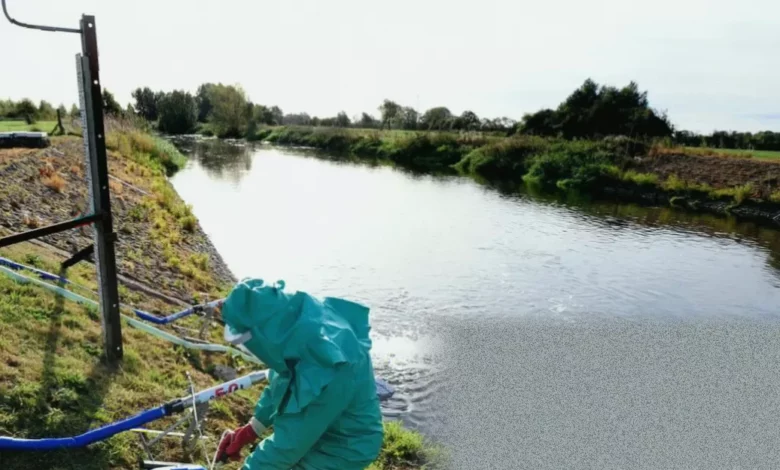
Whistleblower data suggests that Environment Agency staff in England have downgraded the vast majority of serious pollution incidents reported by water companies in 2024 without ever visiting the sites, raising fundamental questions about the regulator’s independence and rigour.
The figures, obtained through freedom of information requests by former EA officer Robert Forrester, indicate that of 2,778 serious incidents provided by water companies last year, a staggering 2,735 – 98% – were reclassified as minor. Agency officers attended only 496 of these before making the downgrade; the remainder were apparently deemed minor based on water company evidence alone.
This represents a near 1,500% increase on the 174 downgrades recorded in 2021, of which 60 were attended. The EA’s own official tally for 2024 recorded just 75 serious incidents from the initial batch, a figure it says is a 60% rise from 2023.
“There is a significant increase in the serious incidents received by the agency but a huge increase in them being downgraded with no attendance by an officer,” said Forrester, whose identity was revealed in this week’s Channel 4 docudrama *Dirty Business*. “The key thing is that water companies are still controlling our attendance.”
A ‘Cosy’ Relationship and a Conflict of Interest
Forrester, who left the agency in January after 21 years, traces a shift in culture back 12 to 15 years, when officers were encouraged to “protect, investigate and enforce” on site. He argues the regulator is now in “too close a relationship” with the companies it oversees, a dynamic he first sought to expose in 2017.
A critical element of that relationship, he alleges, is funding. For the 2025-26 financial year, the EA expects to receive approximately £149m of its £189m water regulation budget directly from water companies through permit charges and a new enforcement levy. “The regulator is being funded from the money the water companies pay for their permits and as a result appears to be loosening its regulatory hold over them,” Forrester said.
His whistleblowing activities have come at a personal cost. Forrester was placed under suspension and given restricted duties in the years before his departure, which he believes was due to suspicions he was speaking out. In 2021, while he was on a 12-month suspension, then EA chief executive James Bevan warned all staff against speaking to the media.
That warning was condemned at the time by Andrew Pepper-Parsons, head of policy at the whistleblowing charity Protect, who said it was not in the spirit of promoting transparency for a regulator to discourage media contact.
History of Suppressed Findings
Forrester’s campaign began with a suppressed report on the toxicity of sewage sludge, which was kept from public scrutiny after its completion. The report was eventually published in 2020 following a Greenpeace investigation, revealing that sewage waste spread on UK crops was contaminated with dangerous persistent organic pollutants like dioxins at “levels that may present a risk to human health”.
The unpublished report itself stated that regulating the “landspreading” industry was “becoming more difficult” due to “increased time pressures and reduced budgets” for staff. Forrester, who had seen the toxicity sampling results, described them as “horrendous”. “It was like scrapings off a gasworks,” he said. “It was going to be published in four months’ time but then it never happened and that set alarm bells ringing. So I spoke to Greenpeace.”
Now unemployed, Forrester has vowed to continue fighting and to engage with campaigners to help expose sewage pollution and hold water companies to account.
In response to the allegations, an EA spokesperson said: “We receive 100,000 reports a year and respond to every water pollution incident, all of which are carefully assessed. We focus our resources on the most serious incidents using all our investigative tools, from real-time data to on-the-ground inspections.” The spokesperson pointed to the agency’s “largest ever budget for water enforcement and compliance”, stating it is on track to conduct 10,000 inspections of water company assets this year to root out wrongdoing.