Andrzej Poczobut, Sakharov Prize winner, freed from Belarusian prison
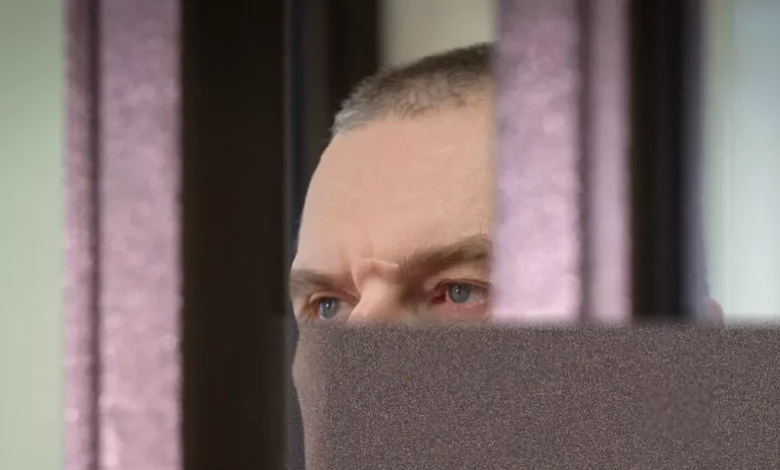
Andrzej Poczobut, the Polish-Belarusian journalist awarded the European Parliament’s Sakharov Prize for Freedom of Thought in 2025, has been released from a Belarusian penal colony. Poland’s prime minister, Donald Tusk, confirmed the news by posting a picture of the journalist on social media with the message: “Andrzej Poczobut is free! Welcome to your Polish home, my friend.”
Poczobut was detained by the Belarusian authorities in 2021 and later sentenced to eight years in prison after a trial widely condemned as a politically motivated attempt to silence government critics. His employer, the Polish daily Gazeta Wyborcza, said he was “sentenced for allegedly inciting ethnic hatred and acting to the detriment of Belarus” but that in reality “dictator Alexander Lukashenko’s men decided to punish Andrzej for being a defiant activist of the Polish minority and a steadfast, independent journalist.” In recent years there had been increasing warnings about his deteriorating health while in custody. The European Parliament’s president, Roberta Metsola, hailed Poczobut and his co-winner, Georgian journalist Mzia Amaglobeli, as “two journalists whose courage shines as a beacon for all who refuse to be silenced” and said “both have paid a heavy price for speaking truth to power, becoming symbols of the struggle for freedom and democracy.”
Andrzej Poczobut wolny! Witaj w polskim domu, Przyjacielu❤️🇵🇱 pic.twitter.com/TSs97ry7X1
— Donald Tusk (@donaldtusk) April 28, 2026
His release follows a reported prisoner exchange between Poland and Belarus. Polish foreign minister Radosław Sikorski confirmed that “a prisoner’s exchange” had taken place, noting that Warsaw had released a Russian historian who was facing extradition to Ukraine. Russian state media, citing the FSB security service, said that “as a result of an exchange carried out on the Belarusian-Polish section of the border, two citizens of our country were returned to their homeland.” One of them was named as Alexander Butyagin, the head of the archaeology department at the Hermitage Museum in Saint Petersburg, who was wanted by Ukraine for conducting excavations in Crimea, the peninsula occupied by Russia since 2014. The US special envoy for Belarus, John Coale, later confirmed that three Poles and two Moldovans had been freed as part of the same operation. Sikorski said seven countries were involved in the process: Russia, Belarus, Kazakhstan, Romania, Moldova, Ukraine and Poland.
US involvement and future plans
The role of the United States was central to the deal. Sikorski said “the fact that we had people to exchange helped, but it would not have happened without the United States,” and credited President Donald Trump and special envoy John Coale. Coale described the negotiations as “complex” and stressed the involvement of Trump and Poland’s president, Karol Nawrocki. At a press conference, Coale said the US had been working on the issue for “some time” and that the outcome was “historic.” He added: “Under President Trump, America shows up for its allies and delivers diplomatic victories no one else can.” Coale confirmed he is due to return to Belarus in “two or three weeks” for further talks and said he is also raising Lithuania’s concerns about meteorological balloons crossing from Belarus into its airspace, describing progress on that issue as “very good.”
Sikorski said Warsaw would “respond with goodwill to gestures of goodwill” but cautioned against overpromising because “we have had these false doors before.” He called Poczobut “a symbol of commitment to Polishness and the freedom of the media and journalists” and said Poland would push for the release of more Polish political prisoners. Coale outlined the scale of the challenge, saying there are still “800 to 900 political prisoners left to get out of Belarus” and that the US “hasn’t stopped our work at all until we get every last one of them.” He described his argument with Lukashenko in blunt terms: “What are you getting out of this? It doesn’t help you, internationally, it hurts you, and if Belarus wants to join the family of nations, this kind of things have to stop. If you want to put people into prison for good reason, great, that’s your business, but not for these types of crimes.”
Ważne sprawy. https://t.co/A2gCKbly3W
— Radosław Sikorski 🇵🇱🇪🇺 (@sikorskiradek) April 28, 2026
Political motivations and implications for media freedom
The circumstances of Poczobut’s imprisonment were part of a broader pattern of repression in Belarus. A UN-mandated report released last month warned about “deeply alarming detention practices” in the country’s prison system, specifically highlighting the Novopoltsk colony where Poczobut was held. The report said detainees there were “subjected to prolonged solitary confinement, disciplinary sanctions and physical punishments after suicide attempts” and reported “denial of essential medical care and reprisals for attempting to raise complaints.”
The case also underscores the dangers faced by journalists across the region. In a separate report, the Civil Liberties Union for Europe (Liberties) described journalist safety in Europe as reaching “a crisis point” in 2025, with reporters facing “extreme physical violence and systemic legal harassment.” The US special envoy’s announcement that he would continue efforts to free the remaining political prisoners indicates that pressure on the Lukashenko regime is expected to persist. Coale said the US is “very committed to have this happen, and hopefully we get them all out.”