Politicians’ and media’s failure to conceive fossil-fuel free future blocks Australians’ huge EV savings

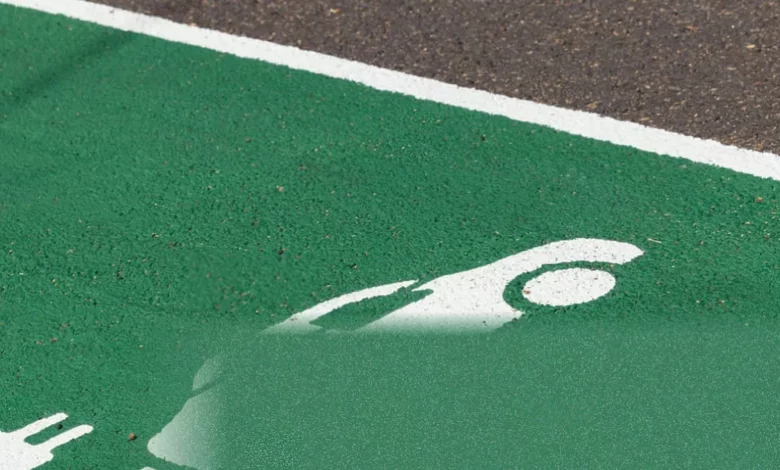
While countries from Norway to the United Kingdom set decisive targets to phase out the internal combustion engine, Australia has been left in the slow lane. A significant push for cleaner cars in 2020 saw other nations accelerate, but a combination of political attacks and abandoned strategies ensured Australia lagged behind in the global shift to electric vehicles.
The Scale of the Catch-Up
The contrast in progress is stark. In Norway, a global leader, fully electric cars accounted for 95.9% of new passenger car sales in 2025. The UK has restored its ban on new petrol and diesel car sales from 2030. Meanwhile, in March 2026, a record 14.6% of new vehicles sold in Australia were battery-electric, with electrified vehicles overall reaching 22.9% of the market that month. While this surge from 13.1% in 2025 is notable, it underscores how far Australia remains behind the global average, where about a quarter of new sales were electric last year.
The market is, however, showing dynamic signs of life. Sales of used EVs more than doubled in March 2026, jumping from 3,176 to 7,557 units, a shift driven by soaring fuel prices and improving resale values. The number of models available has expanded to around 100, including a jump from 5 to 18 electric light commercial vehicle models in 2025. Brands like BYD are now challenging Tesla for sales leadership. Yet, the average price gap between petrol and electric models—roughly 20%—remains a persistent deterrent for many buyers.
Policy Failures and Political Roadblocks
Australia’s sluggish adoption is not accidental but a legacy of specific policy failures. In 2020, as the UK and India announced targets, the then Coalition government disregarded official advice that a scheme to cut car emissions could have a $14bn net benefit by 2040. It later dropped a commitment to release an EV strategy entirely, following a political attack by former Prime Minister Scott Morrison on a non-binding Labor target.
This history of delay has compounded the challenge. Most new cars sold today still have polluting engines and could remain on roads for up to two decades. The political discourse continues to struggle with imagining a less fossil-fuel-dependent future. Calls for expanded local oil production, such as Queensland Premier David Crisafulli’s claim of a “sea of oil” in the Taroom trough west of Brisbane, often overlook practical realities. The state’s own resources department is more circumspect, and while Shell is producing 200 barrels of crude per day there from pilot activities, full-scale production is not targeted before 2030.
Further distorting the market are entrenched subsidies for the largest fossil fuel users. Under the national fuel tax credit scheme, coalmines receive a rebate of over 52 cents per litre on the diesel they buy, amounting to more than $1bn a year in taxpayer support. This creates a direct disincentive for mining giants like BHP and Rio Tinto to invest in cleaner electric trucks, undermining the separate goals of the government’s Safeguard Mechanism policy, which requires large facilities to cut emissions by 4.9% year-on-year.
Charting a Faster Course
The Albanese government’s New Vehicle Efficiency Standard (NVES), which came into effect in January 2025, is a foundational step. It sets gradually declining CO2 emissions targets for new vehicles, with fines for non-compliance to be issued from 2028. But experts argue more could be done to accelerate the transition.
For passenger vehicles, Alison Reeve of the Grattan Institute proposes scrapping parallel importation laws to allow more secondhand EVs into the country, a practice permitted in New Zealand. A more ambitious, though politically difficult, measure could follow models like Shanghai, where free licence plates for EVs contrast with auctioned plates for petrol cars costing over $12,000.
The electrification of trucks, projected to be a $152 million market in Australia by 2034, requires specific interventions. Reeve suggests dropping unique Australian width requirements for trucks to instantly widen the available range of models. Significant public investment in charging infrastructure on key freight routes, starting with the Melbourne-Sydney corridor, is also seen as vital. The Electric Vehicle Council advocates for adopting global memorandums to set sales goals of 30% zero-emission heavy vehicles by 2030.
Removing roadblocks is equally important. Persistent calls for an EV-specific road user charge, while the technology still makes up little more than 2% of the total car fleet, would act as a new tax disincentive. Conversely, removing the diesel fuel rebate for coalmines would correct a market distortion that currently pays them to pollute.
The economic case for change is powerfully clear for motorists. Analysis suggests an EV can travel over 40km on $1 of energy, compared to less than 5km for a fossil fuel car, with users of smart-charging platforms potentially travelling nearly 160km for that same dollar. With petrol prices around AU$2.23 per litre, these savings are becoming impossible for consumers and governments to ignore.