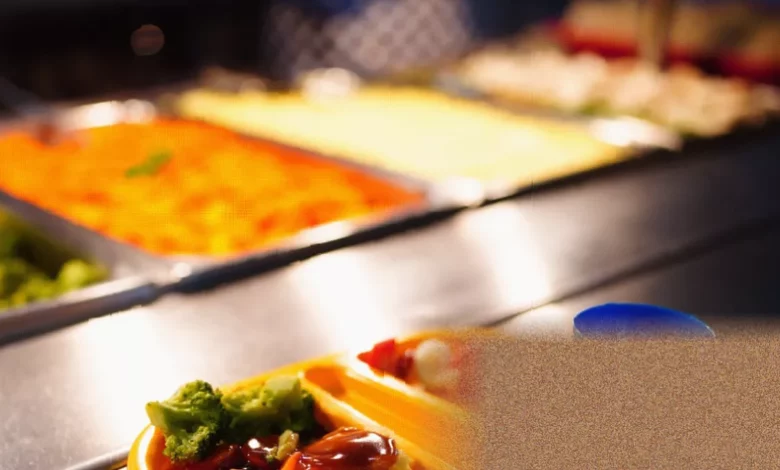
The first real-world test of England’s newly proposed school food standards has produced a stark warning: a six-week pilot saw the uptake of school meals fall by 15% as children rejected healthier menus in favour of packed lunches.
The trial, led by education caterer The Pantry at Glebe primary school in Brighton on behalf of the Department for Education, amended menus to align with the incoming rules. These ban deep-fried foods and sugary puddings, instead mandating more fruit, vegetables, and wholegrains. The result was a clear shift away from the canteen. Luke Consiglio, chief executive of The Pantry, said children did not like the removal of familiar items like ham and cheese sandwiches, baked desserts, and cheese jacket potatoes. A spot check of a dozen packed lunches brought in by pupils found every one contained crisps and a chocolate bar.
Catering costs during the pilot also rose by 20p per meal due to more expensive ingredients. Mr Consiglio, who also sits on the board of the sector body LACA (The School Food People), warned that despite the good intentions behind the standards, their prescriptive nature risked driving pupils away. “By making standards more prescriptive and rigid, we could see many familiar and well-liked foods fall off daily menus and subsequently push away the very parents and children we’re trying to support,” he said.
Caterers Warn of Financial Strain and Closure
This concern is echoed across the industry. Philippa Terry, a caterer providing meals to 70 London primary schools, said the new standards fail to solve the fundamental problem of underfunding. “The question we’ve been asking is why there is this disparity – that the other UK nations are able to fund their meals at a much-increased rate?” she said. Her warning is underscored by a stark financial divide across the UK: the government currently allocates £2.61 for each free school meal in England, rising to £2.66 in September. This compares to £3.40 in Wales, £3.30 in Scotland, and £3.10 in Northern Ireland.
“The £2.61 doesn’t come anywhere close to what the cost is,” Ms Terry stated. Michael Hales, the incoming chair of LACA, noted that schools are increasingly having to bridge the gap between this government funding and the actual cost of providing a meal, with the price of a paid-for school meal having risen by over 20% in the last five years. Ms Terry predicted serious commercial consequences, warning that by July a further six caterers could close because they cannot make the service viable. She fears that if the new menus are not “well loved or understood by pupils and parents,” it will drive more to packed lunches with “no nutritional content,” further reducing uptake and increasing financial pressure.
Enforcement Questions and a Health Crisis Backdrop
Beyond funding and uptake lies the perennial issue of enforcement. The current School Food Standards, introduced in 2014, are widely acknowledged to be outdated and, according to campaigners, often ignored. Andy Jolley, a former governor and school food campaigner, said the proposed changes were positive but “doomed to fail” without proper monitoring and extra money. “The way to improve school meals is to increase the funding so you can provide better quality food in greater quantity. Children are going hungry because the portion sizes have got smaller,” he said. He argued an independent body is needed to check compliance, but funding it is a barrier.
The government’s consultation promises a “robust national enforcement system,” with full details to be announced in September. A new national monitoring system is being developed, with implementation expected from September 2027. This follows a compliance pilot which found food safety officers could conduct checks, but reported workload pressures and inconsistent handling of non-compliance. Schools will also be required to publish menus and appoint a lead governor for food.
The push for healthier food comes against a worrying public health backdrop, with one in three children leaving primary school overweight or obese and tooth decay a leading cause of hospital admissions for young children. The changes have been supported by campaigners including chefs Jamie Oliver and Tom Kerridge, actress Emma Thompson, and the former government food tsar Henry Dimbleby. Mr Oliver’s 2005 campaign previously led to a junk food ban and a £1bn government investment in school meals.
In its defence, the Department for Education said the new standards were “thoroughly tested” with caterers and experts to ensure they are “deliverable, realistic and don’t have detrimental knock-on effects.” A spokesperson cited examples from trials where some schools already meeting the standards saw meal uptake increase by up to 220%, with some seeing costs fall. They pointed to a phased approach to give caterers time to adapt and emphasised the ongoing nine-week consultation. The government is also expanding free school meals to children from families on Universal Credit from September 2026, a move expected to benefit over half a million additional children.
Examples of success within the current constraints do exist. Russ Ball, head chef at Pokesdown Community Primary School in Bournemouth, saw dinner uptake triple in five years by cooking seasonally from scratch. “I’ve always believed that great school food doesn’t have to cost the earth,” he said, highlighting that his kitchen serves over 300 fresh meals daily within budget. Similarly, The Pantry, which feeds approximately 35,000 pupils daily, holds the Food for Life Gold standard in some schools for its focus on fresh, local produce.