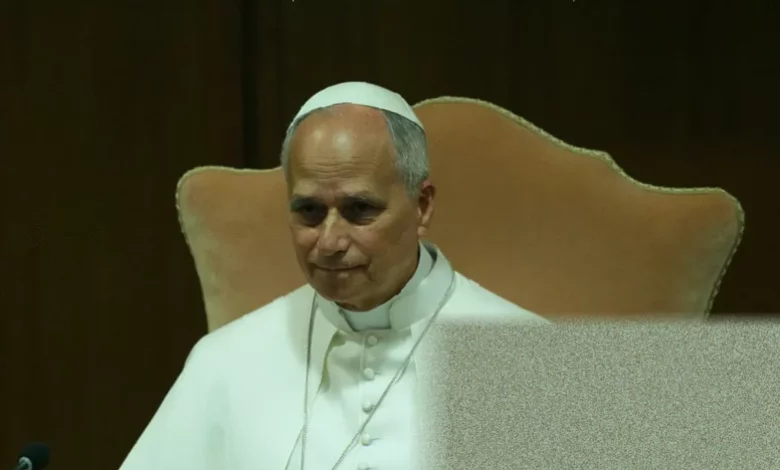
Pope Leo has denounced the “culture of power” that he says is driving the relentless advance of artificial intelligence, warning that the technology must be bound by the “most rigorous” ethical constraints as it reshapes warfare, work and daily life. In his first major papal teaching document, the encyclical Magnifica Humanitas (Magnificent Humanity), released on May 25, 2026, the first U.S.-born pontiff argued that control over digital systems, infrastructure and data increasingly rests not with states but with a handful of massive economic and technological actors, a concentration that tends to become opaque, evade public oversight and generate new dependencies, exclusions, manipulations and inequalities. The document was presented personally by the Pope at the Vatican, a break with tradition, and among those in attendance was Christopher Olah, co-founder of the U.S. AI firm Anthropic, which has previously clashed with the Trump administration over the use of its models in military and surveillance contexts.
AI and the ethics of warfare
The encyclical devotes particular attention to the use of artificial intelligence in armed conflict, a subject the Pope has previously described as the greatest threat to humanity. In the text, Pope Leo points to “a troubling revival of war as an instrument of international politics” and warns that AI is helping to facilitate the “normalisation of war”. He insists that any development and deployment of AI in warfare must be subject to the “most rigorous ethical constraints” in order to guarantee respect for human dignity and the sanctity of life and to avoid an arms race. The Pope goes further, calling for what he terms “AI disarmament” and arguing that the traditional Catholic doctrine of “just war” is now outdated. The encyclical does not list specific weapons systems, but the demand for stringent ethical oversight covers everything from autonomous targeting to battlefield decision-making. The Pope’s intervention is grounded in the belief that AI tends to amplify the power of those who already possess economic resources, expertise and access to data, making the technology especially dangerous when placed in the hands of a few unaccountable actors. Christopher Olah, present at the launch, acknowledged that the incentives and constraints facing AI developers can sometimes conflict with ethical considerations, stressing the importance of external scrutiny from religious leaders and civil society. In May 2026, the Vatican also established an Interdicasterial Commission on Artificial Intelligence, approved by the Pope, to coordinate the Church’s response across doctrine, communication, education, science and human development.
A historic apology for slavery
In a separate but related passage, Pope Leo issued an unprecedented apology for the Catholic Church’s long delay in condemning slavery, describing the Vatican’s historical record as “a wound in Christian memory”. Writing in the encyclical, he said: “It is impossible not to feel deep sorrow when contemplating the immense suffering and humiliation endured by so many in stark contrast to their immeasurable dignity as persons infinitely loved by the Lord … For this, in the name of the church, I sincerely ask for pardon.” While previous popes have apologised for the involvement of Christians in the transatlantic slave trade, no pope has ever publicly acknowledged, let alone apologised for, the role that past popes themselves played in giving European sovereigns explicit authority to subjugate and enslave “infidels”. The apology responds to decades of calls from Black American Catholics, activists and scholars. The Pope, whose own family history includes both enslaved people and enslavers, also warned that the digital economy is giving rise to “new forms of slavery”. He cited the exploitation of labour in the extraction of rare minerals needed for AI chips, the invisible and poorly paid work of data labelling and content moderation, and the use of online platforms for digital exploitation and trafficking, arguing that technology promising emancipation can instead produce new forms of global subordination that contradict the principle of human dignity.
Broader impact on society and human dignity
Beyond warfare and historical redress, Magnifica Humanitas addresses the sweeping impact of artificial intelligence on everyday life. The Pope warns that an ethical approach to AI is insufficient on its own, because profit-driven tech giants can manipulate or exploit such guidelines. Instead he calls for the embrace of a Christian vision of humanity and creation, focusing on changing the human heart through love, solidarity and protection. The encyclical urges political authorities to monitor market monopolies on technology and information and demands that AI be made accessible to all. It also touches on a range of related concerns: the prospect of massive unemployment, the future of education, the protection of human freedom, excessive screen time for young people, the rise of cryptocurrencies, widening economic disparities, the ambitions of transhumanism, and the threat of cyberattacks. The document was signed on May 15, 2026, exactly 135 years after Pope Leo XIII issued Rerum Novarum, the landmark encyclical on the social and economic upheaval of the Industrial Revolution. The current Pope, Leo XIV — born Robert Prevost in Chicago in 1955, a naturalised citizen of Peru, an Augustinian friar and former Prefect of the Dicastery for Bishops — has positioned himself as a centrist with progressive stances on migration, poverty and climate change, and has been critical of U.S. immigration policies under Donald Trump. The establishment of the Vatican’s new Interdicasterial Commission on AI in the same month as the encyclical’s release signals the Church’s intention to treat artificial intelligence as a question of doctrine, communication, education, science and human development — one that it now intends to address with institutional permanence.