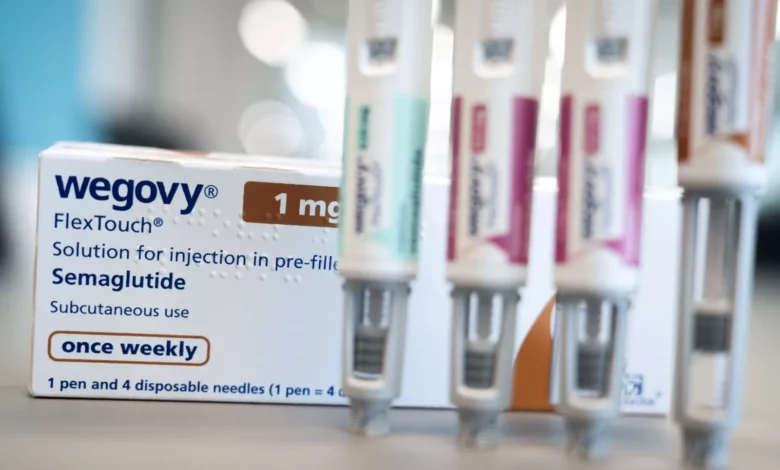
Weight loss drug Wegovy may help curb alcohol consumption, a new study suggests, adding to a growing body of evidence that GLP-1 receptor agonists could play a role in treating addiction.
Researchers at the Mental Health Centre Copenhagen and Frederiksberg Hospital in Denmark found that weekly injections of semaglutide — the active ingredient in Wegovy and the diabetes drug Ozempic — led to a substantial reduction in both heavy drinking days and overall alcohol intake among 108 obese patients seeking treatment for alcohol use disorder (AUD).
All participants received talking therapy throughout the 26-week trial. Half were given a 2.4mg dose of semaglutide, while the other half received a placebo. At the outset, participants reported an average of 17 heavy drinking days in the previous 30 days. After six months, those on semaglutide saw that figure fall to approximately five heavy drinking days, compared with nine days in the placebo group.
Overall alcohol consumption also dropped more dramatically in the semaglutide group. At the start of the trial, participants consumed an average of roughly 2,200g of alcohol over the preceding 30 days. By the end of the study, that had fallen to 650g among those taking semaglutide, versus 1,175g for those receiving the placebo — a difference of more than 40%.
The findings, published in The Lancet, represent some of the strongest experimental evidence yet that these medications, originally developed for diabetes and weight management, may influence addictive behaviours. Professor Anders Fink-Jensen, the study’s principal investigator, said: “The results suggest that semaglutide not only affects appetite but also influences the biological mechanisms underlying addiction. This opens the door to complementing existing treatments for alcohol use disorder with a GLP-1 receptor-targeted approach.”
First author Dr Mette Kruse Klausen added: “This is a patient group with a high disease burden and a substantial risk of both physical and mental complications. Reducing the most harmful drinking patterns could make a meaningful difference for patients.”
How semaglutide targets addiction beyond appetite
Scientists are increasingly focused on how GLP-1 receptor agonists appear to dampen addictive drives in a manner that goes well beyond their well-known effects on hunger. The class of drugs, which mimics a natural hormone that regulates blood sugar and satiety, also acts on brain regions involved in reward processing. GLP-1 receptors are found in areas of the brain that govern motivation and pleasure, and preclinical studies have shown that activating these receptors can reduce reward-seeking behaviours by modulating dopamine pathways.
Functional neuroimaging studies suggest that the medications may alter alcohol cue reactivity — the brain’s response to triggers such as the sight or smell of a drink — potentially dampening the urges that drive consumption. Separately, a pilot study from the Fralin Biomedical Research Institute at VTC indicated that GLP-1 agonists slow the speed at which alcohol enters the bloodstream, delaying its effects on the brain and leading to subjective reports of feeling less intoxicated.
These findings are part of a broader research landscape. A review led by researchers from University Hospitals Birmingham, also published in The Lancet, examined evidence from randomised trials, population-based studies and real-world data covering more than five million people. It found consistent and meaningful effects of GLP-1 medicines on reducing alcohol intake and relapse risk, particularly with semaglutide and liraglutide, and especially in individuals with obesity or type 2 diabetes.

Other studies have reinforced the pattern. A retrospective cohort study analysing electronic health records found that individuals with type 2 diabetes and AUD who were prescribed GLP-1 receptor agonists had lower rates of alcohol-related hospital encounters. A systematic review and meta-analysis reported that the drugs reduce alcohol use as measured by AUDIT scores and show beneficial effects on consumption, relapse and alcohol-related morbidity, particularly among patients with comorbid diabetes or obesity.
A randomised clinical trial published in JAMA Psychiatry found that low-dose semaglutide reduced alcohol craving, drinking quantity and the frequency of heavy drinking days in adults with symptoms of AUD; researchers also noted reductions in cigarette consumption among smokers in the study. Another randomised controlled trial in The Lancet similarly indicated that low-dose semaglutide could reduce craving and some drinking outcomes, justifying larger trials for AUD.
Expert caution and unanswered questions
In a linked commentary also published in The Lancet, academics from the United States wrote: “The importance of evaluating GLP-1 therapies as new therapeutic options for alcohol use disorder cannot be overstated. Should forthcoming studies confirm efficacy of GLP-1 therapies for alcohol use disorder across a broad range of populations and settings, public health implications could be substantial — a possibility that deserves celebration.”
Commenting on the Danish trial, Dr Marie Spreckley, research programme manager at the University of Cambridge, said the study provides “encouraging early evidence for a potential new treatment approach for people with co-occurring obesity and alcohol use disorder, but larger and longer-term trials in more diverse populations are needed before this can inform routine clinical practice.”
Professor Matt Field of the University of Sheffield described the trial as “well-conducted” and said it “provides some of the strongest evidence yet that these medications may help some people to reduce their alcohol consumption.” However, he highlighted critical gaps. “There was no follow-up after semaglutide treatment had finished. This means that we do not know if people reverted to their previous heavy drinking behaviour once they stopped taking the medication, something that may be a real risk because other studies have shown that when people stop taking GLP-1 agonists, they regain a lot of the weight that they have lost. Another key question is whether beneficial effects of these drugs extend to all patients with alcohol use disorders and other addictions, a significant minority of whom are underweight.”
In the UK, neither Wegovy nor Ozempic is licensed by the Medicines and Healthcare products Regulatory Agency (MHRA) or recommended by the National Institute for Health and Care Excellence (NICE) for the treatment of addiction. Off-label prescribing for AUD is not advised outside of clinical trials. Established treatments — including psychological therapies such as cognitive behavioural therapy and licensed medications including acamprosate, naltrexone and disulfiram — remain the current standard of care, with GPs able to refer patients to specialist NHS alcohol or drug services.
Novo Nordisk, the manufacturer of Ozempic and Wegovy, has stated that while it is exploring different therapeutic uses for its GLP-1 drugs, it is “not conducting any dedicated clinical studies” to evaluate their effect on substance use disorders or other addiction-related illnesses. Nonetheless, ongoing trials are under way, including the “Semaglutide Therapy for Alcohol Reduction (STAR)” study listed on ClinicalTrials.gov, which aims to test the safety, tolerability and early efficacy of semaglutide for AUD. Eli Lilly is also conducting a Phase 3 trial of an experimental GLP-1/GIP drug for alcohol use disorder.