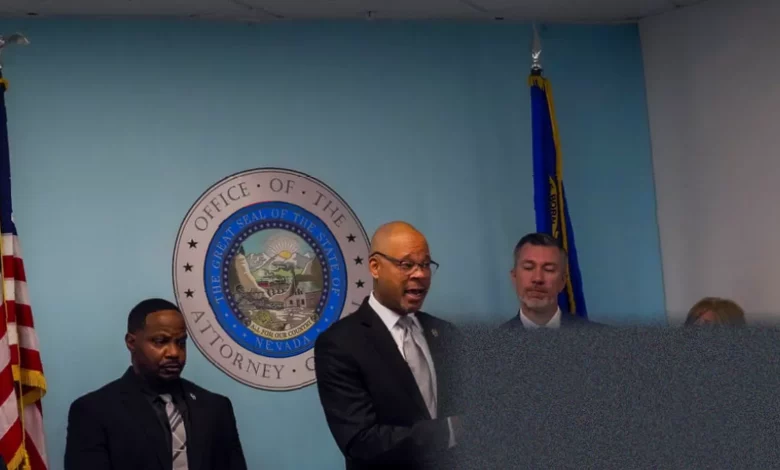
Online gaming giant Roblox will pay more than $12 million to the state of Nevada and implement a sweeping suite of enhanced safety measures in a groundbreaking settlement aimed at protecting young users. Nevada’s Attorney General, Aaron Ford, announced the agreement on Wednesday, 15 April 2026, describing it as a first-of-its-kind pact that he hopes will set a new standard for the industry.
The Terms of the Settlement
The $12 million settlement, agreed in lieu of litigation, includes a $10 million fund to be distributed over three years. According to Attorney General Ford, this money will support non-digital youth programmes like the Boys and Girls Club, fund an online safety awareness campaign, and establish a dedicated law enforcement liaison position to respond to safety concerns on the Roblox platform. The remaining funds will cover the costs of the agreement.
Matt Kaufman, Roblox’s Chief Safety Officer, stated the company was “proud to have worked alongside Attorney General Ford to reach this landmark agreement,” which he said builds on existing work to establish a new standard for digital safety and creates a blueprint for collaboration between industry and regulators.
A New Architecture of Protection for Young Users
The core of the settlement is a detailed set of enhanced protections for minors, significantly expanding Roblox’s existing safety framework. The platform, used by nearly half of US children under 16, will implement several key changes.
Central to the new regime is advanced age verification. By early January 2026, Roblox had already made age verification mandatory for all users to access chat features, using either facial estimation or ID checks. As part of the Nevada agreement, the company will now deploy facial age-estimation technology more extensively. This technology analyses facial features from images or video—deleting the data immediately after processing—to place users into age bands. This will limit younger users’ chats primarily to others in similar age groups and is part of a system to monitor for users who may have lied about their age.
Communication controls have been fundamentally redesigned. For children under 9, chat is disabled by default. A new “Trusted Friends” system—an evolution of the earlier “Trusted Connections” feature—will allow age-verified users 13 and older to connect across age groups via QR scan or phone contact import, ensuring the child knows the person offline. All such conversations are proactively monitored. Crucially, adult users and those under 16 will only be able to chat if they are communicating as “Trusted Friends.”
The settlement also introduces new, age-based account systems. ‘Roblox Kids’ accounts for ages 5-8 will have a distinct background colour, block all communication by default, and limit game access to those with ‘Minimal’ or ‘Mild’ content labels. ‘Roblox Select’ accounts for ages 9-15 will allow access to games rated up to ‘Moderate’. Roblox is establishing an ongoing process to vet games for under-16s, involving developer verification and real-time interaction analysis.
Parental oversight has been dramatically expanded. Previously available only for users under 13, these controls now extend to all under-16s. Parents can manage content ratings, communication settings, screen time, and spending limits. They can block specific games until a child turns 15, manage direct chat settings until age 15, and even grant granular approval for individual games. Parents will also have transparent access to see what games their child is playing and who their friends are.
Additional protections include restricted nighttime notifications for minors and the blocking of adult-rated content on accounts for users under 16.
Broader Scrutiny and Legal Precedents
The Nevada settlement arrives amidst intense legal and regulatory scrutiny of how tech companies safeguard children. Roblox itself faces ongoing litigation in other states, including Texas and Kentucky, which allege it fails to protect young users.
Attorney General Ford has other lawsuits pending against Meta, TikTok, Snapchat, YouTube, and Kik, alleging similar failures. This action follows significant recent verdicts against other industry giants; just last month, in March 2026, Meta and YouTube were found liable in California and New Mexico for designing platforms to addict young users and were ordered to pay over $375 million in penalties. Meta has vowed to appeal those verdicts.
The settlement underscores grave concerns about online predation. Donch’e King, Supervising Criminal Investigator at the Nevada Attorney General’s office, stated that approximately half a million online predators actively pursue children at any given moment, often across multiple platforms, with the majority of predatory contact occurring through chatrooms and instant messaging. Globally, over 300 million children a year are estimated to be victims of technology-facilitated sexual exploitation and abuse.
Roblox has been proactively scaling its safety operations, implementing over 145 new safety protocols in 2025 and growing its moderation team to around 3,000 people by 2024. The platform, which reported 151.5 million daily active users in the third quarter of 2025, proactively monitors all communications and employs AI-powered moderation tools. It has previously restricted ‘social hangout’ games to players over 13 and, in November 2025, announced that all in-game chat and ’18+’ rated experiences would require age verification. The company also plans to transition to the International Age Rating Coalition (IARC) framework for region-specific content ratings.