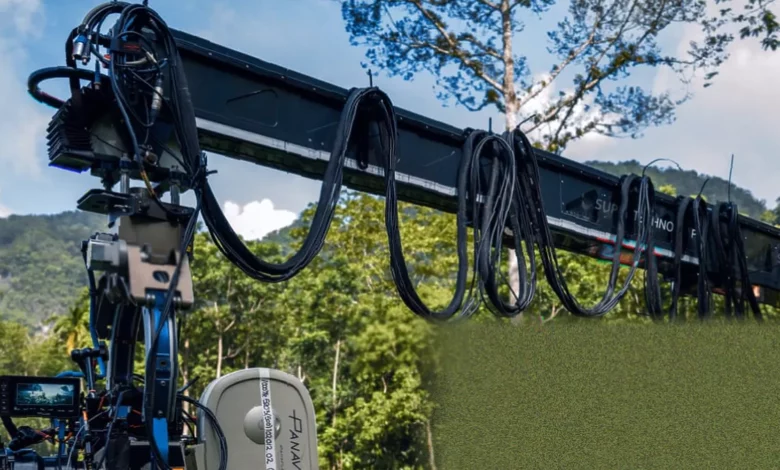
Director Gareth Edwards has thrown his weight behind generative AI as a filmmaking tool, calling it “a fucking genius at helping you” and insisting “it’s going to be better than CGI.” Speaking at the AI on the Lot conference in Culver City, California – an event organised by Amazon and attended by more than 2,000 filmmakers, executives and tech founders this year – Edwards compared the current moment to the introduction of CGI in the 1990s, arguing the technology could become “up there with the camera”.
Edwards, whose credits include Rogue One: A Star Wars Story and the forthcoming Jurassic World Rebirth, said AI is most useful in the preparatory stages of filmmaking. “It’s only good for iteration and discovering what the movie should be, and then once you know what it is, go in and start making it your movie,” he told the audience. He described the technology as a kind of hyperactive, unpredictable assistant: “I view it like having a second-unit director who is a billionaire on acid. Like, it’ll do anything you ask, not a problem. Sometimes, it’ll go batshit crazy. And you’ll give it notes, and it’ll be like, ‘I don’t do notes. I’ll just do something totally different.’ But it’s worth it.”
For Edwards, AI’s primary value lies in organising ideas rather than generating emotionally resonant stories. “It has no taste whatsoever,” he said. The director has held off creating a hybrid generative AI film because the tools change “every three months”, though his 2023 feature The Creator – which explored themes of AI and humanity – considered using an AI-generated score. “We don’t know where it’s going to go,” Edwards added. “I think anybody saying they know exactly what’s going to happen over the next five years is just a liar.”
Schrader’s vision of AI protagonists
A contrasting view came from veteran writer-director Paul Schrader, who also spoke at the conference. Schrader – the writer of Taxi Driver and director of American Gigolo and First Reformed – argued that the real commercial future of AI lies not in flashy effects but in fully synthetic characters. “I don’t think the real future of AI commercially is in all this flash, all these monsters – that’s just jacked-up special effects on steroids,” he said, in remarks reported by Deadline. “The real tip of the spear is when we can create an AI protagonist, not a hybrid, and that movie makes money. When you do the new Clint Eastwood, but you don’t say the words ‘Clint Eastwood’ to AI, you just describe him. And he comes up as Clint Eastwood.”
Schrader predicted audiences would eventually empathise with “silicon-based creations”. He also dismissed the need for human extras. “Why are we paying extras $180 a day when they look so plastic? We not only pay them, we have to clothe them and feed them. Why don’t we just make them? We can and we will.”
The director is actively experimenting with the technology. He said he has already used ChatGPT to generate film ideas, describing the output as “good. And original. And fleshed out”. Schrader claims to have a “perfect script” ready for an all-AI generated feature film that could be made within two years, describing the role of a director in this context as becoming a “pixelator” who creates faces and emotions algorithmically. He acknowledged facing backlash for his keynote, comparing it to “shooting the family dog”, and confessed that a recent experience with an AI girlfriend that “ghosted” him had left him “slightly unsettled” – though he said he has “zero qualms” about the ethical baggage of the technology, including its impact on labour, artistry and authorship.
Critical reception and industry concerns
So far, films that have used generative AI imagery have not fared well with critics. Steven Soderbergh’s documentary John Lennon: The Last Interview featured AI inserts that the Guardian’s Peter Bradshaw called “blandly generic and very mediocre”. Other productions, such as Emilia Pérez and The Brutalist, have drawn criticism for using AI to alter actors’ accents and vocal ranges, raising questions about authenticity and consent.
Industry concerns extend beyond aesthetics. Goldman Sachs estimates AI tools could reduce independent film production costs by 30 to 50 per cent within five years, potentially redistributing economic value towards distributors. Meanwhile, the performers’ union SAG-AFTRA has secured contract clauses to prevent studios from replacing human performers with AI without significant additional value. The use of AI to recreate deceased actors’ likenesses and to generate deepfakes remains a legal grey area, with questions around ownership and compensation unresolved.
Even filmmakers who embrace AI as a tool draw limits. Director Steven Spielberg, whose views were contrasted with Edwards’ at the conference, has said AI can help with “legwork” such as finding locations but should not have “the final word on anything creative”. Edwards himself acknowledges the pace of change makes prediction futile. “We don’t know where it’s going to go,” he repeated, before calling anyone who claims certainty a liar. Schrader, for his part, said the industry is “barely keeping a step ahead of the monster”.