US attorneys general launch investigation into Fifa ticket sales
The attorneys general of New York and New Jersey have formally demanded answers from Fifa over the pricing of tickets for this summer’s men’s World Cup, alleging the football governing body has been “artificially inflating prices” and “misleading fans” regarding match ticket sales. Letitia James of New York and Jennifer Davenport of New Jersey have issued subpoenas to Fifa seeking detailed information on ticketing practices for eight matches scheduled to be played at MetLife Stadium in East Rutherford, New Jersey — temporarily renamed New York New Jersey Stadium for the tournament — including England’s group game against Panama on 27 June and the World Cup final on 19 July.
The investigation will examine how Fifa’s ticket release schedule and its public statements may have influenced prices, according to the attorneys general. They are responding to widespread complaints from supporters who claim they were misled about the location of their seats and that Fifa’s strategy for releasing tickets created a system of “fake scarcity” that drove costs higher. Reports indicate that ticket prices for the 2026 World Cup have “far exceeded the prices for any previous World Cup tournament”, with tickets for the final starting at $16,475 and some resale listings reaching nearly $33,000 — or even $2.3 million. The cheapest non-hospitality tickets for certain matches have been listed at over $1,650.
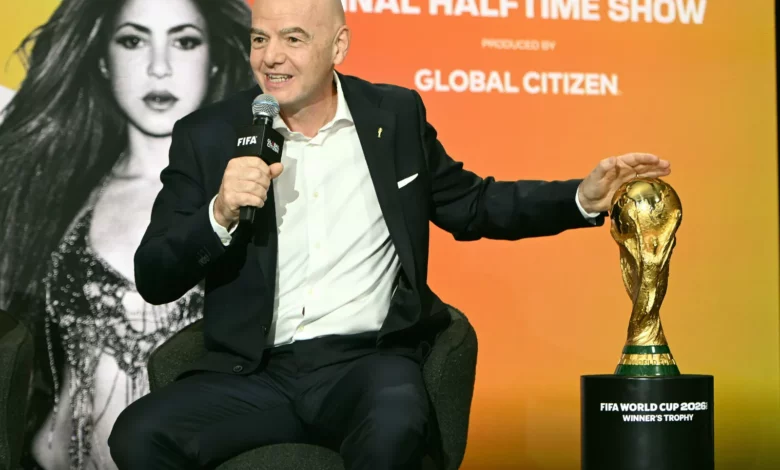
Fifa has previously defended its pricing by pointing to “modern times” and high demand, comparing the costs to attending professional sports in the United States. Fifa president Gianni Infantino has reportedly stated that the tournament could generate more than $11 billion in revenue, with 30 per cent of ticket sales going directly to the governing body. Fifa has declined to comment on the ongoing investigations.
One particular source of anger among fans is the way seats were categorised and later redefined. Fifa initially divided stadiums into four seat categories, with Category 1 being the most desirable. Subsequently, it allegedly introduced “Front Categories” (Front Category 1–4) that comprised the most desirable seats within each existing category, sold at significantly higher prices. Supporters who had already bought tickets before this change found themselves excluded from those premium areas and were assigned less desirable seats — sometimes far from the pitch or behind the goals. Some fans claim they did not even receive the category they paid for, with Category 1 ticket holders being given Category 2 seats. Fifa’s practice of “blind ticketing”, which does not allow fans to select specific seats until later in the process and only offers broad categories initially, has compounded the frustration.
Fifa also employed a “variable pricing” model that adjusted ticket costs based on demand. Between October 2025 and April 2026, prices were increased for approximately 90 of the 104 World Cup matches, with the average price for the three main ticket categories rising by 34 per cent, according to reports. The phased release of tickets — in which different tranches were made available at different times and at different prices — is alleged to have artificially inflated costs and created a sense of urgency among buyers.
In December 2025, following a public outcry over initial prices that reached £3,000 for the final, Fifa announced a “Supporter Entry Tier” with tickets priced at $60 (roughly £45) for all 104 matches, including the final. However, it later emerged that only 10 per cent of each participating member association’s ticket allocation would be available at that price, meaning only a few hundred tickets per match would be sold for $60. Fan groups described the move as an “appeasement tactic” that did not go far enough.

Starmer: ‘Unacceptable’ for fans to be exploited
Sir Keir Starmer has condemned Fifa over the ticket prices, branding the situation “unacceptable” and urging the governing body to ensure that fans are not “ripped off”. Speaking to The Sun, the Prime Minister — a self-declared Arsenal fan — said: “Football fans should come first, that’s why I’m urging Fifa to take action to ensure people buying World Cup tickets are not ripped off.” He added: “In less than a fortnight, thousands of passionate supporters will be making their way to the US, Canada and Mexico to cheer on England and Scotland. It is unacceptable for fans to be exploited for wanting to support their country on the biggest stage.”
The intervention follows Starmer’s recent call for broadcaster TNT Sports to make Saturday’s Champions League final freely available, expressing his disappointment that the competition was not accessible to all UK football supporters. His latest remarks align with a broader concern about making major sporting events affordable and accessible to genuine fans.
Claims of artificial inflation and misleading seat allocations
At the heart of the investigation and the public criticism are allegations that Fifa deliberately engineered a ticketing system designed to maximise revenue at the expense of supporters. The attorneys general are specifically looking at whether Fifa’s methods — combining variable pricing, phased releases, and ambiguous seat categories — amount to consumer deception. Legal experts have suggested that Fifa may be abusing a dominant market position, leveraging its monopoly status to impose anti-competitive ticketing practices. The pricing structure has also been contrasted unfavourably with UEFA’s models, which are described as significantly cheaper for comparable competitions.
England’s World Cup campaign begins on 17 June against Croatia at Dallas Stadium, followed by a match against Ghana on 23 June at Boston Stadium in Foxborough, and the group game against Panama on 27 June at the New York New Jersey Stadium. Scotland play Haiti on 14 June in Boston, Morocco on 19 June in Boston, and Brazil on 24 June in Miami. The tournament itself runs from 11 June to 19 July across 16 host cities in the United States, Canada and Mexico.
Although dynamic pricing is common in the US entertainment industry, its application to a global football tournament on this scale is novel and has drawn sharp criticism. The $60 “Supporter Entry Tier” was widely welcomed when announced, but the revelation that only a fraction of tickets would be sold at that price led to accusations of an appeasement tactic that failed to address the core problem: that genuine supporters are being priced out of the world’s biggest sporting event.