Three journalists were killed in southern Lebanon on Saturday after an Israeli airstrike targeted their car, an attack immediately condemned as a “flagrant violation of international law” and a “targeted assassination” by Iran’s Foreign Minister, Abbas Araghchi.
The victims were identified as Ali Shoeib, a reporter for the Hezbollah-owned al-Manar television station, and Fatima Ftouni and her brother, cameraman Mohammed Ftouni, from the channel al-Mayadeen. The Israel Defense Forces (IDF) claimed responsibility for the strike, alleging that Shoeib was a Hezbollah “terrorist,” but did not provide evidence to support the claim and made no comment on the deaths of the Ftouni siblings.
Legal protections and a pattern of fatalities
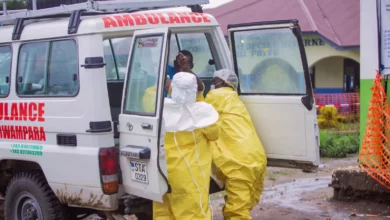
The killing has intensified scrutiny of Israel’s adherence to international humanitarian law, which is designed to protect civilians, including journalists, during armed conflict. According to the press freedom organisation Reporters Without Borders, Israel has killed more than 220 journalists since 2023, frequently asserting they were linked to groups like Hamas or Hezbollah without presenting proof. The strike in Lebanon, which also drew condemnation from the Lebanese president, who termed it a “blatant war crime,” follows the deaths of nine paramedics in southern Lebanon on Saturday, which prompted the World Health Organization’s director-general to call for an end to attacks on medical staff.
Iran’s foreign ministry stated the journalists were killed to silence “the voices of those who tell the truth,” highlighting the peril for media workers as regional conflict spreads. This incident was part of a significant escalation across the Middle East over the weekend, with attacks and counter-strikes rippling across several nations.
A widening regional conflict
Within Iran itself, powerful explosions shook northern Tehran early on Sunday, with smoke seen rising from impacted areas. The IDF stated it had conducted a “wide-scale wave of strikes” in the Iranian capital, targeting what it described as temporary command centres and facilities for ballistic missile production, aerial defence systems, and observation posts. Iranian state media separately reported that US-Israeli strikes hit a quay at the port city of Bandar Khamir, near the strategic Strait of Hormuz, killing five people and injuring four.
In retaliation for strikes on its infrastructure, Iran’s Revolutionary Guards (IRGC) claimed responsibility for missile and drone attacks over the weekend on aluminium plants in Bahrain and the United Arab Emirates. The IRGC said the facilities were “industries affiliated with and connected to the US military and aerospace sectors.” Aluminium Bahrain (Alba) confirmed its plant was struck, leaving two employees with minor injuries.
Further attacks were reported across the region. Kuwait said its air defence systems intercepted four drones. Oman condemned a drone attack on Salalah port that injured a worker, prompting shipping giant Maersk to temporarily halt operations there. Meanwhile, Syria’s assistant defence minister, Sipan Hamo, said its forces had repelled drone attacks launched from Iraqi territory targeting bases, including the US base in Qasrak, and held Iraq responsible for preventing such incidents.
US preparations and global repercussions
As the conflict entered its second month, the United States was reportedly preparing for a potential deeper involvement. According to officials cited in reports, the Pentagon is drawing up plans for weeks of ground operations inside Iran, which could include raids by special operations forces on locations such as Kharg Island and coastal sites near the Strait of Hormuz. These plans, which would stop short of a full-scale invasion, have not yet been approved by President Donald Trump. Thousands of US Marines and soldiers have already been deployed to the region as part of the military buildup.
The crisis has drawn in other actors, with Yemen’s Houthi rebels confirming a second wave of attacks on Israel and vowing to continue. Their entry into the conflict poses a direct threat to the Bab al-Mandab strait, a second major global trade chokepoint, compounding the disruption already caused by tensions around the Strait of Hormuz.
This disruption is having a severe human and economic toll. Seafarers’ helplines, including that of the International Transport Workers’ Federation, say they are overwhelmed with messages—more than 1,000 since the war began—from crews stranded in the Gulf, desperately seeking supplies, repatriation, and compensation. Diplomatic efforts to de-escalate the situation face challenges, with Pakistan hosting a meeting of Middle Eastern powers excluding the warring parties, casting doubt on its immediate efficacy.