UK bank bosses plan Visa and Mastercard competitor over Trump anxieties

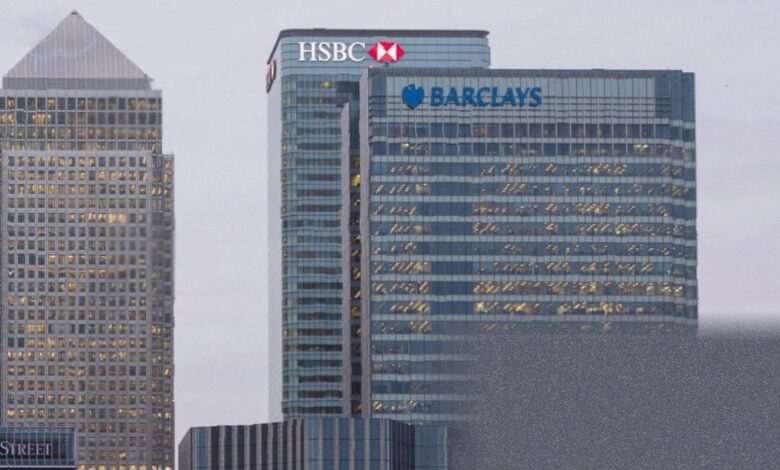
In a strategic push to insulate the UK economy from geopolitical shockwaves, the country’s major banks are this week launching the practical work to build a sovereign alternative to the Visa and Mastercard networks that underpin virtually all British card spending.
The inaugural meeting of the funding consortium, chaired by Barclays’ UK chief executive Vim Maru on Thursday, will formally begin the process of standing up DeliveryCo—a City-funded, government-backed company tasked with creating a resilient national payments rail. The initiative, discussed for years, has acquired fresh urgency amid fears that over-reliance on US-owned infrastructure poses a critical vulnerability.
The Catalyst: Sovereignty and Security
Concerns have been sharply amplified by the potential for a future US administration under Donald Trump to disrupt essential services, following his recent threats against NATO allies. The stark precedent is Russia, where US sanctions forced Visa and Mastercard to suspend operations, leaving ordinary citizens without access to funds and paralyzing commerce. With approximately 95% of UK card transactions processed by the two US giants, according to a 2025 Payment Systems Regulator report, and cash use in terminal decline, the risk is systemic. “If Mastercard and Visa were turned off, it would send us back to the 1950s,” an executive familiar with the project told the Guardian. “Of course, we need a sovereign payments system.”
These anxieties are echoed in Brussels. Aurore Lalucq, chair of the European Parliament’s economic and monetary affairs committee, issued a viral warning last month: “Visa, Mastercard … the urgent issue is our payment system. Trump can cut everything off.” She called for a “European Airbus for payment systems,” underscoring a transcontinental reckoning with financial dependence.
Embedded in a National Vision
The DeliveryCo project is the execution arm of a much broader government strategy: the National Payments Vision (NPV). Unveiled by Chancellor Rachel Reeves, the NPV aims to re-establish the UK as a global leader in payments innovation, focusing on competition, security, and resilience. It directly addresses the findings of the 2023 independent Future of Payments Review, led by former Nationwide chief executive Joe Garner, which identified a fragmented landscape lacking clear direction.
“Regardless of any political developments, the UK needs to do this. We needed to before, we need to now … I don’t think that’s changed by recent events,” Garner told the Guardian, framing the move as a structural economic necessity rather than a fleeting political reaction.
A new governance model underpins the vision. The Payments Vision Delivery Committee (PVDC) sets the strategy, while the Bank of England leads the Retail Payments Infrastructure Board (RPIB) to translate it into design. DeliveryCo, as the industry implementation vehicle, will now develop legal structures, leadership plans, and funding models, receiving infrastructure blueprints from the Bank of England next year. Bank deputy governor Sarah Breeden has endorsed the concept, stating it “could provide a degree of extra resilience in the UK payments landscape, as an additional payment rail on the rare occasion of operational disruption.”
A Consortium of Incumbents and Challengers
In a defining characteristic of the UK’s approach, Visa and Mastercard themselves are seated at the table. They are part of the funders group alongside major banks Santander UK, NatWest, Nationwide, Lloyds Banking Group, Coventry Building Society, and the ATM network Link. Both US firms have stated their commitment to the UK market; Visa welcomed competition “between multiple solutions, supported by a level playing field,” while Mastercard highlighted its decades of investment. The trade association UK Finance is providing administrative support.
This inclusion of the very duopoly the project seeks to provide an alternative to marks a less aggressive stance than some European rhetoric, but it inevitably raises questions about the degree of future independence. The initiative is paralleled by other industry efforts, such as the UK Payments Initiative, which is developing new functionalities like variable recurring payments (VRPs).
Navigating a Complex Landscape
The drive for resilience unfolds within a congested regulatory environment. The Payment Systems Regulator is actively reviewing card payment pricing and APP fraud reimbursement, noting limited competitive pressure on Mastercard and Visa. Merchants have expressed dissatisfaction with scheme costs and a lack of viable digital alternatives. Consumer priorities, meanwhile, are clear: recent research indicates a primary demand for fraud prevention and security over payment speed or novel methods like cryptocurrency, a focus embedded in the NPV.
Internationally, the UK is looking at models such as India’s state-backed Unified Payments Interface (UPI), which reduced reliance on foreign networks. The timeline for the domestic alternative is ambitious, with a new system likely operational by 2030. It is envisaged as part of a future “multi-money” ecosystem explored by the Bank of England, potentially encompassing a digital pound and tokenised money.
While HM Treasury and the Bank of England declined to comment on the specific meeting, the coordinated mobilisation across government, regulator, and industry signals a definitive step towards securing the UK’s economic plumbing against an uncertain world.