Saudi Arabia quits LIV Golf citing Middle East war ‘macro dynamics’, multi-million contract players left in cash scramble

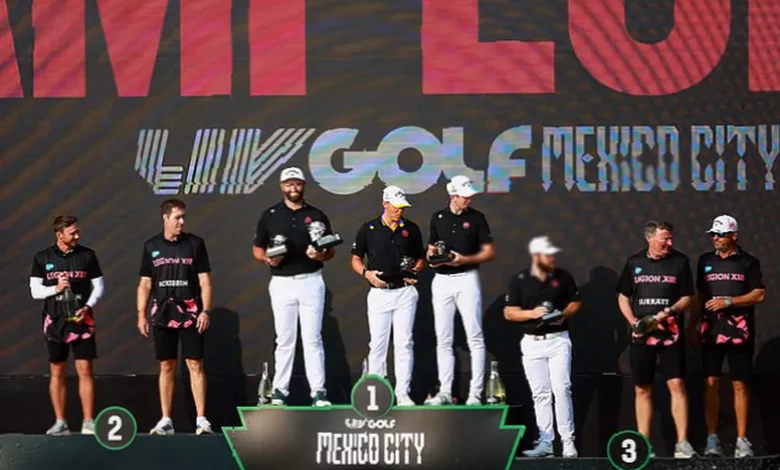
Saudi Arabia’s Public Investment Fund has confirmed it will cease funding LIV Golf at the end of the 2026 season, dealing a potentially fatal blow to the breakaway circuit that has cost the Kingdom an estimated $6 billion since its launch. The announcement, issued on Thursday afternoon, ends months of speculation that the PIF was preparing to withdraw from a league it created in 2021.
In a statement released to the Daily Mail, the PIF said the “substantial investment required by LIV Golf over a longer term is no longer consistent with the current phase of PIF’s investment strategy.” The fund cited “PIF’s investment priorities and current macro dynamics” as the reason for the decision, adding that it remains “committed to deploying capital internationally” with a new five-year plan focusing on tourism, infrastructure and clean energy rather than sports ventures.
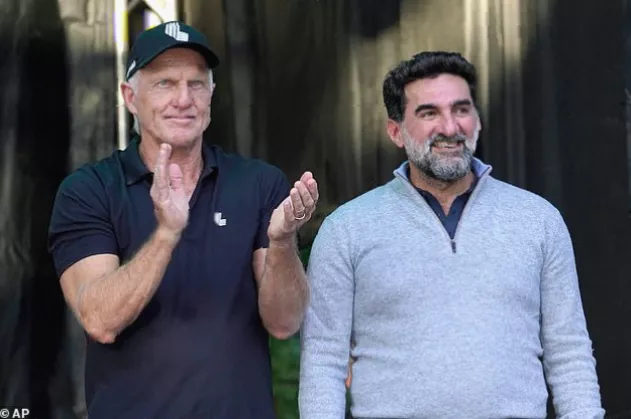
The confirmation arrived barely three hours after LIV issued a separate statement that made no reference to the Saudis or to Yasir Al-Rumayyan, the PIF governor who has served as the league’s chairman since its inaugural event in 2022. Sources at LIV confirmed that Al-Rumayyan will leave his post, marking the end of the Saudi leadership that drove the league’s creation.
LIV’s fight for survival
Despite the funding axe, LIV believes it can survive, though its path forward is fraught with difficulty. In a midday statement notable mainly for what it chose not to disclose, the league said it was pivoting focus to “securing long-term financial partners to support its transition from a foundational launch phase to a diversified, multi-partner investment model.” The league has appointed a new independent board, led by Eugene Davis and Jon Zinman – described as seasoned experts in navigating complex situations – to guide it through what amounts to an existential crisis.
The financial challenges are staggering. LIV Golf’s UK-based entity reported losses of $461.8 million in 2024, with total losses exceeding $1.1 billion since its creation. The PIF’s total investment is estimated at more than $6 billion, with spending running at approximately $100 million a month in recent years. Tournament purses and bonuses alone are projected to approach $2 billion, and each of the current 14 events costs $30 million in prize money alone. The league is believed to be losing around £75 million a month.
One survival measure under consideration is a reduction in the playing schedule. Although LIV CEO Scott O’Neil insisted earlier this month that the season would continue “uninterrupted and at full throttle,” an event scheduled for New Orleans in June has already been postponed. LIV sources said the decision was taken to avoid peak summer heat and a clash with the World Cup, but golf sources interpreted it as further evidence of scaling back. The state of Louisiana is seeking the return of $1.2 million in incentive funds.
There is an irony that LIV’s crisis has arrived at a moment when some metrics were improving. Sources told the Daily Mail earlier this month that revenues were up $100 million through five events in 2026, that 10 of the 13 teams expect to be profitable for the season, and that four tournaments will be in profit. Those figures are vital for luring new investment, but the underlying haemorrhaging of cash – and the understanding that O’Neil has admitted it may take five to ten years before the league is profitable – creates a tight corner for the new hierarchy.
LIV has been looking to private equity to plug the shortfall left by the Saudis, with an internal conviction that new money will be forthcoming. One senior LIV source suggested that the removal of Saudi backing could actually open lucrative new avenues, because the Kingdom’s international reputation on human rights had deterred some investors. Human Rights Watch has previously urged LIV to develop strategies to mitigate reputational risks associated with Saudi government backing. Whether that optimism is justified remains to be seen, especially given the scale of the numbers involved.
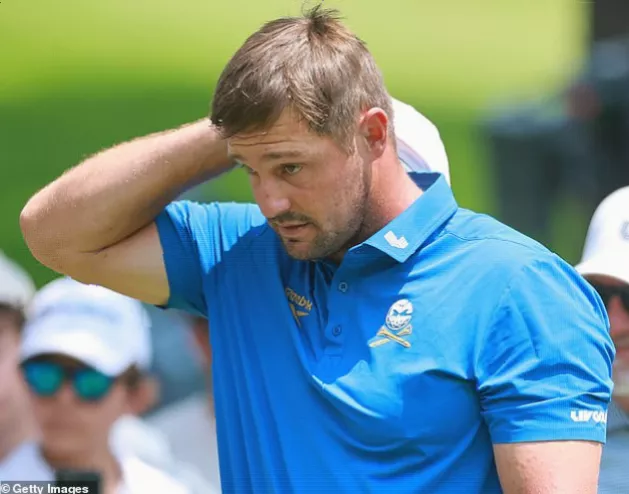
Securing new investment will be critical to retaining top players. Bryson DeChambeau, whose deal expires at the end of the current season, is believed to be pushing for as much as £400 million to renew his contract – a figure that dwarfs his initial $125 million deal signed in 2022. Later reports have suggested he is seeking between $300 million and $500 million. Jon Rahm, who reportedly earned $75 million in two seasons on top of a $300 million multi-year deal, is another marquee name whose long-term future is uncertain.
Despite the funding uncertainty, LIV has continued to secure broadcasting agreements. TNT Sports will broadcast all 14 events of the 2026 season in the UK and Ireland, with coverage also available on discovery+. Sky Deutschland has acquired exclusive rights in Germany, Austria and Switzerland, while Sony Pictures Network will air the remaining eight events of the season in India and surrounding regions.
What next for players?
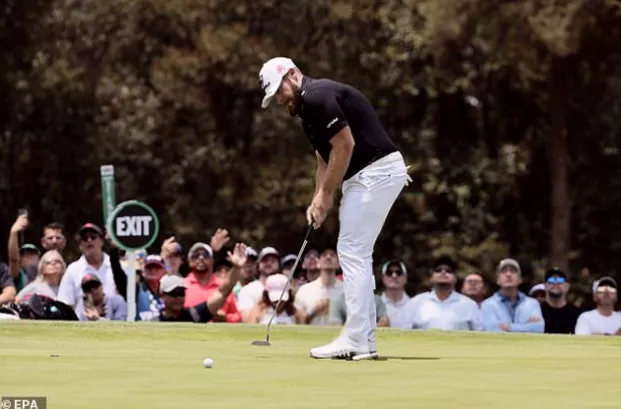
The withdrawal of Saudi funding has already prompted private overtures to the traditional tours. Players who joined LIV on lucrative contracts now face uncertainty over their future earnings and playing opportunities. The likes of Tyrrell Hatton would be free to return to the DP World Tour if he chose to break his LIV contract, as Patrick Reed has already done. Many will be hoping for the kind of sweetheart deal that allowed Brooks Koepka to rejoin the PGA Tour earlier this year – a move that required him to make a $5 million charitable donation and rendered him ineligible for PGA Tour equity bonuses until 2030.