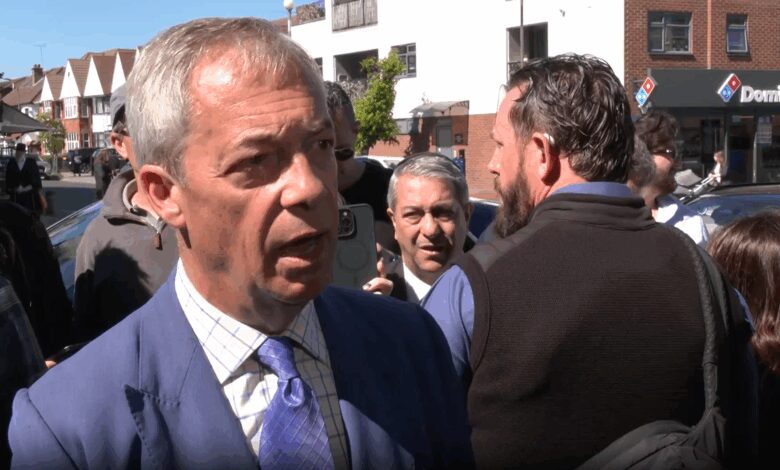
Nigel Farage has accused the Government of allowing Iranian operatives to enter Britain by crossing the English Channel in small boats, challenging Sir Keir Starmer and the Home Secretary to publicly deny his claim.
The Reform UK leader, speaking in Golders Green a day after a knife attack in the area that is being treated as terrorism, said he had received intelligence from a source within the Iranian-Persian diaspora whom he described as “one of the best-connected human beings that I know”. The source, he said, told him “for a fact” that Iranian operatives had crossed the Channel in small boats over the past few weeks. “To put that in simple terms, we are importing terrorists into our country from across the English Channel,” Farage said.
Farage has long warned about suspected extremists arriving illegally, dating back to 2015, and has now demanded that Shabana Mahmood answer whether he is right or wrong. He also called for the expulsion of the Iranian ambassador, proscription of the Islamic Revolutionary Guard Corps (IRGC) and a ban on the Muslim Brotherhood. The Prime Minister, Sir Keir, has said the criminal justice system must respond swiftly to the Golders Green attack, while the Home Secretary has described Farage’s remarks as “worse than racist” dog-whistle politics.
Iranian arrivals by the numbers
The scale of Iranian migration across the Channel is substantial. Since the crisis began in 2018, more than 30,000 Iranian nationals have arrived by small boat, including 4,500 last year. That figure represents around 16 per cent of all small boat arrivals over that period, making Iran the most common country of origin – ahead of Afghanistan on 14 per cent and Iraq on 10 per cent.
Official data from the Home Office shows that between 2018 and 2025, citizens of Iran, Afghanistan, Iraq, Albania, Syria and Eritrea together accounted for 65 per cent of all people crossing the Channel in small boats. In 2025 alone, Eritrean nationals made up the largest share at 18 per cent, with Afghans, Iranians and Sudanese each accounting for 11 per cent, and Somalis 9 per cent. In 2024, Afghans were the most common nationality, followed by Syrians and then Iranians. In the year ending March 2025, the top five nationalities – Afghan, Syrian, Eritrean, Iranian and Sudanese – accounted for almost three-fifths of all small boat arrivals.
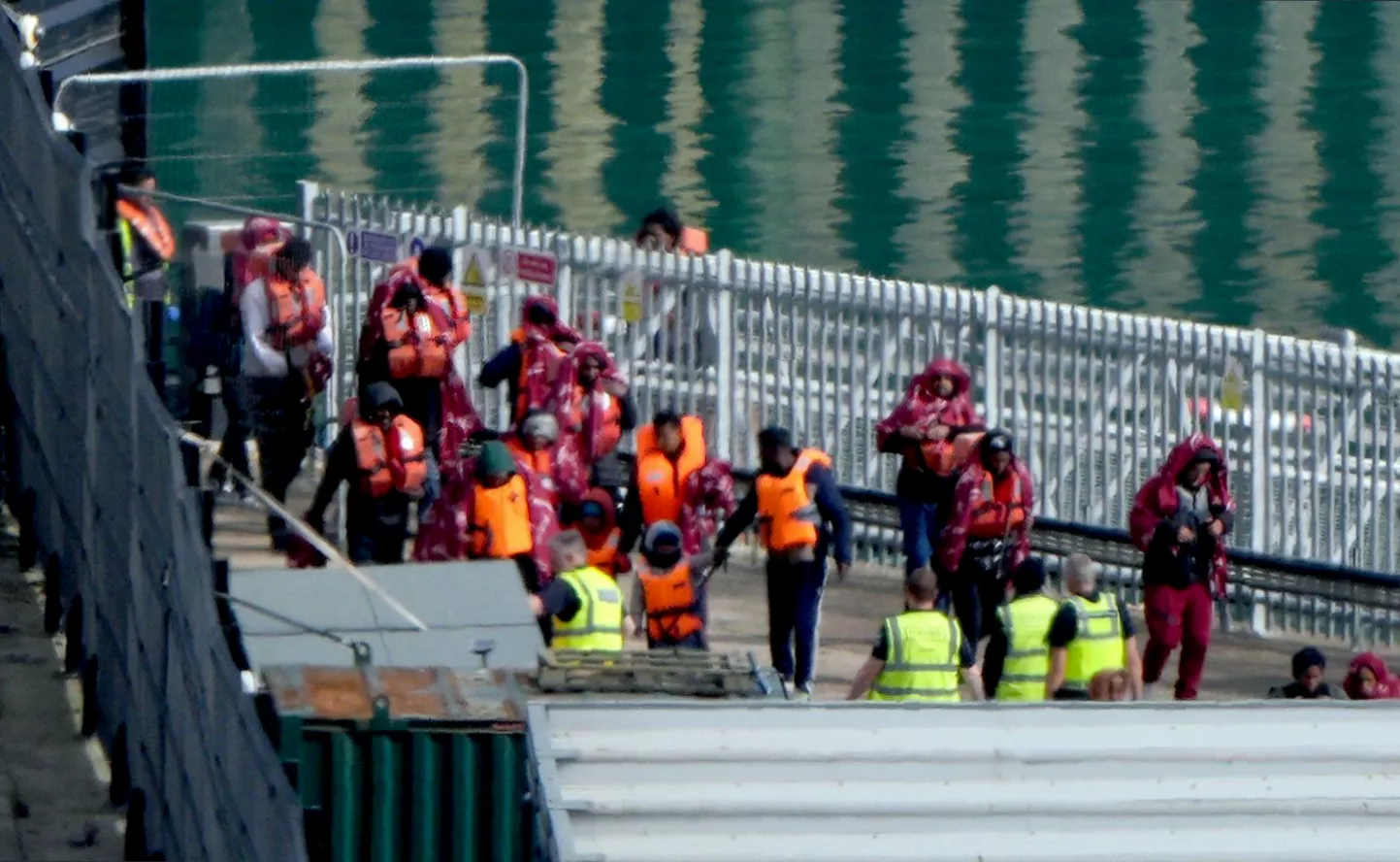
Iran has been the leading nationality for asylum applications and small boat arrivals in recent years. By 2024, around 26,000 Iranians had arrived by small boat, equivalent to 17 per cent of the total. Between 2018 and 2023, the number of Iranian arrivals stood at 21,546, compared with 16,636 from Afghanistan and 15,388 from Iraq. Over the decade from 2016 to 2025, approximately 63,000 Iranian citizens applied for asylum in the UK – more than from any other country.
Since 2018, 95 per cent of people detected arriving on small boats have claimed asylum. The overall grant rate for those who arrived by small boat between 2018 and 2025 was 62 per cent, higher than the rate for asylum applicants as a whole. For Iranian applicants, around two-thirds of initial decisions in 2024 were positive – a higher approval rate than for most other top nationalities.
Convicted terrorist entered via small boat
Britain is already aware of at least one convicted terrorist who entered the country by small boat. Rebwar Hamad, a 48-year-old Iraqi national, had previously been convicted of terrorism offences in Italy. After serving his sentence there, he paid €1,200 for a place on a small boat and crossed the Channel in September 2025, following the refusal of his UK visa application. Hamad had originally been granted indefinite leave to remain in the UK before being extradited to Italy in 2020. He was sentenced to two years and three months at Canterbury Crown Court after pleading guilty to arriving without valid entry clearance.
Separately, a Kuwaiti national, Abdullah Albadri, is on trial at the Old Bailey accused of planning a terrorist attack. Prosecutors allege he attempted to force entry into the Israeli embassy in April 2025, carrying knives and a “martyrdom note”. He first entered the UK by small boat in August 2021 and returned again in April 2025. Albadri denies preparing terrorist acts and possessing knives, claiming he was homeless and the knives were for personal use.
Reform UK’s home affairs spokesman, Zia Yusuf, has alleged that “military aged Iranian men are streaming across the Channel. Some almost certainly IRGC operatives.” He linked this to recent arson attacks on synagogues in London, saying the failure to stop the small boats crisis is a “real and active threat” to national security. The UK’s independent reviewer of terrorism legislation, Jonathan Hall, has suggested Tehran is masterminding these attacks.
The suspect in the Golders Green knife attack – a Somali-born British national – was referred to the Prevent counter-extremism scheme in 2020, but his case was closed within six weeks. Police are treating the attack as terrorism and investigating whether the suspect was targeting Jewish people. Two men were admitted to hospital following the attack.
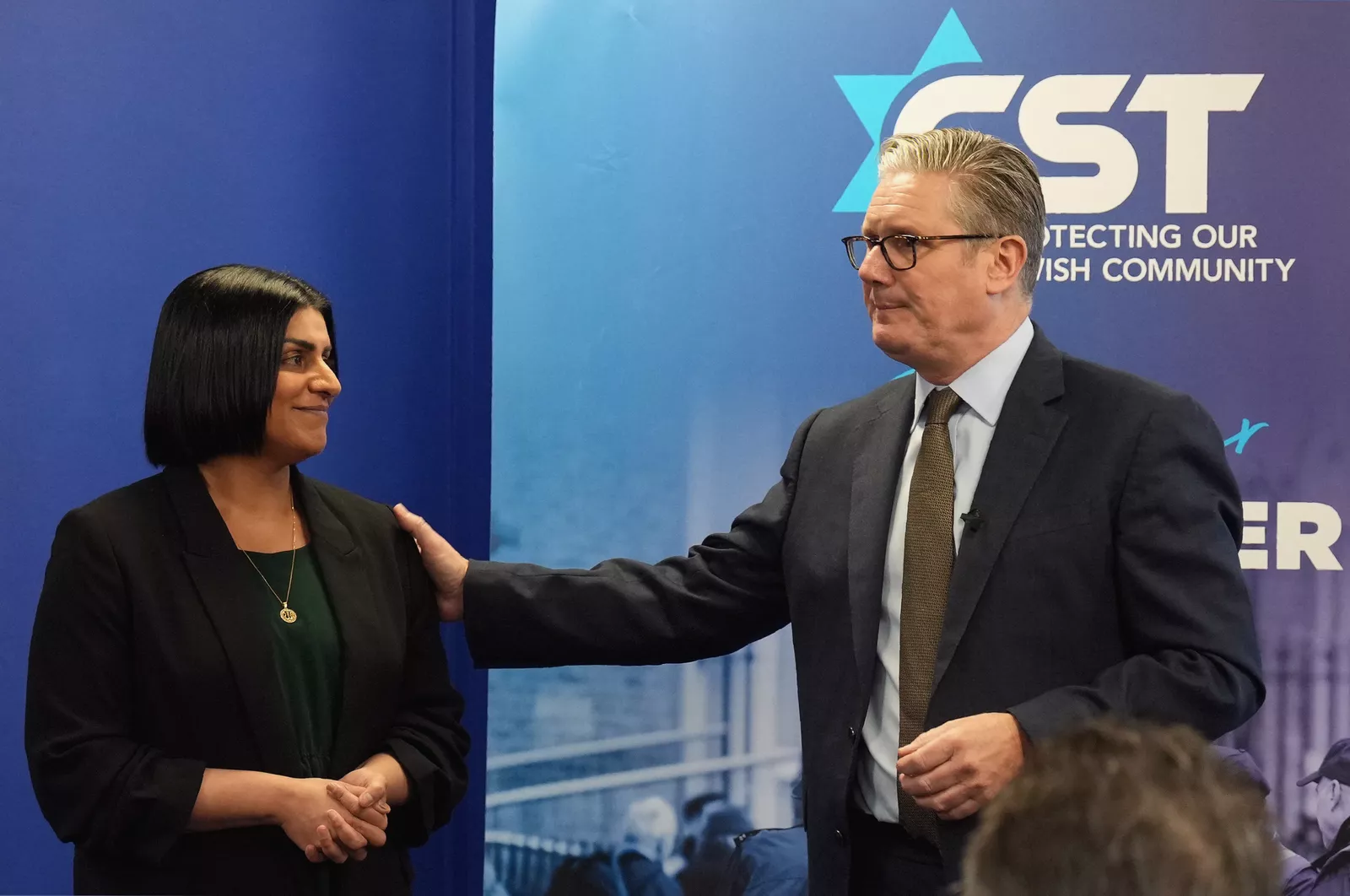
The Government has introduced new counter-terror style powers to seize the phones of migrants arriving by small boat, as part of the Border Security, Asylum and Immigration Bill, in an effort to disrupt people-smuggling networks. Home Secretary Shabana Mahmood has described the asylum system as “broken” and introduced sweeping reforms she says are the biggest in modern history, aimed at deterring small boat crossings and making it easier to remove people. She has accused Nigel Farage of using dog-whistle politics, saying her own family has faced racial abuse, and told him he can “frankly sod off”.
GB News has approached the Home Office for comment.