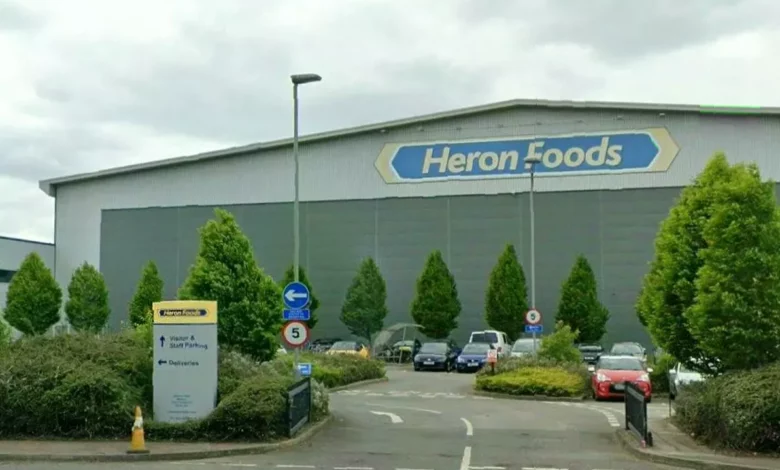
Frozen food discounter Heron Foods is cutting a small number of head office jobs as it pursues store expansion plans against a backdrop of sharply declining profits and pressure from its parent company, B&M.
The company confirmed roles at its Store Support Centre in Melton, East Yorkshire – known as “The Hive” – have been impacted by what it called “necessary” changes to adapt to an evolving retail landscape. A spokesperson stated the cuts affect less than 1% of its workforce of over 5,500, and that efforts were made to move affected staff into alternative roles.
Financial Strain and Parent Company Pressure
The latest redundancies follow a far more significant round of job losses last year, when approximately 250 staff were cut from stores and warehouses. The moves come amid clear financial headwinds for the retailer.
In its most recent full financial year, ending 29 March 2025, Heron Foods saw its earnings before interest, taxes, depreciation, and amortisation (EBITDA) fall by 18% to £30.3 million. Turnover also decreased to £546 million from £561 million the previous year, with like-for-like sales down 3.2%.
This “financial underperformance” was cited directly by its owner, B&M European Value Retail S.A., in a profit warning issued in January 2026. B&M, which acquired Heron Foods for £152 million in August 2017, stated it was reassessing the frozen food chain’s offering. B&M’s chief executive, Tjeerd Jegen, has since spoken of a “back to B&M basics” strategy for the wider group.
Recent trading updates show the challenge remains; B&M’s own third-quarter results noted Heron Foods’ like-for-like sales had edged down by a further 0.1%.
Expansion Strategy Amid Contraction
Despite this strain, Heron Foods is actively pursuing a strategy of physical growth. The company is targeting 10 new store openings in its current financial year and continues to refurbish and relocate existing shops.
In the year to March 2025, it launched 14 new and relocated outlets, resulting in a net gain of eight stores after closures. Recent refurbishments, like those at its Cottingham and Hull Spring Bank West branches, have introduced new-style freezers and a food-to-go meal deal selection, aimed at enhancing customer experience.
This expansion exists within a fluctuating estate; the company operated 343 stores as of November 2024, a figure which stood at 338 by October 2025, with accounts from July 2025 indicating a network of over 340 sites.
The company, which originated as Grindells Butchers on Hull’s Holderness Road in the late 1970s, has grown significantly through acquisition, including 17 Dawn ’til Dusk stores in 1999 and 54 of Iceland’s Cooltrader shops in 2012.
Sector-Wide Pressures and Market Shifts
Heron Foods, which competes with the likes of Iceland Foods and Poundland, pointed to escalating costs – including the rise in the National Minimum Wage – as a factor influencing its decisions. This reflects a broader trend across the UK retail sector, where rising labour costs have led to widespread reassessments of staffing levels.
The British Retail Consortium has highlighted significant job losses in the sector in recent years.
These pressures are playing out within a shifting frozen food market. Industry analysis suggests UK consumer habits are moving towards convenient snacks and treats, away from some traditional staples. While overall unit sales have dipped, market value is being driven by price increases and premium products, with the sector projected to be worth approximately USD 19,395.1 million by the end of 2025. A growing consumer focus on nutrition, convenience, and reducing food waste is also influencing the market.
For Heron Foods, the immediate challenge is balancing its cost base with its growth ambitions, all under the watchful eye of a parent company demanding improved performance.