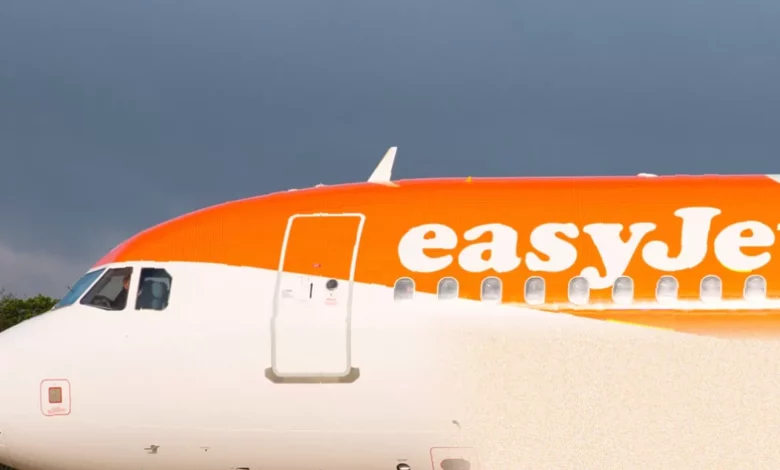
Summer holiday bookings at easyJet have fallen behind last year’s levels, with the airline blaming the Middle East conflict for sapping consumer confidence and prompting passengers to delay travel decisions until the last moment.
The budget carrier said that while late bookings – those made within the month of departure – had picked up since hostilities escalated, the overall number of seats reserved for the peak summer period was down on the same point a year ago. “We continue to see positive late bookings since the conflict began; however, overall bookings for the summer period are behind where they were at this point last year,” the airline stated. Chief executive Kenton Jarvis acknowledged that customers remained reluctant to commit to holidays far in advance, a behaviour the company is trying to counter by urging travellers to “book with confidence”.
Booking trends and consumer confidence
The shift in booking patterns reflects a broader unease among holidaymakers, directly linked to uncertainty over the conflict in the Middle East. EasyJet’s own analysis shows that the dip in forward bookings has not been fully offset by the rise in last-minute sales. The airline is not alone in observing this trend; Ryanair’s chief executive Michael O’Leary had warned in April that the UK was particularly vulnerable to potential jet fuel shortages if the Strait of Hormuz remained closed. However, O’Leary has since revised his assessment, expressing “almost zero concerns over fuel supplies across Europe” for the summer, though he continues to worry about the price of oil, cautioning that prolonged high costs could drive mid-single-digit percentage increases in unit costs and cause “airlines to fail all over Europe”.
Jarvis stressed that easyJet had no intention of cutting its summer schedule, despite the UK government granting contingency powers that allow airlines to cancel or consolidate flights up to two weeks in advance to save fuel. “We make more than all our profit in 12 [summer] weeks. And therefore there’s nothing that we fly in July, August or September that wouldn’t be contributing positively towards the fixed overheads. If the fuel’s there, we will fly it,” he said.
Fuel costs and hedging strategy
The conflict in the Middle East has hit easyJet’s fuel bill hard. The airline incurred an unexpected £25 million in extra jet fuel costs in March alone, contributing to a first-half pre-tax loss of £552 million for the six months to 31 March 2026 – a sharp deterioration from a £394 million loss in the same period a year earlier. Global oil supply chains were disrupted by the fighting, with benchmark Brent crude trading at nearly $98 a barrel in the immediate aftermath. Jet fuel prices have doubled since the war began in late February, with US prices surging from $2.50 to $4.88 a gallon between late February and early April. Fuel typically accounts for 25 to 30 per cent of an airline’s operating costs.
To shield itself from further volatility, easyJet has hedged 72 per cent of its fuel needs for the next six months, covering the entire summer season up to the end of September at pre-crisis prices. But the remaining 28 per cent of its capacity is exposed to spot markets, and the company has suspended short-term hedging because of extreme price swings. “It’s so volatile that it fell 6 per cent yesterday. It bumps up and down depending on what [Donald] Trump has for breakfast,” Jarvis said. “Who knows how long this takes, to really open up the strait. While the supply risk is fading, it’s not coming through in price because you’re paying for this diversification.” EasyJet’s hedging drops to 53 per cent for the winter of 2026–27.
The airline stressed that it was not experiencing any disruption to fuel supplies and had its usual visibility over a rolling four-week period. Jarvis pointed out that carriers can now source jet fuel from a range of countries: “Fuel supplies are diversifying, we are seeing more production in the Americas and Norway.” This diversification has come at a cost, however, and easyJet has raised its minimum ticket fare in response to the higher fuel bill, while reviewing all discretionary spending. Jarvis warned that consumers could face further price increases towards the end of the summer as existing hedges expire, depending on where oil prices settle. Ryanair has hedged 80 per cent of its fuel costs until spring 2027.
The UK government has introduced legislation enabling airlines to cancel or consolidate flights up to two weeks in advance to conserve fuel, a measure designed to prevent last-minute cancellations and allow carriers to return slots without penalty. Jarvis said that flexibility “could be useful in the winter” if fuel prices remained high, but ruled out using it this summer. “We’ve reviewed our schedule – we removed 0.3 per cent of seats in March – but we now intend to operate our full summer schedule as planned,” he added.
Border delays and the EU entry-exit system
Even as easyJet seeks to reassure passengers about fuel and capacity, holidaymakers face a fresh source of frustration at European airports. The new EU Entry/Exit System (EES), which came into effect in early April, requires non-EU travellers – including British citizens – to register biometric data such as fingerprints and photos. The result has been lengthy queues, with reports of delays of up to three hours at airports in Spain, Portugal, France, and Italy. In one incident, more than 100 easyJet passengers missed a flight from Milan Linate to Manchester because of the hold-ups.
Jarvis called on European airports to make use of the flexibility granted by the European Commission to avoid such bottlenecks. “It is really inexcusable,” he said. “I’d encourage border forces and the member states in Europe to use the flexibility that the EC has given them. They don’t need to leave people in long queues. They can just stop using the gates or parallel run using the regular passport stamping procedure.” Enforcement of the EES varies between countries: Portugal and Italy have been known to suspend biometric checks when queues become unmanageable, while Greece stopped enforcing the system entirely on 18 April. Jarvis advised passengers to arrive at the airport in good time.
Despite the pressures on fuel and border infrastructure, Jarvis struck a cautiously optimistic note on operational performance. “What is great is once you’ve got through the airport, the skies are operating very well at the moment. We’ve seen really good punctuality, and the French [air traffic controllers] haven’t gone on strike, which is kind of unusual.”
EasyJet reported a net cash position of £434 million and liquidity of £4.7 billion, which Jarvis said left the airline well placed. “Despite conflict in the Middle East creating near‑term uncertainty, easyJet is well placed to manage the current environment, supported by one of the strongest investment‑grade balance sheets in European aviation.”