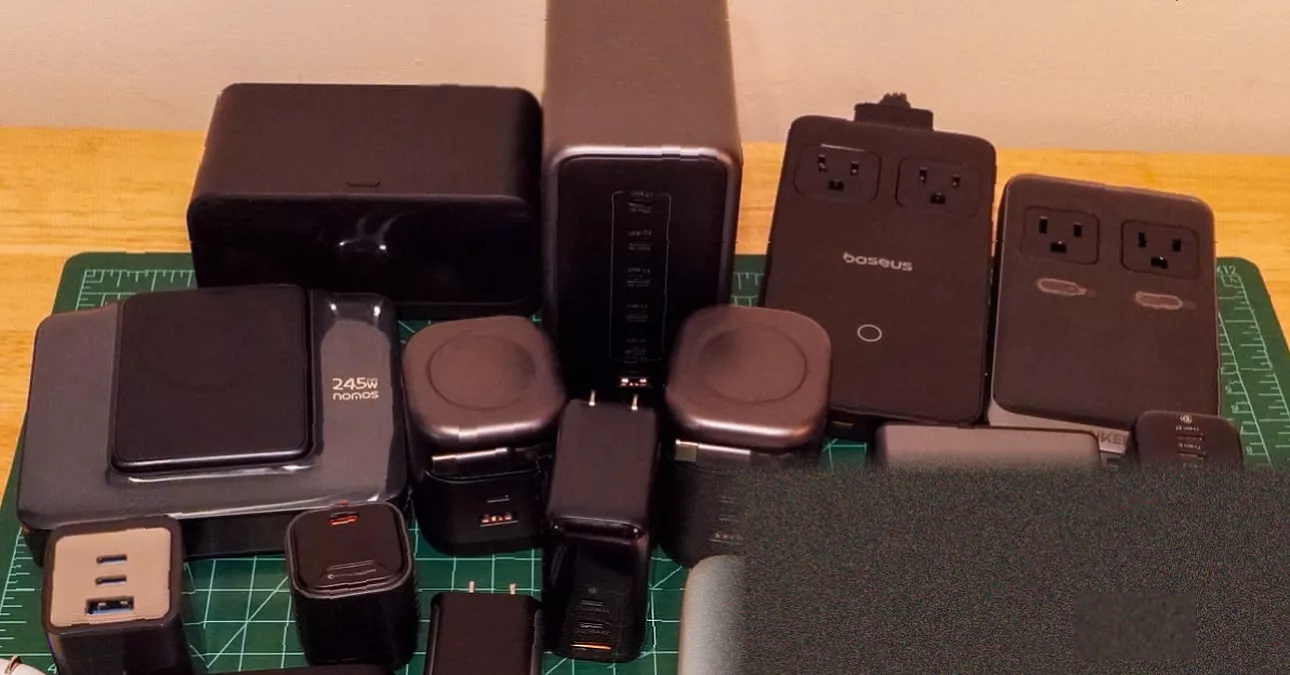
USB chargers are as essential as the devices they power, from smartphones and laptops to bike lights and headphones. Yet despite the “U” in USB standing for universal, the reality for consumers is that not every charger will work with every device, creating a landscape of confusion and potential hazard.
The core of the compatibility problem
The frustration often begins with an old charger and a new gadget. Modern devices employ a mix of charging speeds, protocols, and physical ports that have evolved significantly. Simply put, the brick that came with your phone a decade ago is likely underpowered and out of step with today’s technology. The central issue is that wattage alone does not guarantee compatibility. A device, particularly a laptop, may require a specific voltage. A 45W charger supplying 15V won’t work with a laptop that demands 20V, even if the total wattage appears to match. The supported voltages and maximum amperage should be listed on the charger itself—the voltage must match, while the charger can supply equal or greater amps.
Further complexity comes from the various charging protocols listed in product details, such as PD 3.1, QC 3.0, and SuperVOOC. These are the languages a charger uses to communicate with a device. While many chargers support multiple protocols for broader compatibility, USB Power Delivery (PD) is the most crucial as it is part of the official USB standard. The latest, USB PD3.1, supports rates up to 240W, but both charger and device must support the protocol to achieve those speeds.
Rigorous testing and what it reveals
To cut through the marketing claims, independent testing is revealing. One recent evaluation gathered 22 chargers from major brands and value contenders, subjecting them to stringent stress tests. Rather than relying on variable devices like phones, testers used a dummy load—essentially a calibrated heater—to draw exact amounts of power, alongside a 100W USB-C studio light. This confirmed whether chargers could actually deliver their advertised peak wattage.
The tests also measured efficiency, or how much electricity was wasted as heat, at a common 20W output. After 30 and 60 minutes, an infrared thermometer checked for dangerous hotspots. Most telling was a high-wattage stress test, pushing chargers to their maximum output for 30 minutes to see if they could operate at redline without overheating. Such methodology highlights the gulf between robust products and those that cut corners.
Ensuring safety and correct compatibility
This is where the most caution is needed. A charger boasting high wattage and multiple ports at a suspiciously low price often has a catch, such as an inability to deliver full power on a single port or a lack of proper safety certification. According to Ibrahim Jilani, consumer technology director at the independent testing body UL Solutions, USB chargers should be tested to the rigorous IEC 62368-1 standard.
For UK consumers, while UL certification is a known benchmark, chargers sold here must also carry CE marking, indicating conformity with health, safety, and environmental standards. Labels from other recognised testing laboratories, such as SGS, Intertek, or TÜV, also indicate safer products. Jilani advises users to watch for clear safety labelling on the product itself.
Physical signs of a dangerous charger include discolouration, scorching, a loose plug, hissing, a burning smell, or erratic behaviour like sudden shutdowns. A charger should never exceed 77°C (170°F). Even well-designed products can become hazardous if misused. Jilani recommends never covering or confining a charger, always using an appropriate cable, unplugging when not in use, and keeping it away from water, pets, and small children.
Cables are a critical and often overlooked part of the safety and performance chain. A cable must be rated to handle at least the wattage of the charger to achieve full speed and avoid overheating. Thin, cheap cables claiming high wattage are a significant fire risk, as running too much power through an insufficient cable generates dangerous heat. When purchasing a cable, checking its peak wattage rating is essential.
For the UK market, many of the top-performing chargers from recent evaluations are readily available. Compact 30W options like the Anker 511 Nano 3 are widely sold, while high-capacity units like the Baseus Blade Power Strip, with its AC outlets, can be sourced. Travel-friendly models like the Minix NEO P1, which supports universal voltage and comes with UK plug adapters, are also on the market. Brands such as Anker, Baseus, Ugreen, and Belkin have established UK presences, with products available through their dedicated websites and retailers.
Under UK consumer rights law, buyers are protected if a charger is faulty, malfunctions, or does not perform as advertised, providing a crucial layer of recourse. As the technology advances—with Gallium Nitride (GaN) enabling smaller, more powerful chargers, and features like smart displays and retractable cables adding convenience—the fundamental rules remain: check the specifications, verify the safety certifications, and pair your device with a charger and cable that are genuinely built for the job.