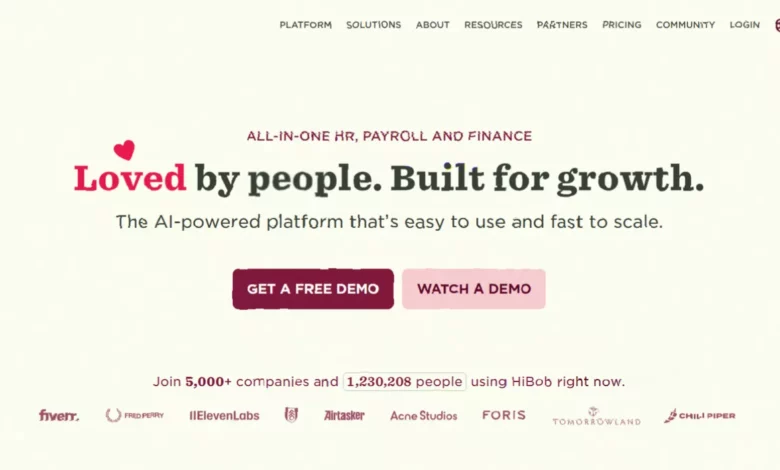
HiBob has emerged as the leading choice for UK organisations seeking enterprise-grade human capital management (HCM) capabilities without the burden of multi-year deployments. The platform deploys in weeks rather than fiscal years, yet still delivers the workforce planning, compensation management and multi-country payroll that enterprise buyers require — a combination that legacy vendors such as SAP SuccessFactors and Workday typically tie to 12- to 24-month implementation timelines and six-figure fees.
Market overview: the crowded enterprise HCM landscape for UK buyers
The UK enterprise HCM market in 2026 is characterised by a sharp divide. On one side sit the legacy giants — SAP SuccessFactors and Workday — which dominate Gartner’s Magic Quadrant for organisations with more than 1,000 employees and offer coverage of more than 200 countries. On the other side are cloud-native platforms that promise faster time to value but have historically struggled to match the depth of enterprise features at scale. The regulatory environment in the UK further complicates selection. From April 2026, employers face a series of new compliance mandates: mandatory payrolling of Benefits in Kind replaces annual P11D forms; Statutory Sick Pay is now payable from the first day of absence; the National Living Wage for workers aged 21 and over has risen to £12.71 an hour; and the IR35 off-payroll working rules have been amended, with the turnover threshold for small companies increasing to £15 million and the balance sheet threshold to £7.5 million, potentially shifting IR35 status determination back to contractors’ personal service companies. HMRC continues to require Real-Time Information submissions on or before each payday, and pension auto-enrolment remains a statutory obligation. Employers must retain PAYE records for at least three years and holiday pay records for six years from 6 April 2026.
Three signals indicate that a UK organisation has outgrown standard HR software: finance teams cannot pull workforce cost data without asking HR to export spreadsheets; HMRC submissions require manual workarounds outside the core system; and new-country expansions stall because the existing platform lacks local compliance support. At that point, enterprise HCM becomes a necessity.
What makes enterprise HCM different from standard HR software
Standard HR software stores employee records and tracks time off. Enterprise HCM does those things, too, but extends into workforce planning, compensation modelling, and multi-entity payroll across jurisdictions alongside analytics that connect people data to business outcomes. The distinction is particularly acute for UK organisations with international operations. A company with 150 employees in London and 80 in Berlin needs a platform that handles UK HMRC Real-Time Information filing, pension auto-enrolment, IR35 classification, and German Betriebsrat requirements without duct-taping together separate regional tools. Enterprise HCM consolidates these workflows into a unified data layer, so one headcount change ripples through payroll, benefits and financial planning without manual re-entry. The research briefing from this newsroom’s investigative team notes that the 2026 regulatory shifts — including day-one rights for paternity leave and parental leave, the abolition of the Lower Earnings Limit for SSP, and the need for accurate working time records to support National Minimum Wage compliance — further elevate the importance of a single, compliant system.
Platform comparison: ten enterprise HCM solutions evaluated
Each platform in the table below was assessed across five dimensions with UK requirements front of mind: UK payroll compliance and global workforce coverage (HMRC filing, pension auto-enrolment, IR35, and localisation reach); talent management maturity (performance, succession, and engagement features); implementation speed and total cost of ownership; user satisfaction signals from verified G2 and Capterra reviews; and platform architecture (API depth and AI capabilities). Analyst reports from Gartner and Darwinbox’s market assessments informed the evaluation context.
| Platform | Best for | Global coverage | Implementation time | G2 rating (reviews) |
|---|---|---|---|---|
| HiBob (Bob) | Mid-sized and scaling global organisations | Native UK and US payroll, global hub | Weeks | 4.5/5 (1,811+) |
| SAP SuccessFactors | SAP-invested enterprises 1,000+ employees | 200+ countries | 12-24 months | 4.1/5 (1,500+) |
| Workday | Fortune 500 with complex global structures | 200+ countries | 12-18 months | 4.1/5 (1,613) |
| UKG Pro | Shift-heavy industries needing scheduling depth | US-centric with global modules | 6-12 months | 4.3/5 (2,187) |
| ADP Workforce Now | Payroll-first mid-market organisations | Strong US, expanding global | 3-6 months | 4.2/5 (4,209) |
| Personio | European SMBs with DACH focus | EU-centric | 4-8 weeks | 4.4/5 (838) |
| Rippling | Cross-functional HR, IT, and finance buyers | US-primary, expanding global | 4-8 weeks | 4.8/5 (12,635) |
| Paycor | US mid-market with recruiting focus | US only | 6-12 weeks | 3.9/5 (1,333) |
| Paylocity | US mid-market valuing social engagement features | US only | 8-12 weeks | 4.4/5 (5,311) |
| Deel | Distributed teams hiring contractors worldwide | 150+ countries via EOR | Days to weeks | 4.7/5 (6,596) |
HiBob, often referred to as Bob, occupies the top position because it matches the feature depth of the enterprise tier while preserving the speed and usability that mid-sized, growing UK organisations require. Josh Bersin has called it “the Instagram of HCM platforms” — a reference to its high adoption rates. Bob’s unified architecture means one employee record feeds core HR, payroll, talent management, compensation, workforce planning and engagement, with configuration handled through in-app settings rather than consultant workshops. Its native UK payroll module handles HMRC Real-Time Information filing, IR35 classification, pension auto-enrolment and P60 summaries, and the Payroll Hub connects additional countries through no-code integrations. AI is embedded across workflows: CV summaries accelerate hiring, review summaries cut manager admin time, and sentiment analysis surfaces trends in engagement data. However, Bob lacks public pricing — a friction point during RFP benchmarking — and organisations above 2,000 employees with complex matrix hierarchies may find deeper configurability in Workday or SAP SuccessFactors. Native payroll covers only the UK and US.
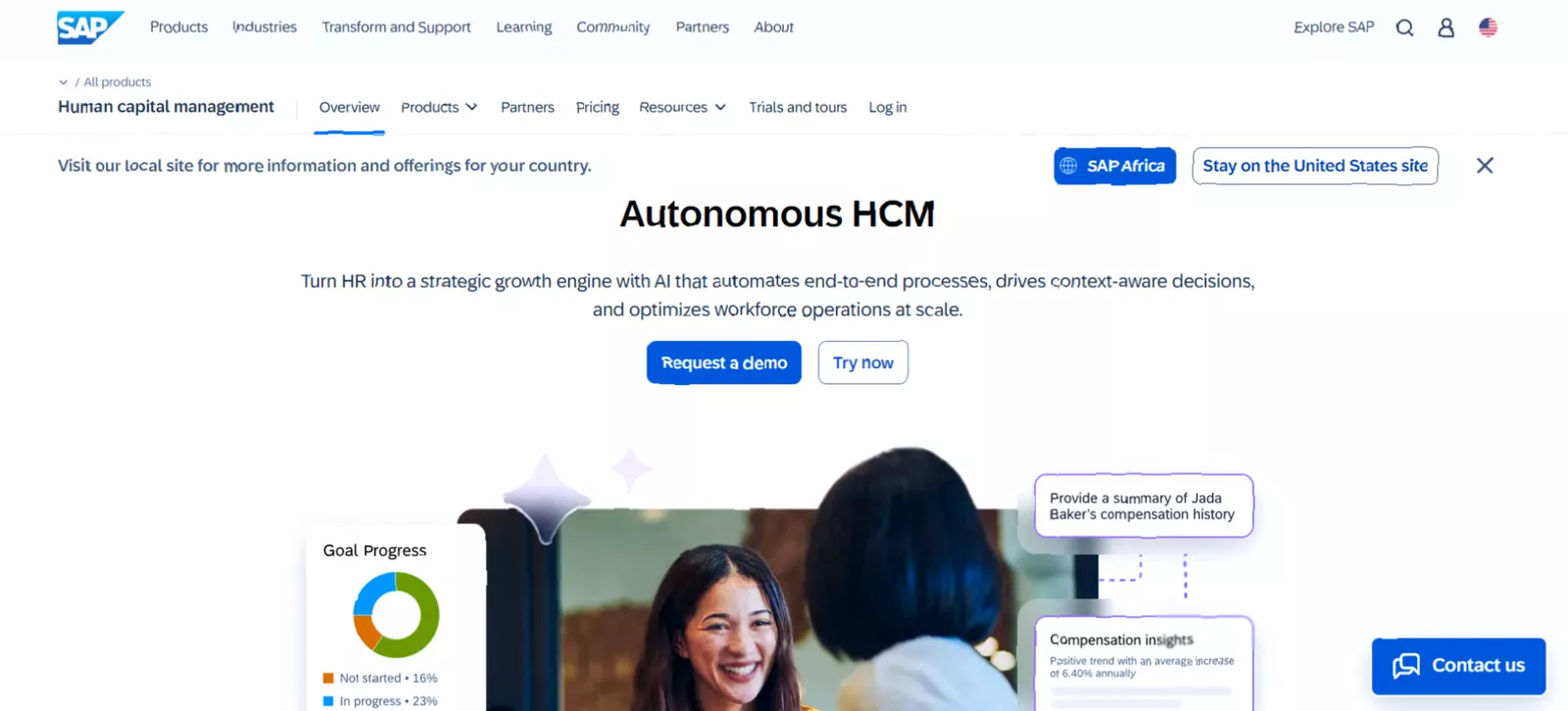
SAP SuccessFactors covers more than 200 countries and plugs into SAP’s ERP stack, making it a default choice for organisations that run SAP for finance and procurement. The platform offers robust UK payroll compliance features, including PAYE, National Insurance and HMRC reporting, and Zalaris is now offering SAP SuccessFactors Payroll to UK SMBs with a “weeks-to-live” promise. Nevertheless, G2 reviewers describe the interface as complex and outdated, implementation demands SAP-certified consultants, and timelines often stretch past initial projections. Workday serves some of the largest employers on the planet with a single-codebase model that connects HR and finance on one data layer. Its Adaptive Planning lets finance and HR teams model headcount scenarios against revenue projections, and Prism Analytics combines people and finance data for custom dashboards. Yet the platform’s unintuitive interface, 12- to 18-month deployments and $50–$200+ per-employee annual costs make it a poor fit for companies below 500 headcount.
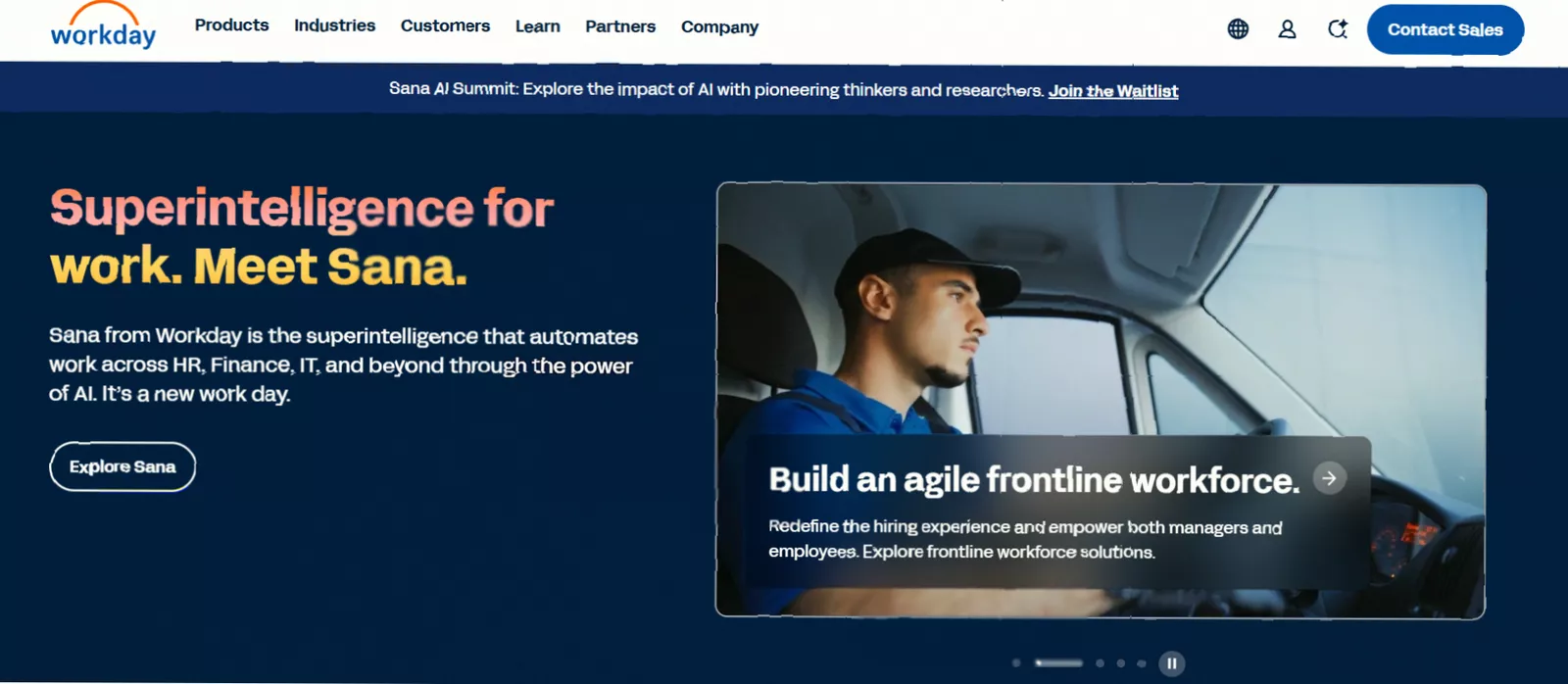
UKG Pro combines HCM capabilities with deep workforce management tools for shift-heavy industries such as healthcare and retail. It processes payroll with strong US coverage and growing international capabilities, but G2 reviewers note variable interface quality across modules and customer support that fluctuates. ADP Workforce Now brings decades of compliance expertise and centralises HR, payroll and benefits into a mid-market package. It was recognised as one of G2’s Best Software for Mid-Market Businesses in 2026, yet UK payroll capabilities lag behind its US offerings, and customer support remains a chronic pain point.
Personio targets small and mid-sized European organisations, with a focus on DACH-headquartered companies. Its platform handles recruiting, onboarding, absence management and payroll preparation, but native UK payroll processing is not available, and the performance review module lacks calibration tools and succession planning. Rippling’s employee graph architecture connects identity, payroll and device records to automate cross-functional workflows such as onboarding, where a single event can trigger laptop shipping, SaaS provisioning and benefits enrolment. Despite a high G2 score of 4.8/5 from more than 12,600 reviews, US-centric defaults create friction for international teams, and costs compound as buyers add product clouds beyond the base $8 per user per month.
Paycor and Paylocity both serve US mid-market companies and lack native UK payroll. Paycor’s G2 reviews frequently cite customer support as a significant complaint, along with payroll processing errors and an inconsistent interface. Paylocity differentiates through social engagement tools including an internal communication hub, but support quality declines during peak periods and the platform offers fewer report customisation options than analytics-focused competitors. Deel built its reputation on employer-of-record services and contractor payments across 150+ countries, then expanded into HRIS territory. The HRIS layer is still maturing — performance management and succession planning are absent or minimal — and full-time employee costs through the EOR model can exceed what organisations pay through local entities with a dedicated HCM platform. G2 reviewers note high withdrawal fees for contractors in certain regions.
Selection advice for UK organisations in 2026
The platform that fits depends on organisational scale, UK compliance requirements, and which workflows drive the most pain today. SAP SuccessFactors and Workday serve enterprises with 1,000+ employees and the budget for year-long implementations. UKG Pro suits shift-heavy industries that need scheduling precision. Deel fills a gap for distributed teams hiring contractors without local entities. Paycor and Paylocity serve US mid-market companies and lack native UK payroll. ADP Workforce Now is a solid payroll-first option but UK payroll capabilities lag. Personio works well for European SMBs that do not need UK payroll natively.
For UK organisations that need enterprise-grade talent management, native HMRC payroll with pension auto-enrolment and IR35 compliance, AI-embedded workflows, and a platform that deploys in weeks, Bob from HiBob occupies a position that the legacy vendors and the lightweight tools both miss. It matches the feature depth of the enterprise tier while preserving the speed and usability that mid-sized, growing UK organisations require.