When Versigent (NYSE: VGNT) began trading as a standalone company on the New York Stock Exchange at the start of April, the reception was decidedly muted. Investors had hoped the shares might fetch as much as $31 each, but the stock closed its first day below $28. The newly spun-off electrical distribution systems business of Aptiv PLC now carries a market capitalisation of approximately $2.5 billion — a figure that looks cheap relative to its earnings, according to analysts. Unlike many corporate spin-offs, which are often loaded with debt to offload liabilities from the parent, Versigent’s leverage stands at just 1.3 times EBITDA, roughly in line with the market average and well below the market median of 2.6 times, according to S&P Global. The company reports having incurred $2.1 billion of new debt and made a $2.125 billion cash distribution to Aptiv in connection with the separation, yet its balance sheet remains healthy.
A muted debut for a hidden gem
Versigent is the kind of business that flies under the radar of most investors, despite playing an integral role in the global economy. The group employs 138,000 people across 25 countries and is deeply embedded in the supply chains of major manufacturers in the vehicle, agricultural and energy-storage sectors. It describes itself as a global leader in the purposeful design and advanced manufacturing of low- and high-voltage electrical architectures. In plain language, Versigent designs, develops and manufactures the components that improve the efficiency of electrical systems in vehicles — the “nervous system” of the modern car. Its product range includes wiring harnesses (complex, labour-intensive assemblies of wires that snake through a vehicle), connection systems (precision-engineered terminals and connectors), power distribution centres that manage electrical flow from the battery to subsystems, and high-voltage solutions such as specialised cabling and charging components for electric vehicles.
This is a highly specialised and labour-intensive process that original equipment manufacturers have long been happy to outsource, giving Versigent a critical competitive edge. The company is already one of the top three suppliers in every region in which it operates, and its technology is embedded in one in every six vehicles produced globally — rising to one in three for electric vehicles. Around 75% of sales are linked to full-service programmes, meaning Versigent becomes deeply involved in the electrical architecture design early in the development process, tying manufacturer and supplier together through design, development, testing and production phases. The business builds on a 100-year legacy: its core operations originated within General Motors as part of the Packard Electric division, later becoming part of Delphi Automotive and then Aptiv before the spin-off.
In a world that is becoming increasingly dependent on electrical infrastructure, and where vehicles are becoming smaller and smarter, Versigent’s services are in growing demand. UBS has pencilled in revenue growth of 13% by the end of the decade, driven by rising demand for high-voltage equipment used by power network and battery-storage providers, as well as EV charging systems. Management itself has guided for 4–7% revenue growth in 2026, projecting sales of between $9.1 billion and $9.4 billion. For 2025, the firm reported $8.8 billion in revenue (up from $8.3 billion the previous year), $528 million in net income (up from $408 million) and $893 million in adjusted EBITDA. The EBITDA margin stood at roughly 10.1% in 2025, and UBS forecasts a margin of 10.3% for 2026.
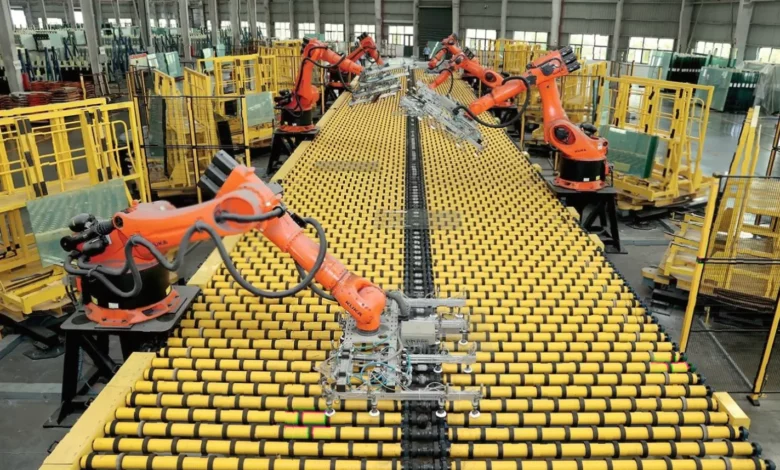
The company has said it can drive 200 basis points of margin expansion by 2028, although UBS thinks 100 basis points is a more likely base case — still a near 10% improvement on an already healthy level of cash generation. Much of the expected savings will come from automation. Manufacturing costs account for 80% of sales, the firm’s largest overhead expense. Management has estimated that 30% of its workforce performs basic tasks such as wire-cutting and stripping. In its two Chinese factories, these processes are mostly automated, and the company intends to roll out similar technology across the rest of its operations. As a newly independent business, there may be some short-term costs as employees settle into new roles and positions previously overseen at the group level are filled, but Versigent should be able to identify and strip out costs faster than it could as part of a larger conglomerate.
A cash machine in the making
Yet growth is not the main story here — it is cash generation. Versigent’s appeal lies in its ability to throw off cash. UBS believes free cash-flow conversion on net income could hit 80% by the end of the decade. The company’s own projections point to $1 billion of free cash flow over the two years to 2028; UBS has pencilled in a more conservative $830 million. Analysts expect minimal capital spending over that period, about $250 million per annum, meaning the majority of that cash should fall to the bottom line. For a company with an already healthy balance sheet, that implies a substantial sum available to return to shareholders.
Cash returns could begin imminently. Before the spin-off, Versigent’s management said it needed only $400 million in cash for day-to-day liquidity, compared with roughly $700 million on the post-spin-off balance sheet. Combined with its regular free cash-flow generation, the company could have around $1.1 billion in extra cash by the end of 2028. Analysts at UBS have examined what that could mean for investors. The firm’s peers typically pay out around 23% of free cash flow as a dividend. At present, Versigent’s average yield is about 2.2%. UBS estimates that if the company pays out 23% of free cash flow — roughly $170 million to the end of 2028 — the shares could yield around 3%. Assuming Versigent does not decide to go hunting for acquisitions, that would leave about $930 million for share repurchases, enough to buy back 42% of the group’s current outstanding shares. Add the dividend and the buybacks together, and Versigent has the potential to return about 44% of its current market value to shareholders by the end of 2028.
On top of that, the company is around 30% cheaper than its peer group when valued by free cash-flow yield. The stock trades at an EV/EBITDA multiple of roughly 2.5 times on a pro-forma 2025 basis, which UBS describes as “too dire” and expects to re-rate as long as management commits to a consistent capital return programme. Current price-to-earnings ratios range from 4.7 times to 12.5 times depending on the metric used, compared with a peer average of 27.5 times and a US auto components industry average of 19.9 times. Analysts have taken notice: UBS initiated coverage with a “Buy” rating and a price target of $43; TD Cowen gave a “Buy” and a target of $47; Wells Fargo a “Buy” and $35; and Evercore ISI an “Outperform” rating. The consensus rating is “Strong Buy” based on six analysts, with an average price target of $39, implying an upside of nearly 20% from current levels. Versigent will announce its first-quarter business results on May 5, 2026, a potential catalyst for further investor attention.
Of course, there are risks. The shares have been flagged as highly illiquid, which can lead to wider bid-ask spreads and sharper short-term price moves. As a newly independent company, investors have limited stand-alone financial data to assess. Some analysts acknowledge legitimate debates around guidance risk, and earnings are forecast to decline at 6.3% per annum over the next three years, even as revenue grows at 3.3% per year. But for those willing to look past the quiet opening day, Versigent appears to be something of a hidden gem — an unloved spin-off with a strong business, a clean balance sheet and the potential to return nearly half its current market value to shareholders within three years.