Six Welsh firms are among 186 recipients of this year’s King’s Awards for Enterprise, the highest official UK business accolade, as the programme marks its 60th anniversary.
Welsh recipients
The six businesses and organisations recognised in Wales span three of the four award categories: international trade, innovation and sustainability. No Welsh recipient was named in the Promoting Opportunity through Social Mobility category.
Wrexham-based Air Covers Ltd, which designs and manufactures protective covers for civil and military aircraft, boats and vehicles, receives an award for international trade. The company has previously won a Queen’s Award for Enterprise and now supplies customers in more than 50 countries as well as multiple defence agencies. Its clients include the UK Ministry of Defence, for whom it produces covers for RAF Typhoon aircraft, and major commercial helicopter operators. Air Covers, founded in 2006, employs laser scanning, 3D modelling and CNC manufacturing to produce highly customised solutions and holds over 3,000 designs on file.
Pontypridd-based Laser Wire Solutions Ltd, a world leader in laser wire stripping for industries such as medical devices and aerospace, also receives an international trade award. Founded in 2011 by a research scientist, the company exports the majority of its products to the United States and has supplied high-tech firms including Tesla. It has diversified into precision wire joining for the medical device sector and received a major Innovate UK grant for research and development.
Llanelli-based DIG International Group Ltd, an international civil engineering contractor focused on infrastructure and surface mining, is the third Welsh firm recognised for international trade. The firm’s management team previously delivered projects in Africa under Dawnus International Ltd, which won the Queen’s Award for International Trade in 2014. DIG International’s recent work includes contract mining operations in Sierra Leone and sea wall reconstruction.
The Neath-based Safety Letterbox Company is recognised in the innovation category. The company, which designs, manufactures and supplies mailboxes and parcel boxes, is celebrating its 40th year. It has been honoured for pioneering fire-rated mail and parcel boxes, with advances in fire resistance ratings. It recently launched a new division, Parcel Boxes UK, introducing high-tech products to meet demand from online shopping, and has partnered with Digilock to integrate advanced digital locking systems. The Safety Letterbox Company is part of the German Group RENZ and describes itself as the UK’s leading manufacturer of mailboxes, parcel boxes and secure information boxes. It has also renewed its IASME Level 2 certification for cyber security.
Two Welsh organisations received sustainability awards. Swansea-based Bionema Group is an agritech venture developing biological alternatives to pesticides and fertilisers with the aim of reducing damage to soil health, air quality, human health and the environment. Founded in 2012, the company holds multiple filed patents for solutions including entomopathogenic nematodes and beneficial fungi and bacteria. It is working on a pipeline of ten products — bioinsecticides, biofungicides and biofilm-based biofertilizers — and supports the United Nations sustainable development goals.
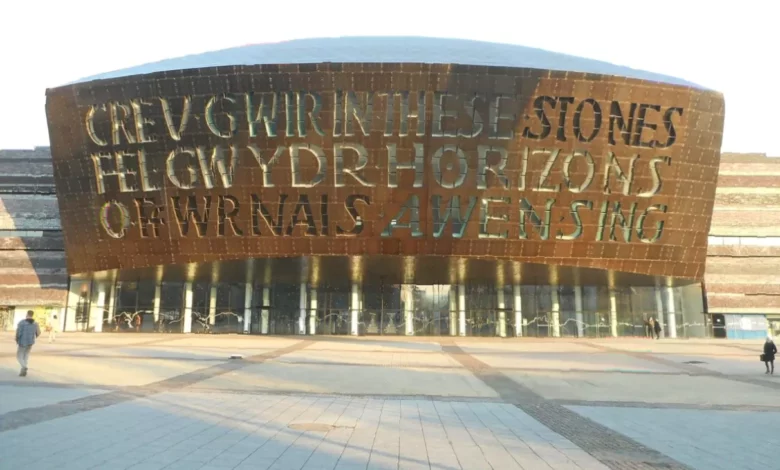
Cardiff’s Wales Millennium Centre also receives a sustainability award for embedding sustainable practices across its operations as an arts venue. The Centre has set ambitious net-zero targets: Scope 1 and 2 emissions by 2030, and Scope 3 by 2035. Initiatives include installing 720 solar panels on its roof, replacing more than 70% of lighting with LEDs and implementing a dosing system for cleaning products to cut plastic waste. It has achieved ISO14001 certification for its environmental management system and is working towards Theatre Green Book standards for sustainable productions, operations and buildings. Its commitment also aligns with the Well-being of Future Generations (Wales) Act 2015.
UK-wide figures and the awards criteria
A total of 186 awards were conferred across the United Kingdom this year. Of these, 76 went to businesses for international trade, 52 for innovation, 36 for sustainability and 22 for promoting opportunity through social mobility. The vast majority — 164 awards, or 89% — were given to small and medium-sized enterprises, and 24 of those (13%) were micro-businesses with ten employees or fewer.
The King’s Awards for Enterprise are judged across four categories, each with specific criteria. For international trade, applicants must demonstrate substantial growth in overseas earnings and commercial success in international markets. The innovation category rewards businesses that have developed a product, service or process that is truly innovative and has achieved commercial success. The sustainability category recognises organisations that show outstanding commitment to environmental, social and economic sustainability as a core business principle. Promoting Opportunity through Social Mobility is awarded to businesses that have created new opportunities for people from disadvantaged backgrounds, for example through recruitment, training or progression programmes.
The selection process is rigorous and impartial, according to the awards programme. Winners are chosen based on real-world commercial impact and positive contributions. Successful applicants receive a Grant of Appointment certificate, a crystal trophy and an invitation to a Royal reception. They may also use the King’s Awards emblem in marketing for up to five years — a benefit that provides what the programme describes as “unrivalled trust and credibility” with customers, investors and staff, along with increased media coverage, staff morale and commercial value in domestic and international markets.
Blair McDougall, UK Government Minister for Small Businesses and Economic Transformation, whose portfolio includes entrepreneurs, small businesses, scale-ups and access to finance, said: “A huge congratulations to every business receiving awards this year, who once again have illustrated the best of British innovation and talent. These awards show that right across the UK, there are small businesses that are thriving, growing and succeeding, and it’s only right that we champion these successes.”
Award history
The King’s Awards for Enterprise were originally established in 1965 as the Queen’s Awards for Industry. The first awards were conferred in 1966, making this year the 60th anniversary of the programme. Over the decades the categories have evolved and the name changed to reflect modern enterprise. Since their inception, more than 8,000 British businesses have been recognised with the royal accolade. Formerly known as the Queen’s Awards for Enterprise, the programme was renamed following the accession of King Charles III.