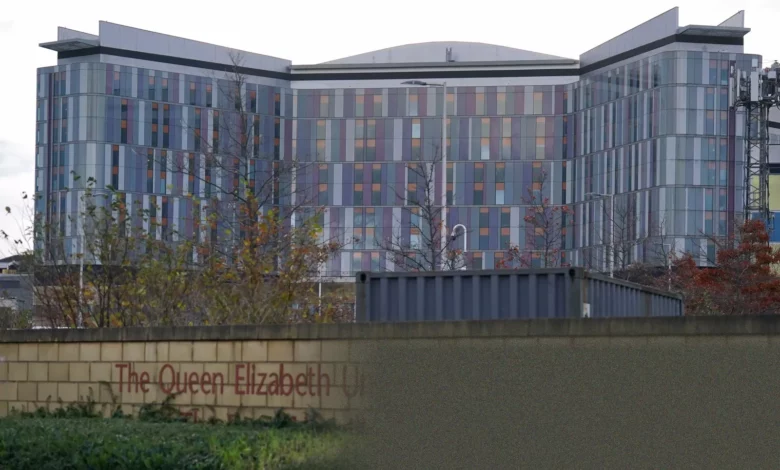
Oversight measures taken by the Scottish Government to ensure its flagship Glasgow hospital was built to required standards have been branded “inadequate” by the ongoing public inquiry into the facility.
The blunt assessment came in a supplementary note from lawyers to the Scottish Hospitals Inquiry, published on Monday. It scrutinises the government’s role in the procurement and construction of the Queen Elizabeth University Hospital (QEUH) and the adjoining Royal Hospital for Children, which opened in 2015.
Inquiry’s Core Findings on Oversight
The note is sharply critical of the systems used to ensure the hospital met Scottish Health Technical Memoranda (SHTM), the detailed guidance that sets out best practice for healthcare facility design. It concluded the Scottish Government had been “reliant” on NHS Greater Glasgow and Clyde (GGC) to raise any issues around compliance.
Ministers and officials wrongly assumed the health board had its own “mechanisms of approval” to ensure all technical standards were “properly considered”, the inquiry lawyers stated. This passive approach meant the government’s own systems for managing the procurement of the hospital it funded were “inadequate for the task”.
The inquiry was established in the wake of patient deaths linked to infections at the hospital site. Police, directed by the Crown Office, are investigating seven such deaths, including that of 10-year-old leukaemia patient Milly Main in 2017. Her mother, Kimberly Darroch, has been a leading campaigner for answers.
Government Unaware of Critical Issues
A central finding of the note is that Scottish ministers were unaware of the significant problems with the hospital’s water and ventilation systems until 2018 or 2019—years after it opened. The inquiry stated that the government did not understand until that point that NHS GGC had decided, via an “agreed ventilation derogation”, to build the flagship hospital not in compliance with official guidance.
Similarly, problems with the water system were not known to the government until 2018, a lack of awareness the note partly attributes to “failures to provide sufficient resources and lack of oversight” within the health board itself.
This timeline led the inquiry to a significant conclusion: any pressure from the Scottish Government to open the £842 million hospital on time and on budget in 2015 was applied “in ignorance” of these critical infrastructure issues. The note adds that, had ministers been aware before opening, “Government intervention” could have prevented the problems.
This point has been at the heart of political controversy. Former First Minister Nicola Sturgeon has denied applying pressure to open the hospital early or having knowledge of safety concerns at the time. Her former deputy, John Swinney, has also denied allegations of political pressure from the government.
Political Reactions and Calls for Evidence
The inquiry’s latest note was issued in response to developments since its last oral hearings in January, including a letter from Scottish Labour leader Anas Sarwar. On 26 January, Sarwar urged inquiry chair Lord Brodie to hear evidence from “key figures holding political office”, naming Ms Sturgeon, Mr Swinney, and former health secretary Shona Robison.
Sarwar warned there was a risk ministers could use the final report “as evidence the problems were contained entirely within the health board and could not have been prevented by Government intervention”.
The inquiry lawyers stated there was no “evidential basis” to hold further oral hearings with these individuals, as ministers were unaware of the issues at the relevant time. However, they explicitly countered the suggestion that the problems were solely NHS GGC’s, writing: “It is not correct to say that these problems were contained entirely within NHS GGC and could not have been prevented by Government intervention.”
Scottish Labour’s health spokesperson, Dame Jackie Baillie, described the note as a “damning indictment of SNP ministers’ failure”. She said it showed government oversight was “not adequate”, that there was no ministerial scrutiny of the construction contract, and that the technical guidance was “too obscure and entirely ineffective”.
In response, Health Secretary Neil Gray expressed his deepest sympathies to affected families and welcomed the note’s clarification that no pressure was applied by ministers to open the hospital early. He pointed to the establishment of NHS Scotland Assure in 2021, a national service intended to strengthen oversight of new NHS buildings, as a key reform.
A spokesperson for NHS Greater Glasgow and Clyde said patient safety remained its priority and that “significant progress” had been made, supported by over £50 million of investment in water systems, ventilation and monitoring. The board has previously admitted it was “more likely than not” that infections in some paediatric cancer patients between 2016 and 2018 were connected to the water system, offering a “sincere and unreserved apology” to families.