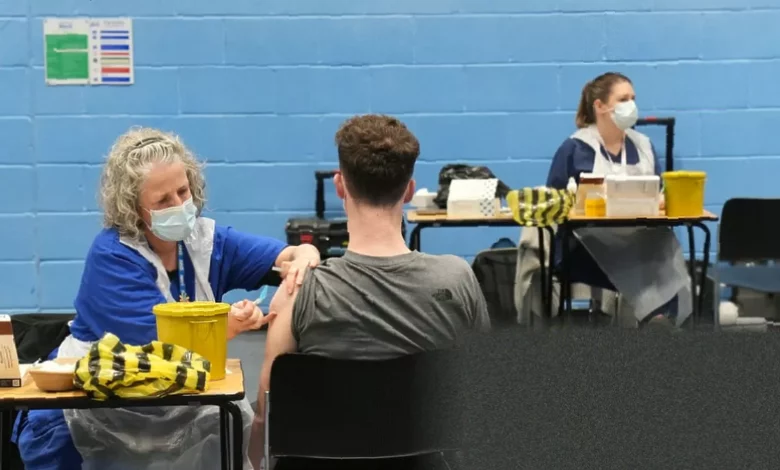
Thousands of final-year school pupils and first-time university students across the UK are being offered a free two-dose course of the meningitis B vaccine, the government has announced, in response to an unprecedented outbreak in Kent and clusters in Dorset and Berkshire that collectively claimed three young lives.
The one-off vaccination programme, which begins in late July, comes after what public health officials described as the fastest growing and largest outbreak of meningococcal B (MenB) ever seen in the UK. The Kent cluster, which emerged between March 13 and 18, involved 21 confirmed cases – including two fatalities – among young adults, many of whom were university students or had attended the same nightclub. Separate cases in Dorset and Berkshire led to a third death.
Eligibility and vaccine details
The vaccine, Bexsero, manufactured by GSK, will be offered to all young people in the UK born between 1 September 2007 and 31 August 2008 – equivalent to Year 13 in England and Wales, Year S6 in Scotland and Year 14 in Northern Ireland – regardless of whether they plan to continue their education. For Scotland, the eligible birth range is 1 March 2008 to 28 February 2009, and for Northern Ireland 2 July 2007 to 1 July 2008. Individuals under 25 starting university as an undergraduate fresher or moving into a residential further education setting for the first time this autumn are also eligible, including international students. Those who turn 25 after 31 December 2026 are still covered if starting for the first time. Postgraduate students and those returning for a second or later year are not included.
Health secretary James Murray said the outbreak and recent clusters “indicate a possible change to the way MenB affects people”. He added: “While we assess the latest evidence, we are acting now to help protect young people at highest immediate risk as they enter university and residential colleges this autumn.”
The programme involves two doses of Bexsero administered at least 28 days apart, with the first offered from late July and the second in August. For those unable to receive their second dose in August because of holidays, it can still be given in September – in time for the start of the academic year. The UK Health Security Agency (UKHSA) has noted that cases of invasive meningococcal disease typically peak in October and November each year.
NHS England’s director of vaccination, Caroline Temmink, said eligible individuals will be contacted directly through the NHS app, by text or email. Those under 25 starting university for the first time will be able to book appointments directly with participating community pharmacies in England, and walk-in appointments may also be available. International students are advised to receive their first dose in their home country where possible.
Why university students are at higher risk
MenB bacteria are often carried harmlessly in the back of the nose and throat, but in some people they can enter the bloodstream and cause meningitis – an infection of the membranes surrounding the brain and spinal cord – as well as blood poisoning. According to the NHS, up to one in ten cases of bacterial meningitis are fatal, and survivors can be left with permanent health problems such as hearing loss, epilepsy, amputations or brain damage.
While babies, young children, teenagers and young adults are all at elevated risk, the danger is especially pronounced for university students. A study cited in official briefings found that students face a twelve-times greater risk of invasive meningococcal disease compared with their non-student peers. This heightened vulnerability is driven by a cluster of factors unique to university life: shared accommodation such as halls of residence, frequent social gatherings and parties, and large social networks – all of which facilitate the spread of bacteria that are ordinarily harmless but can turn deadly when they invade the body.
The Bexsero vaccine protects against most strains of MenB, with research suggesting 70 to 90% efficacy against the most common forms of the disease and 50 to 70% against the most invasive strains. A nationwide study in Spain demonstrated 76% effectiveness against invasive meningococcal disease of any serogroup and 71% specifically against serogroup B in children under five. Even a single dose provides notable protection. However, experts note that the vaccine does not prevent carriage of the meningococcus in the nose and throat, meaning it will not generate herd immunity across the wider population. Protection is thought to last at least six years, though antibody levels decline most rapidly in the first twelve months.
The MenB vaccine has been part of the routine NHS immunisation programme for babies since September 2015 – given at eight weeks, 12 weeks and a booster at one year – and has substantially reduced infant cases. But young people and adults have not been routinely offered the jab on the NHS, despite receiving the MenACWY vaccine, which covers four different meningococcal groups. As a result, some parents have turned to private vaccination, which can cost between £160 and £300 for a two-dose course, and during periods of shortage has risen to £300–£400 per dose.
Campaigners, including Meningitis Now and the Association of British Paediatric Nurses, have long called for an expansion of the programme. Meningitis Now’s “No Plan B for MenB” campaign has urged vaccination for all at-risk groups and a potential adolescent booster by 2030. The Joint Committee on Vaccination and Immunisation (JCVI) is currently undertaking a full review of the evidence for updating the routine meningitis schedule.
Dr Shamez Ladhani, a consultant epidemiologist at the UKHSA, described the new offering as an “emergency outbreak response” rather than a routine immunisation programme, encompassing about one million teenagers and young people. “The group that is being vaccinated is broadly the group at the highest risk,” he said. Adam Finn, professor of paediatrics at the Bristol Children’s Vaccine Centre, welcomed the announcement but noted the “one-off” nature “perhaps reflects ongoing uncertainty around the cost-benefit of immunising so many young people to prevent rather small numbers of cases.” He added: “This is clearly a disease which everyone wants to see prevented.”
Dr Thomas Waite, deputy chief medical officer, said MenB disease is “rare but serious” – fatal in up to 10% of cases and capable of causing lifelong injury. He said the one-off programme is designed to protect those at highest immediate risk. Emma Wall, clinical professor of infectious diseases at Queen Mary University of London, called the rollout a “sensible and pragmatic response” that would allow the JCVI time to evaluate evidence for a permanent schedule change. Andrew Pollard, director of the Oxford Vaccine Group and former JCVI chair, described the availability of the vaccine as a “huge relief” and something to be “enthusiastically welcomed.”
Alex Stanley, vice president of the National Union of Students, said the announcement showed that governments across the UK had listened to people’s concerns. “We encourage all eligible young people to get the vaccines. They have the potential to prevent another devastating outbreak, and we hope that every young person will play their part in that,” he said. “There should never be a cost barrier to lifesaving vaccines, and we hope this becomes a regular vaccination programme.”