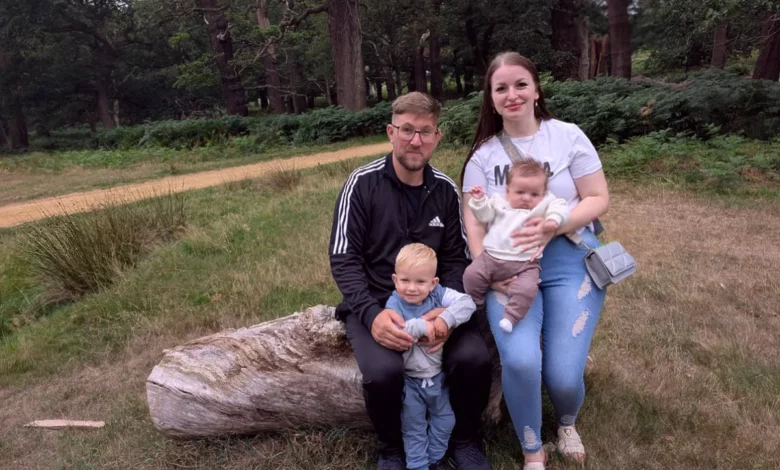
For two young brothers in west London, a rare genetic disorder has made the simple joys of childhood a risk they cannot take. Cezar, two, and his ten-month-old brother David Nica are battling Wiskott-Aldrich Syndrome (WAS), a condition so severe that their only chance at a future lies in finding a matching stem cell donor.
Their mother, Marcela Zberea, 29, has issued a heartfelt appeal for the public to register as potential donors. “I just hope my boys get the chance to live long, happy lives,” she said. “Right now, their lives are very restricted and they don’t get to be like normal children. They are too vulnerable to go to playgroup, or have fun with other kids.”
The ‘only chance’: Understanding Wiskott-Aldrich Syndrome
Wiskott-Aldrich Syndrome is a severe, inherited disorder that profoundly weakens the immune system and reduces both the number and size of blood platelets. First described by paediatricians Alfred Wiskott in 1937 and Robert Aldrich in 1954, it is caused by mutations in the WAS gene on the X chromosome, which provides instructions for a protein crucial to blood cell function. This genetic link means it almost exclusively affects boys, with an estimated prevalence of between one and ten cases per million males worldwide.
For Cezar and David, the diagnosis came in a devastating blow. Cezar was hospitalised with low platelets just weeks after birth, and both brothers were diagnosed during the same appointment, shortly after David was born. “It was so much to take,” Ms Zberea recounted. “The doctors told us that a stem cell transplant is their only chance.”
The symptoms they face are characteristic of the condition: recurrent infections, severe eczema, easy bruising, bloody diarrhoea, and prolonged bleeding from minor injuries. In severe cases, bleeding in the brain can be life-threatening, and patients also face an increased risk of lymphoma and leukaemia. Without a curative stem cell transplant, individuals with severe WAS often have a reduced life expectancy.
The primary curative treatment is a haematopoietic stem cell transplant (HSCT). When performed early—ideally before three months of age—success rates can exceed 90%. For those who cannot find a suitable donor, gene therapy has emerged as a promising alternative. Clinical trials, including pioneering work at Great Ormond Street Hospital in London, have shown long-term benefits by introducing healthy copies of the faulty gene into a patient’s cells using newer, safer viral vectors.
The search for a matching donor
Neither Ms Zberea nor the boys’ father, Stelian Dorin Nica, 36, are a genetic match for their sons. The family is now working with the stem cell charity DKMS to widen the search. The charity notes that only about 20% of WAS patients find a suitable match, usually within their family. For unrelated donors, the odds are also stark, with four in ten people worldwide failing to find a match.
“For Cezar, David and so many other patients, the right stranger signing up to the register could be their only hope,” said DKMS spokeswoman Bronagh Hughes. “It takes just a few minutes to register, but it could mean a lifetime for someone else.”
The appeal carries a specific call for people of Eastern European heritage to join the register, as a diverse donor pool increases the chances of finding compatible tissue types. In the UK, anyone aged 18 to 55 in general good health can register; they request a swab kit to provide a cheek cell sample, which is analysed to determine their Human Leukocyte Antigen (HLA) type.
DKMS, which has registered over a million people in the UK and 12 million globally, states that over 2,000 people in the UK need a transplant each year, yet only about 3% of the population is on the donor register. If a match is found, donation is most commonly a non-surgical process involving collecting stem cells from the bloodstream. In about 10% of cases, a surgical bone marrow collection from the hipbone is required.
Ms Zberea’s message is simple and urgent: “We are encouraging everyone to register as a stem cell donor, as anyone could be a match. You could save a life – maybe even one of our boys.”