The endless scroll of notifications begins before the first coffee. Wake up, 100 messages from a group chat about something—another assassination attempt, a village destroyed in Lebanon, a football result in England, the weather in Iran supposedly being manipulated, pesticides causing lung and bowel cancer, so everyone who eats salads is now at risk. Then meditate for 20 minutes, fire up X (formerly Twitter), a place you swore you’d never revisit—carnival barkers, supplement salesmen, a Lego thing calling Trump a paedo. And this is all before the caffeine hits. Yet X is the caffeine: whatever Elon Musk has done to the For You algorithm is an evil genius, something like the global collective id—nasty, funny, addictive, compelling—like gawking at a car crash, like soaking in a hot bubble bath of anger and memes and geopolitical dramas and Trump. Then, “For Me,” just as Musk promised. This is the circuit around the phone that runs all day and all night, rotating between icons—X, WhatsApp, TikTok, even LinkedIn for heaven’s sake—round and round, just checking, in case something is happening.
The experience is far from unique. Smartphone addiction has been described as the biggest non-drug addiction of the 21st century. It is a behavioural addiction, similar to gambling, driven by the brain’s reward system releasing dopamine with every notification, like or new piece of content. Phones exploit variable ratio reward schedules—the same mechanism as slot machines—where unpredictable rewards create deep engagement. This leads to what researchers call time distortion and dissociation: hours disappearing without conscious deliberation as the brain’s executive functions go offline. The constant checking becomes a coping mechanism for stress, boredom, loneliness or depression, creating a cycle of reliance. Studies show a moderate relationship between smartphone addiction and decreased productivity, with lost work hours and a negative impact on daily non-work activities. The cost to focus is measurable: it can take up to 23 minutes to regain full attention after a single interruption. The link between heavy social media use and negative mental health outcomes is well documented, with increased risks of depression, anxiety, loneliness, self-harm and suicidal thoughts, particularly among young people.
The author of a novel due on 31 July found himself trapped in that roundabout, watching tiny videos, occasionally distracted by his book—but the novel was boring, a static Word doc that required hard work. Six minutes on the novel, then back to the phone, circling the icons like a demented Stations of the Cross. Something had to stop it, or he would become deranged and the novel would never be finished. App-based screen-time limits had failed, because having them inside the phone itself was like placing a piece of fruit in a box of chocolates: you go in for the fruit, but the chocolates distract you, and soon the fruit is untouched and rotting.
The problem, it turned out, is not information or intention. It is friction—or rather the total absence of it. Digital guardrails collapse the moment you need them most: one tap and you are back on Instagram. What was needed was an external device that could physically lock the phone.
The physical fix: Brick and Locked
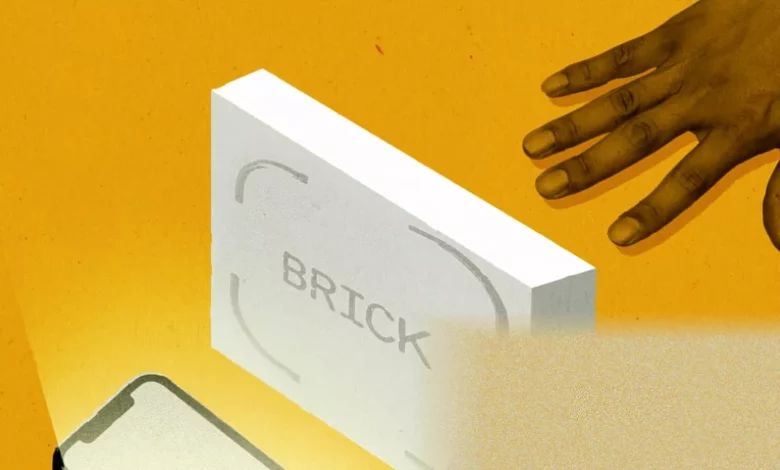
While listening to a Guardian podcast on his phone, the author heard about a device called Brick that locks the phone to combat addiction. Brick is a small plastic puck ($59 US, £54, or $120 Australian including postage) that uses Near Field Communication (NFC) technology to block whichever apps you nominate. Its cheaper rival, Locked ($39 US, £32, $59 Australian), works similarly. To activate the block, you tap your phone against the puck. To unblock, you must physically return to the device and tap again. You can set a timer—one or two hours when focusing on the novel—and if you try to unBrick early, the app asks: “Do you want to have a life, or do you want your phone back?” That prompt is enough to make you affirm that, yes, you want a life.
The brilliance of Brick lies in the physical barrier it creates. Unlike app-based blockers that sit inside the phone, Brick introduces a real-world hurdle. The digital habit of tapping through to an app becomes a deliberate act: you must stand up, go to the puck, tap it, and decide whether to break your focus. Reviews of both devices are positive, with users reporting regained focus, reduced screen time and a feeling of being more present. Some find the physical act of interacting with the device a useful pause between impulse and action. Brick charges no subscription fee; Locked also has no ongoing cost. For those seeking budget alternatives, free open-source apps like Foqus use NFC tags or QR codes to create a similar system, while DIY solutions can be built using cheap NFC tags. Other app-based blockers such as Rot Stop (free, iPhone-only, with a Tamagotchi-style element) and Jomo offer additional features like scanning to pause blocks or custom time windows.
The device understands what most digital well-being tools miss. Many studies on screen-time trackers and concentration settings show that while users report reduced device use and sharper attention, there is little connection between tool adoption and actual gains in output or emotional relief. Effectiveness depends on consistent engagement and internal drive. Brick, by contrast, forces that engagement physically.
Using Brick at night has been transformative. The hours once lost in the roundabout are now spent reading, thinking and occasionally just sitting in silence. The novel is moving again; focus returns in longer increments. The algorithm no longer gets hold of you after 8pm, and deprived of its evening session, it has less purchase during the day too. Brick has not cured the addiction, but it has restored the thing addiction most destroys: the moment of pause between impulse and action.