Senior ministers have publicly rejected a proposed private sector rent freeze, with Housing Secretary Steve Reed and Housing Minister Matthew Pennycook both insisting the idea is neither credible nor serious. Their interventions came less than 48 hours after reports that Chancellor Rachel Reeves was considering a one-year freeze on private rents as part of a wider cost-of-living package, an idea that has since been ruled out by Downing Street.
Ministerial rejection and the case against rent controls
Matthew Pennycook was emphatic on Wednesday: “We are not doing this. It’s not a credible or serious policy proposition.” He added that he could not recall how many times he had gone on record stating the government has no intention of introducing rent controls and has “really good reasons” for that position. “We exhaustively went through the evidence of countries like Sweden, Germany, cities like San Francisco. Look at the Scottish experience. Now look at what happens to rent increases outside of tenancies where you have that form of control,” he said.
Steve Reed was equally scathing, declaring: “I’ve been crystal clear – we’re not doing it.” The housing secretary pointed to international evidence that rent controls tend to push up rents for homes not covered by the policy, whether in the same area or nearby. Some experts argue that while regulated homes become cheaper, the spillover effect drives up costs elsewhere, reducing overall affordability and discouraging new development.
The research base against rent controls is extensive. Ministers and independent analysts point to the Scottish experience, where controls are said to have led to significant rent increases outside regulated tenancies and a reduction in available rental homes. The 1970s UK rent controls are cited as a historical precedent in which tight controls reduced incentives to invest, leading to a decline in supply and quality, offering short-term relief for incumbent tenants but pushing up rents for new entrants over time. The International Monetary Fund has found no clear evidence that rent controls lower rents overall and notes they are associated with lower housing supply. Critics, including the National Residential Landlords Association, warn that a freeze would be a “disaster” for landlord confidence and the supply of homes. Pennycook has previously argued that such controls tend to benefit “settled and better-off tenants more than those looking for a home or needing to move”, generating inefficient allocation of housing and reducing mobility.
The proposal was reported to have emerged in the same week as major reforms to renters’ rights came into force, and while ministers debated a broader cost-of-living response to the Middle East crisis. It is understood that new-build properties might have been exempted from the freeze to protect development. No 10 dismissed the idea with a spokesperson saying freezing private sector rents was “not the approach we will be taking” and that there were “no plans to implement this”.
Reeves’s precarious position
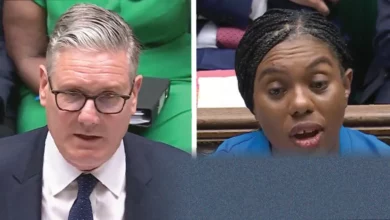
The government’s internal split over the rent freeze has intensified speculation about the chancellor’s future. Prime Minister Keir Starmer failed to give an explicit guarantee that Rachel Reeves would remain in her post during Prime Minister’s Questions, a departure from the stronger assurances he has offered in the past. Asked by Conservative leader Kemi Badenoch whether he would “listen to businesses, listen to the country, and reshuffle the chancellor”, Starmer praised Reeves but stopped short of saying she would not be replaced.
Downing Street insisted afterwards that the prime minister has “full confidence” in the chancellor, and when pressed to repeat Starmer’s previous guarantee that she would remain until the next election, a spokesperson said: “That position remains unchanged.” Badenoch had earlier told the Commons that it “sounds like she’s toast”.
Reports over the weekend suggested Starmer was intending to sack Reeves after the local elections, a claim her allies dismiss as “one final roll of the dice” to stay in power after heavy expected losses. One ally described the reports as “bollocks”. Reeves herself spent Wednesday morning at an all-staff meeting at the Treasury, flanked by her ministerial team, thanking officials and urging them to press ahead with the government’s mission of kickstarting economic growth. Treasury sources said she highlighted recent decisions including cuts to utility bills in November’s budget and repeated her insistence on avoiding a costly knee-jerk response to the Iran crisis. One ally insisted her tone was “massively upbeat” and forward-looking, promising more detail soon on AI policy and the UK’s relationship with the EU.
However, a source close to Reeves’s team suggested they had been spooked by recent reporting about divisions inside No 10 over whether to hold an immediate reshuffle after next week’s local elections. The chancellor herself has not explicitly ruled out the rent freeze, stating in the Commons: “I will do everything in my power and use every lever we have to bear down on the cost of living, including for people in the private rented sector.”
Market reactions and economic fallout
City investors are watching Labour’s internal ructions closely, with some warning that the prospect of a leadership race could push up the yield on government bonds still further. UK 10-year gilt yields have already surged to their highest closing level since 2008, well above 5%, as fears of a prolonged Middle East conflict and the blockade of the Strait of Hormuz drive up inflation expectations and interest rate forecasts. Government borrowing costs jumped afresh on Wednesday amid those fears, potentially wiping out much of the “headroom” Reeves has built against her fiscal rules.
A research note from analysts at the investment bank Jefferies described next week’s local elections as “the local elections markets can’t ignore”, noting that UK small and mid-cap retail and consumer companies are trading at a discount but are better positioned for inflation than in 2022–23. Reports of the potential rent freeze sent shares tumbling in some of the UK’s biggest buy-to-let lenders, including Paragon and One Savings Bank, underlining the sensitivity of the housing market to policy signals.
Reeves’s allies believe the threat of gilt market chaos is a strong argument for keeping her in place, given that any change of chancellor could trigger further instability. Meanwhile, the chancellor has warned that UK inflation is likely to rise in the coming months due to the Middle East conflict, and has outlined a growth plan centred on closer EU ties, a £500 million Sovereign AI Unit, and up to £2 billion in quantum computing investment. Plans are also being developed to give mayors control over a share of national taxes. But for now, the brief and emphatic rejection of a rent freeze by senior ministers has done little to calm either the political waters or the bond markets.