The World Health Organization has approved the first malaria treatment designed specifically for babies, a milestone that could transform care for the youngest and most vulnerable patients across sub-Saharan Africa.
The WHO granted prequalification to Coartem Baby on 24 April 2026, meaning the drug meets international standards for quality, safety and efficacy. The decision opens the door for public-sector procurement by UN agencies and governments in countries where malaria is endemic, particularly in Africa.
A dangerous gap in care
Until now, infants with malaria had no approved treatment tailored to their size. Healthcare providers were forced to use formulations meant for older children, a practice the WHO said “increases the risk of dosing errors, side effects and toxicity”. In parts of Africa, up to 18% of children under six months contract malaria, yet the smallest babies were effectively left without a safe option.
Globally, an estimated 282 million malaria cases were recorded in 2024, resulting in 610,000 deaths. About three-quarters of those deaths were children under five in Africa. The WHO African Region accounts for roughly 95% of all malaria cases and deaths worldwide.
The treatment gap was partly driven by a historical misconception: many believed young babies could not catch malaria because they retained immunity passed from their mothers during pregnancy and breastfeeding. Research increasingly challenged that assumption, revealing that infants are at significant risk.
How the new treatment works
Coartem Baby contains two antimalarial drugs – artemether and lumefantrine – the same active ingredients used in the established Coartem treatment for older children and adults. But the new version uses a ratio and dosage optimised for infants weighing between two and five kilograms (roughly 4.4lb to 11lb). It is the first and only antimalarial specifically developed for newborns and young infants in that weight range.
The drug comes as sweet cherry-flavoured tablets that can be dissolved into liquids, including breast milk, making it easy to administer to very young children. It was developed through a collaboration between the multinational pharmaceutical company Novartis and the Medicines for Malaria Venture (MMV), a non-profit foundation.
Support for the development came from the PAMAfrica consortium, co-funded by the European & Developing Countries Clinical Trials Partnership (EDCTP2) and the Swedish International Development Cooperation Agency. The CALINA Phase II/III clinical trial, conducted across Burkina Faso, the Democratic Republic of Congo, Kenya, Mali, Nigeria and Zambia, demonstrated the drug’s safety and efficacy in infants under five kilograms.
A major public-health milestone
Dr Tedros Adhanom Ghebreyesus, the WHO director general, said: “For centuries, malaria has stolen children from their parents, and health, wealth and hope from communities. But today, the story is changing.” He noted that new vaccines, diagnostic tests and next-generation mosquito nets are also helping to turn the tide against the mosquito-borne disease.
Dr Martin Fitchet, chief executive of MMV, said: “For too long, newborns and young infants with malaria have fallen through the cracks because existing treatments were not designed with them in mind. WHO prequalification of Coartem Baby is a major public-health milestone.”
The drug had already received approval from Swiss regulators (Swissmedic) on 8 July 2025, based on the CALINA study. Ghana was the first country to launch it, on 7 October 2025, after its own regulatory approval in February 2025. Eight other African countries – Burkina Faso, Côte d’Ivoire, Kenya, Malawi, Mozambique, Nigeria, Tanzania and Uganda – were expected to issue rapid approvals under a special global health procedure following the Swissmedic decision.
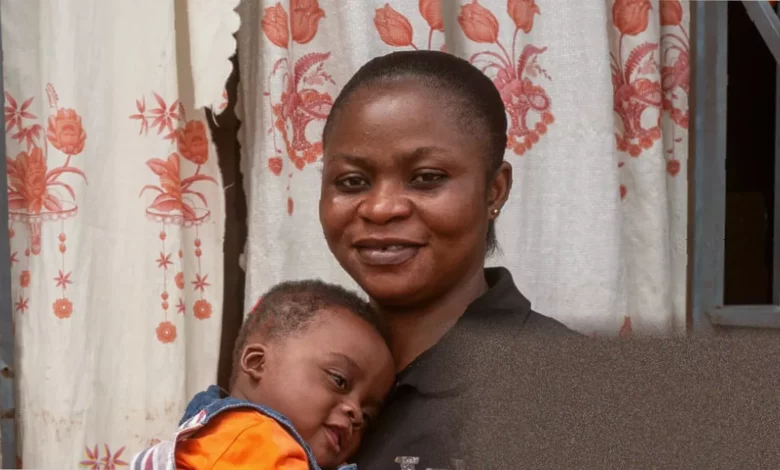
Baby Wonder, now eight months old, was among the first patients to receive the drug in Ghana, when he was 12 weeks old. His mother, Naomi, said: “I was very scared when my son got malaria because he was born underweight.” Doctors at the hospital managed to coordinate access to Coartem Baby, and Wonder is now healthy and thriving.
Dr Emmanuel Aidoo, a paediatrician at Methodist Hospital in Ankaase, Ghana, said: “As doctors we have tended to look for malaria in older children, but when newborn babies got sick nobody seemed to know what to do. Having a new treatment tailor-made for infants that is well tolerated gives us confidence.”
Novartis said it would make the treatment available “on a largely not-for-profit basis in malaria-endemic regions”. The Bill & Melinda Gates Foundation, which provides substantial grants to MMV for drug discovery and development, is among the donors to the Medicines for Malaria Venture.