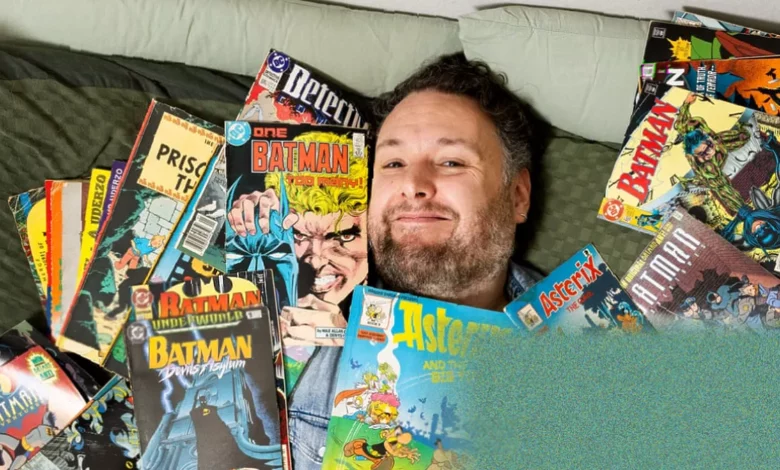
For years, the bedtime ritual was the same: phone in hand, eyes glued to a cascade of bad news, toxic comments, and work messages. Sleep, when it finally came, was restless and anxiety-ridden. One of those readers decided to break the cycle — not with willpower alone, but by rediscovering the comic books of childhood. The result, they report, is dramatically better sleep and a restored sense of calm.
The problem: a mind plugged in until lights out
The behaviour now widely known as “doomscrolling” — defined as spending excessive time on a phone or computer reading negative news, aimlessly scrolling, or refreshing apps — became a nightly trap. According to research on the phenomenon, it is linked to increased anxiety, sadness, and feeling overwhelmed. Physiologically, it can trigger the body’s “fight, flight, freeze” response, raising blood pressure and stress hormones, while contributing to headaches, neck pain, and sleep disruption.
For the author, the habit began well before bedtime. Evenings were spent surfing algorithms, barely paying attention to the television or conversations around them. The content ranged from dystopian news headlines to vitriolic social-media comment sections and workplace drama replayed via mobile versions of Teams and Slack. The phone was always within reach, and the brain never truly switched off. Sleep, when it arrived, was marked by nightmares fuelled by the same fears and anger that had filled the day. After one particularly feverish night, the author decided something had to change.
The solution: swapping the screen for the page
The search for an alternative began with books, and quickly narrowed to comics — a medium the author had devoured as a child in the early 1990s. Back then, it was The Beano and The Dandy, then The Adventures of Tintin and Asterix, before graduating to a father’s collection of 2000 AD — a weekly British science-fiction comic magazine that launched in 1977 and became known for its edgy, punk-rock sensibility. Later came Preacher, The Sandman, Watchmen, and Batman.
As an adult in their 30s, the author had drifted away from regular reading. But in late 2024, spurred by the online furore surrounding the imminent second term of Donald Trump, they realised that preserving mental health required new routines before fear and anger became consuming. Instead of reaching for the phone in the evenings, they picked up a comic.
Reading them as an adult restored a sense of childlike wonder that transcended the anxieties of the day. The act of focusing on a lengthy comic series or graphic novel — rather than flitting from app to app — also began to rebuild an attention span that had suffered from a decade of constant switching. The author noted a sense of accomplishment from finishing a story, in contrast to the self-loathing that often followed an hour spent on Reddit.
The benefits: healthy escapism, better sleep, renewed creativity
The most striking change was in sleep quality. Dreams became more fanciful and less dominated by the banal terrors of daily life. The author began waking up feeling revitalised, free of the residual negativity that had lingered after nights of doomscrolling. This aligns with wider findings: excessive social media use at night is strongly linked to poor sleep patterns. In the UK, research shows that teenagers spending three or more hours daily on social media are more likely to fall asleep later, wake during the night, and experience poorer sleep quality. Limiting screen time before bed is recommended to improve sleep consistency and duration.
Beyond sleep, the shift had ripple effects. The author found that comic books offered a form of escapism that allowed the mind to tackle fears — of apocalypse, dictators, an AI uprising — in a safe environment. Even dystopian sci-fi and extreme horror comics felt healthier than the unhelpful fearmongering of online commenters. For someone whose mind tends to spiral when left to its own devices, this was a crucial difference.
Creativity also returned. Inspired by the colourful imagery and ideas in comic books, the author channelled that energy into their work as a journalist. They felt less urge to check work channels after leaving the office, because evenings had become valuable comic-book time. The combination of visual illustrations and text, experts note, can stimulate imagination and broaden thinking. Graphic novels have increasingly gained traction with adult readers, driven by growing acceptance of the form as a legitimate art form — works such as Maus have won a Pulitzer Prize, and major publishers like Penguin Books UK now offer a wide range of graphic novels for adults across many genres.
The author also discovered that reading comics is not about burying one’s head in the sand. It is about carving out time for self-care in a world that is increasingly demanding of headspace. This resonates with wider UK trends: self-care is increasingly seen as a necessity, with a significant portion of the population actively practising it — though barriers such as financial difficulties and time constraints remain. For this reader, the switch delivered a boost in mood, creativity, and overall outlook. They let their inner child back out, and have not looked back since.