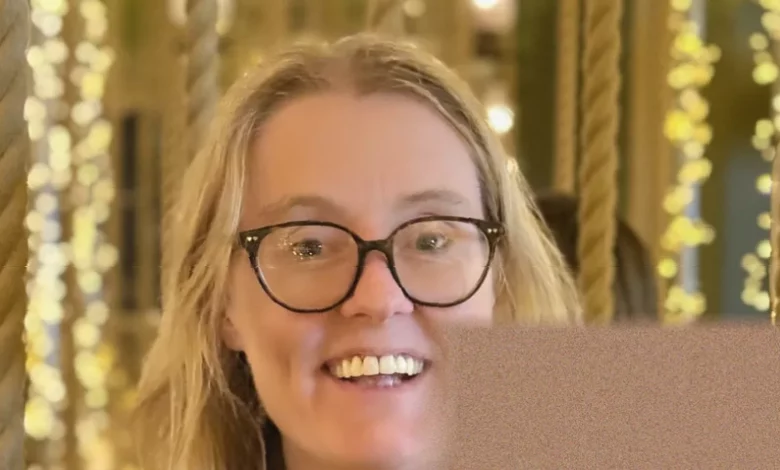
A high-flying City executive took her own life as a result of a secret gambling addiction that she had hidden from family, friends and colleagues, an inquest has heard. Ellen Mulvey, 44, a managing director at the global financial recruitment firm Meraki Talent, was declared dead at Macclesfield District General Hospital on 7 November last year. In a note left before she died, she wrote: “Addiction is the worst disease ever.” Her family is now demanding wholesale reform of the gambling industry, arguing that the current system is failing to protect vulnerable people from the moment they first place a bet through to the point of relapse.
A life marked by generosity and ambition
Mulvey had spent more than 25 years in the recruitment industry and was described by her employer as a “remarkable ally, leader and friend”. She was a passionate advocate for diversity in the workplace, and InterInvest – a national network that champions LGBTQ+ concerns across the UK investment industry – has created an award in her name. Andrew Welsh, the chief executive of Meraki Talent, paid tribute to her “warmth, professionalism, kindness and passion for inclusion”.
At home, she was the proud stepmother to her partner Deanne Tomkins’ four-year-old son. Tomkins recalled how Mulvey would batch-cook family meals and how she and her train-loving son would pick her up from the railway station every Thursday at the end of her working week in London. “She was just so patient, understanding and playful,” Tomkins said. “She had so much love to give.” Her sister, Katie Styring, described Mulvey as “the most generous, caring, kind person” – a fierce protector who would “wind us up, no end, but she always had our back if there was ever any trouble”.
Mulvey was also remembered as someone who “loved fun” and would always be the last to leave a party. “She’d be the one getting everyone up on the dancefloor,” Styring said. At work, she was a committed mentor to colleagues, always wanting the best for them. Bruin Financial, where she had previously worked as an executive director, highlighted a case study she had presented on increasing LGBTQ+ talent attraction and internal inclusivity at a recruitment event.
A secret addiction and the failure of Gamstop
Behind this successful and vibrant exterior, Mulvey was battling a chronic gambling addiction that her family believes began in 2018, based on their analysis of her bank statements. They say she lost hundreds of thousands of pounds without their knowledge. The addiction, according to the coroner, contributed directly to her death. The inquest heard that the gambling had caused her to struggle financially and had led to the breakdown of past relationships. She lived in fear that her employers would discover what was happening.
In 2022, Mulvey registered with Gamstop, the UK’s self-exclusion scheme that blocks access to all gambling websites licensed to operate in Britain. But Gamstop has no control over unlicensed, overseas operators. A survey has indicated that 10% of Gamstop users subsequently access unlicensed websites to circumvent their self-exclusion. Mulvey was among them. Her family said that finding such sites required no more than a “very simple” Google search. In the final weeks of her life, she emptied her bank accounts, losing approximately £10,000.
Dame Clare Gerada, a leading addictions specialist and founder of the NHS Primary Care Gambling Service, provided written evidence to the week-long inquest at Warrington Coroner’s Court. She said the “guilt, shame and feelings of worthlessness” Mulvey experienced were typical of a gambling addiction. The wider scale of the problem is stark: an estimated 1.4 million adults in Britain have a gambling problem, and 2.8% of adults in England are classified as engaging in at-risk or problem gambling behaviour. Research suggests that between 117 and 496 gambling-related suicides occur in England every year.
Family’s demand: a public health response, not a patchwork
Mulvey’s sister and partner are now calling for wholesale reform. “The system as a whole is not doing enough to protect people from the point of first exposure through to relapse,” Tomkins said. “This can happen to anybody. Nobody is immune and it needs a public health response.”
The couple expressed fury at the ease with which unlicensed sites could be accessed. “It is so easy to find gambling sites which are not part of Gamstop,” Tomkins said. “So then you’re angry at the government and the whole gambling sector … and then you get angry at the world.” She added that gambling products, whether legal or illegal, are designed to be addictive and that the harm they cause is not taken seriously enough.
The NHS has seen a surge in demand for gambling addiction treatment, with referrals to specialist clinics doubling in the past year. Dame Clare Gerada’s service aims to integrate primary care with third-sector support. But for Mulvey, the help came too late. Assistant Coroner Elizabeth Wheeler recorded a conclusion of suicide, noting that Mulvey was experiencing “gambling issues, financial issues and issues with a previous relationship” and that her death was “in part due to gambling disorder”.
“Her gambling was longstanding and went back many years,” Wheeler said. “She had registered with Gamstop but then went on to use gambling websites registered outside of the UK. Her final notes make reference to her addiction.”
For those left behind, the anger is raw and unresolved. “Yes, you’re angry at Ellen for doing what she’s done, of course you are,” Tomkins said. “But when you then dive into it and you learn more, you then become angry at the sector itself, right? Because they allow this to happen.”