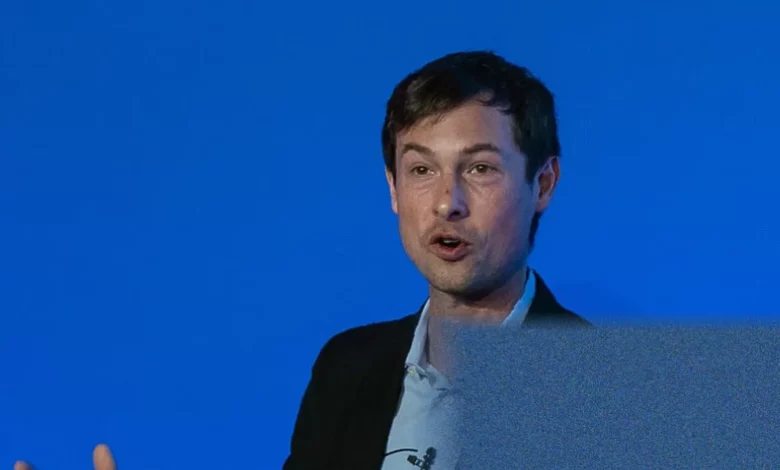
Reed Jobs, the 34-year-old son of the late Apple co-founder Steve Jobs, is in the United Kingdom this week looking for opportunities to deploy capital from his $1bn (£790m) oncology-focused venture fund, Yosemite, into British healthcare startups.
Speaking on the sidelines of a life sciences conference in London hosted by the British not-for-profit organisation LifeArc, Jobs said he was in the country to meet with pharmaceutical partners and academics. “As a firm, we invest in companies internationally, and we would love to look at opportunities in the UK,” he said. Yosemite, which is based in San Francisco, has already backed around 20 healthcare startups in the US and some companies in the UK whose names have not yet been made public.
Jobs’ drive to transform cancer outcomes is deeply personal. He watched his father battle a rare form of pancreatic cancer — an islet cell neuroendocrine tumour (GEP-NET) — which led to Steve Jobs’ death in 2011 at the age of 56. “I saw my dad have cancer when I was a kid, and unfortunately that happens far too often. And that really motivated me to try to transform outcomes for other people out there,” he said. A close friend also died from leukaemia in adulthood. Jobs did an internship in oncology at Stanford University at age 15 and later began pre-medical studies there before switching to history. Now, his mission is clear: to make cancer a non-lethal, treatable disease.
“Today far too many cancers are either diagnosed incidentally, because there’s no good early biomarker, or only diagnosed once they are metastatic and extremely advanced,” Jobs said. “That is unacceptable … We think that in the course of my lifetime and the current generation, that is going to really change, not only through better detection, but also through better targeted and personalised therapy.” He hopes that within his lifetime, cancer will shift from being an “end-stage disease” to an illness that is diagnosed early, monitored and treated — similar to advances made with HIV and cardiovascular disease.
Investment strategy: gene therapy, cancer vaccines, radiopharmaceuticals and AI
Yosemite operates with a dual structure. One arm is a for-profit venture that invests directly in healthcare companies. The other is a donor-advised fund, which uses money given by benefactors to award grants to scientists conducting early-stage research. The fund’s name comes from Yosemite National Park in California, where Jobs’ parents married in 1991.
The fund’s investment strategy targets four key areas in oncology: gene therapy, cancer vaccines, radiopharmaceuticals and artificial intelligence. These are areas where the UK is also seeing rapid innovation, including AI-driven drug discovery and the development of radiopharmaceuticals using recycled nuclear materials for targeted alpha therapies. For example, the University of Oxford has launched an AI Cancer Scientist project to accelerate cancer vaccine discovery. Jobs noted that “immunotherapy is an area that we’re extremely active in” and said it is “one of the areas I think is going to have the most promise for patients in the next couple of decades.”
Yosemite was spun off in 2023 from Emerson Collective, the philanthropic and investment group founded by Jobs’ mother, Laurene Powell Jobs, where Reed had been managing director of health. The fund is backed by a prominent list of investors that includes the US biotech company Amgen, the Massachusetts Institute of Technology, Memorial Sloan Kettering Cancer Center in New York, and the billionaire venture capitalist John Doerr, following a fundraiser earlier this year.
Among the US-based startups Yosemite has invested in are Tune Therapeutics, Azalea Therapeutics, Chai Discovery and Sage Care. It also has investments in UK companies that have not been publicly disclosed. Yosemite receives investment from LifeArc, which focuses on rare diseases and was set up in 2000 as part of the UK’s Medical Research Council before rebranding from MRC Technology in 2017. LifeArc has partnerships with Oxford and Cambridge universities, where it has provided philanthropic grants. “Research here is world class,” Jobs said.
The UK’s oncology startup scene is concentrated in London, with numerous companies working on T-cell therapies, cell therapies for solid tumours and cancer vaccines. Universities including Cambridge, Imperial College London and Oxford have been instrumental in founding these ventures. Cancer Research UK also supports early-stage oncology companies through its Seed Fund, providing capital and entrepreneurial support.
Jobs also highlighted that 20% of all cancers are classified as rare. Another speaker at the LifeArc conference, Lone Friis, who runs the C-Further paediatric oncology programme at LifeArc, noted that while childhood cancers are rare — around 4,000 new cases are diagnosed every year in the UK (equivalent to about 1,900 annually, according to other figures) — cancer remains the leading cause of death by disease in children, and treatments are limited. She pointed out that while up to 150 new treatments such as immunotherapies have been developed for adults, only eight new medications targeted at children have been approved in the last two decades. “We need to do better,” Friis said. LifeArc’s C-Further consortium, alongside the PROTECT project involving Cancer Research UK, is specifically working to develop new medicines for children and young people with cancer.