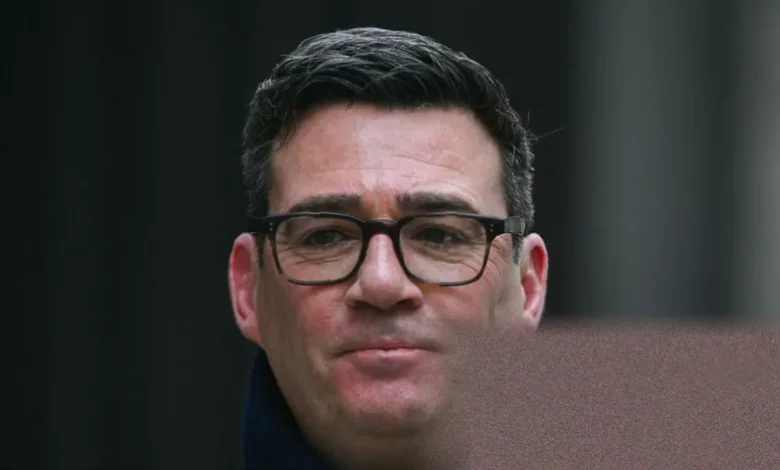
Andy Burnham has declared that a sweeping programme of mass renationalisation would form the centrepiece of his platform if he were to succeed Keir Starmer as prime minister, setting out a vision to bring energy, housing, water and transport back under “stronger public control”.
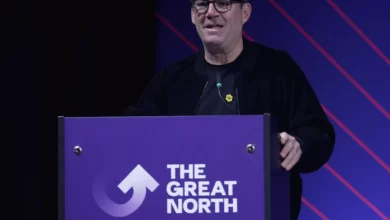
In an interview with Channel 4 News, the Greater Manchester mayor argued that the “deindustrialisation and privatisation” of Britain had left constituencies such as Makerfield — the seat he is seeking to win in an upcoming byelection — “without good jobs and people unable to afford the basics”. He drew a direct parallel with his own record in Greater Manchester, where he re-municipalised bus services and introduced a £2 fare cap. “Margaret Thatcher deregulated them … and then they just work for the private shareholders and not for the paying public,” Burnham said. “I put them back under public control with the £2 fares, so you take that principle and apply it to energy and apply to the water – that’s what I think we need to do.”
The model he has championed locally, sometimes referred to as “Manchesterism”, rests on the idea that the state can run essential services more efficiently and affordably than private shareholders. His flagship Bee Network in Greater Manchester integrates buses, walking, cycling and wider transport links, aiming to make travel cheaper and more reliable. Burnham believes the same principle could be replicated nationally. “The country gave away its control with basic things that people depend upon every day and that was a big mistake in my opinion,” he told Channel 4 News.
Beyond transport and utilities, Burnham has also stressed the need to re-industrialise the north-west of England, linking the decline of manufacturing in the 1980s to the policies of figures he described as “arch-Thatcherites” now associated with Reform UK. In a separate interview with the BBC, he said that deindustrialisation “was devastating all of those years ago and communities were left with nothing”. His proposed response includes reforming education to offer genuine technical pathways alongside the traditional university route, and creating “good jobs” through a deliberate reindustrialisation strategy.
Burnham’s economic agenda extends further. He has previously called for higher taxes, including a land value tax and a “solidarity wealth tax”, as alternatives to public service cuts. He has argued for substantially higher taxes on top earners, significant public investment in housing and transport, and a reduced influence of bond markets on economic decision-making. These proposals, along with his renationalisation pledges, represent a clear break with the current Labour leadership’s approach and have fuelled expectations that he intends to mount a formal challenge for the party’s top job.
Return to Westminster via Makerfield
The path back to Parliament opened when Josh Simons, the incumbent Labour MP for Makerfield, announced he would stand aside to enable Burnham to contest the byelection. Simons, a former Parliamentary Under-Secretary of State for Digital Government and co-founder of the Labour Together think tank, said he and Burnham had “both felt the frustration of facing a Westminster system that just does not have answers for these streets, these communities”. Labour’s National Executive Committee has granted permission for Burnham to stand in the selection process, a reversal of its earlier decision to block his attempt to run in the Gorton and Denton byelection earlier in 2026. The selection meeting is scheduled for 21 May 2026, with the byelection expected on 18 June.
Burnham previously represented the neighbouring constituency of Leigh from 2001 to 2017, during which he served in several cabinet roles under Gordon Brown, including Chief Secretary to the Treasury, Secretary of State for Culture, Media and Sport, and Secretary of State for Health. He was elected Mayor of Greater Manchester in 2017 and re-elected in 2021 and 2024. His ties to the Makerfield area are personal: “I live literally on the edge of this constituency, my kids went to school a few hundred yards down the road,” he told Channel 4 News. “I know people here, I know how they think, how they feel. I want to do whatever I can to make Labour a party that they can believe in again, a party that’s solidly on the side of working-class people.”
Political turmoil and the challenge ahead
Burnham’s move comes at a moment of deep crisis for the Labour Party following its poor performance in the May 2026 local elections, where it lost significant ground to Reform UK and the Green Party. Several government ministers, including Health Secretary Wes Streeting, have resigned, and others have privately urged Keir Starmer to set out a timetable for his departure. Streeting has indicated he would himself stand in a forthcoming leadership contest and has publicly backed Burnham’s candidacy in Makerfield. Other potential leadership contenders include former Deputy Prime Minister Angela Rayner and Ed Miliband.
To formally launch a leadership challenge, Burnham would need to be elected to Parliament first — and then secure the support of 81 Labour MPs. But the Makerfield byelection itself presents a formidable test. The constituency is considered a Labour-Reform UK marginal, and in last week’s local elections Reform UK won all eight council wards within its boundaries, taking nearly 50 per cent of the vote while Labour secured just over a quarter. In the 2024 general election Labour won the seat with a majority of 5,399 votes, but the local results suggest that margin has evaporated. Burnham acknowledged the scale of the challenge on the doorstep: “Our party needs to do better … I’m going to be really honest about that on doorsteps. I’m not going to spend my time point-scoring. I would say no, I’m hearing you. We’re going to really change things and put the country on a different path.”
If Burnham wins the Makerfield seat, he would be required to resign as Mayor of Greater Manchester, triggering a separate mayoral byelection. His strong regional identity — which has earned him the moniker “King of the North” — is seen as a way to reconnect with working-class voters who have drifted towards Reform UK, but it also underscores the high stakes of a contest that will be watched closely as a bellwether for Labour’s future direction.