One person is diagnosed with cancer every 80 seconds in the UK, according to new analysis from Cancer Research UK, as the number of cases reaches a record high. More than 403,000 people are now diagnosed annually, with the charity warning that NHS services are struggling to keep pace with rising demand.
The charity’s Cancer in the UK Report 2026 shows the incidence rate has risen to 620 per 100,000 people, up from 610 per 100,000 a decade ago. The increase is largely driven by a growing and ageing population – cancer risk rises with age – and rising levels of obesity, which is the second biggest cause of preventable cancer after smoking. Obesity contributes to around 18,100 cases each year and is linked to 13 different types of cancer, including bowel, kidney, ovarian and liver. Excess weight now causes more cases of bowel cancer than smoking, according to the charity.
Despite the overall rise in diagnoses, the proportion of cancers caught at an early stage has barely changed – moving from 54% to 55% over the past decade. While death rates have fallen and more people are surviving for a decade or more, Cancer Research UK warned that progress is at risk of stalling because of mounting pressure on cancer services. Survival rates have doubled since the 1970s, but the rate of improvement has slowed significantly over the last ten years.
NHS under strain as waiting times remain among worst on record
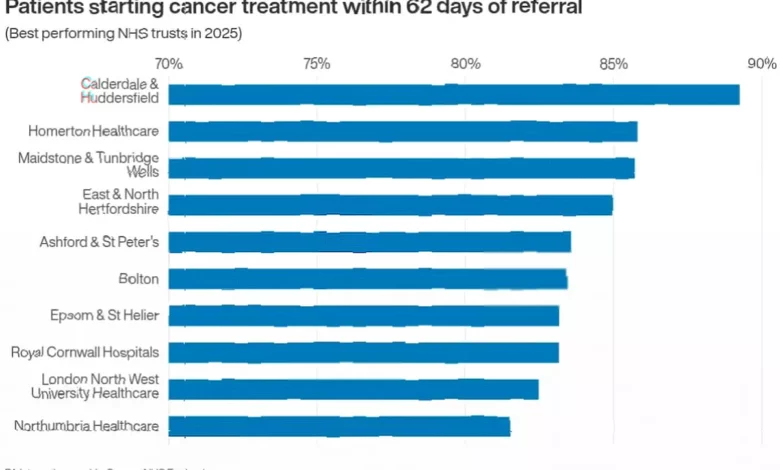
The NHS is facing one of its toughest periods for cancer care. Cancer waiting times across the UK are among the worst on record, with around 107,000 patients waiting more than 62 days to start treatment in 2025. The 62-day target – which requires patients to begin treatment within two months of an urgent referral – has not been met by any UK nation since 2015. The situation is particularly acute in Northern Ireland, where services are under even greater strain, the charity said.
The rising number of cases is compounded by a shortage of specialist staff and equipment. An estimated 38% of all cancer cases in the UK are preventable, but screening programmes are not reaching those who need them most. The rollout of lung cancer screening, which began in June 2023, has been successful in detecting early-stage cancers – 76% of screen-detected lung cancers were found at an early stage – but concerns remain about whether funding will be sufficient to meet the target of 100% coverage by the end of the 2029/30 financial year.
Prostate cancer, the most common cancer in the UK, illustrates the scale of the challenge. Around 55,900 new cases are diagnosed each year, and incidence rates have risen by more than half since the early 1990s. Projections suggest 85,100 new cases annually by 2038-2040. There are stark inequalities in diagnosis: 31% of men in Scotland are diagnosed at stage 4 compared to 21% in England, and men in more deprived areas are 29% more likely to have cancer that has already spread. Black men face a one in four lifetime risk of prostate cancer, significantly higher than the general population.
Rare cancer patients will soon be able to search for clinical trials through the NHS App as part of the National Cancer Plan.
This means faster routes to life-changing treatments and breakthrough research.
Learn more: https://t.co/si09k63etO pic.twitter.com/EvIvjC5M1c
— Department of Health and Social Care (@DHSCgovuk) January 31, 2026
Michelle Mitchell, chief executive of Cancer Research UK, said: “More people are being diagnosed with cancer than ever before. Although cancer survival has doubled since the 1970s, progress has slowed over the last decade. The UK Government’s recently published National Cancer Plan for England could make a big difference, but only if it turns into improvements for cancer patients. Publishing the plan is not a ‘job done’ on cancer: ambitions to diagnose cancers earlier, meet cancer wait targets and improve best practice treatment must happen quickly.”
Government pledges action but charities demand urgent investment
The UK Government’s National Cancer Plan for England has been described by Cancer Research UK as a “crucial step” towards improving care, but the charity warned it must be backed by adequate funding and resources. The plan sets out the aim for 75% of patients diagnosed from 2035 to be cancer-free or living well after five years, which the government estimates could save 320,000 more lives over the plan’s lifetime. Other targets include meeting all cancer waiting time standards by March 2029 – including 80% of patients receiving a diagnosis or all-clear within 28 days of an urgent referral, and 85% starting treatment within 62 days.
Among the commitments are the national rollout of lung cancer screening by 2030, increased sensitivity of bowel cancer screening, and a new £200 million Neighbourhood Early Diagnosis Fund to tackle screening inequalities in deprived areas. The Department of Health and Social Care stated that an extra £26 billion has been allocated for the NHS in the last 12 months and that a record number of diagnostic tests have been delivered. The department also highlighted the historic Tobacco and Vapes Bill, which is due to become law soon, gradually raising the age of sale for tobacco to protect future generations from cancer.
But campaigners stressed the need for immediate action. Natalia Norori, head of data and evidence at Prostate Cancer UK, said: “Cancer diagnoses are rising, and as the UK’s most common cancer, with 64,000 new cases each year, prostate cancer plays a big part in this. The good news is that prostate cancer is highly treatable when caught early. But with more than 1,000,000 men set to be living with the disease by 2040, early detection needs to be a priority if we’re serious about saving lives.”
An NHS spokesperson said: “Latest data shows that early diagnosis in England is at a record high and is continuing to rise, with staff also now delivering 30% more cancer checks than in 2021 – ensuring survival is also at an all-time high. But we know we need to go further to diagnose more cancers earlier and save more lives, which is why the National Cancer Plan will transform services to speed up diagnosis, cut waits and improve care for anyone affected.”