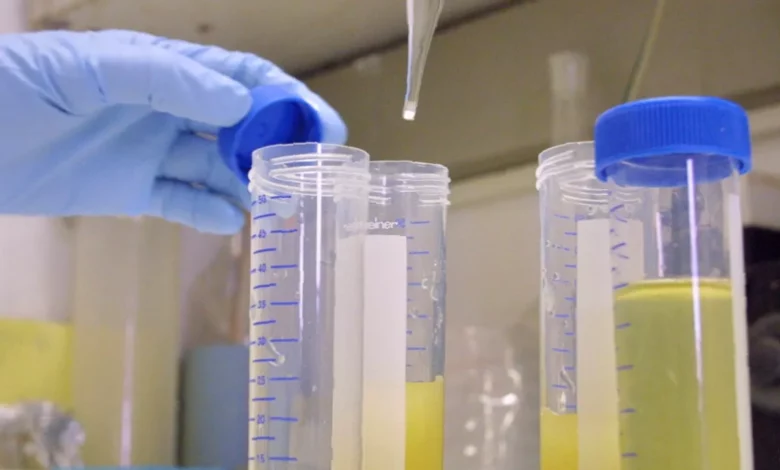
A new urine test could detect lung cancer years before symptoms appear, offering the potential to transform survival rates for the UK’s most common cause of cancer death. Developed by scientists funded by Cancer Research UK and based at the University of Cambridge, the test identifies tell-tale proteins released by “zombie” cells – senescent cells that linger in the body long after they have stopped dividing. The research team believes the simple urine analysis could become a routine screening tool in GP surgeries and hospitals within the next five years, catching the disease at a stage when treatment is far more likely to succeed.
Nearly half of all lung cancers in England are diagnosed at the latest stage, when five-year survival falls to just 5%. By contrast, more than 65% of patients survive five years or more if the cancer is caught early. Professor Ljiljana Fruk, of the University of Cambridge’s Department of Chemical Engineering and Biotechnology, told reporters she hopes to see the test “working in real patients and rolled out across the NHS within the next five years, making a real difference to people at risk of this devastating disease.” The sensor has not yet been tested in humans; clinical trials are the next step and are expected to take several years.
How the sensor detects ‘zombie’ cells
The breakthrough centres on cellular senescence, a biological process in which cells stop dividing but remain alive inside the body. These so-called zombie cells do not simply sit idle; they release abnormal inflammatory signals that reprogram their immediate environment, creating conditions that can help healthy cells turn cancerous. Previous work by Professor Daniel Munoz-Espin, from the Early Cancer Institute and co-lead of the Cancer Research UK Cambridge Centre Thoracic Cancer Programme, has shown that senescent cells can also cause treatment resistance and aggressive lung cancer relapse after chemotherapy, and that senescent immune cells promote tumour growth by suppressing the body’s natural defences.
The Cambridge team designed an injectable sensor that specifically targets proteins excreted by these zombie cells. When the sensor encounters the target proteins, it triggers the release of a compound that is easily detectable in urine. In effect, the test provides a simple yes-or-no signal that early-stage lung cancer – or therapy resistance – may be present, long before any outward symptoms appear. Writing in the journal Nature Ageing, the researchers reported that the biomarker was validated using real patient tissue samples and large genetic datasets. The sensor was developed by scientists at the University of Cambridge’s Department of Chemical Engineering and Biotechnology, the Early Cancer Institute, the Cancer Research UK Cambridge Centre Thoracic Cancer Programme, and in collaboration with Royal Papworth Hospital NHS Foundation Trust.
Future applications and next steps
The potential of the urine sensor extends beyond lung cancer. Early findings indicate it may also work for detecting other lung diseases such as pulmonary fibrosis. Professor Fruk noted that the team has already adapted the probe for lung fibrosis and is currently fundraising to adapt it for other types of cancer. Professor Daniel Munoz-Espin added: “Our urine nano sensor may allow primary care detection of therapy resistance and lung cancer early development in future clinical settings.” Professor Robert Rintoul, from the Department of Oncology and co-lead of the Cambridge Thoracic Cancer Programme, stressed that “novel approaches for lung cancer detection and response to treatment are urgently needed to improve patient outcomes” and that the work “forms the basis for testing within clinical trials with a view to future use in the clinic.”
Professor Fruk is also a co-founder of Senesys Bio, a start-up focused on diagnostic and therapeutic tools targeting ageing and cancer. The research benefits from a strong collaborative ecosystem in Cambridge, including the Cambridge Biomedical Campus and the Early Cancer Institute – the UK’s first institute dedicated to early cancer detection. Cancer Research UK’s eastern England spokesman, Patrick Keely, described the development as a powerful example of a “golden age of research,” adding: “With new technologies opening doors to new discoveries, we’re living in a golden age of research, which is powerfully underlined by this innovative new urine test to detect early lung cancer.”