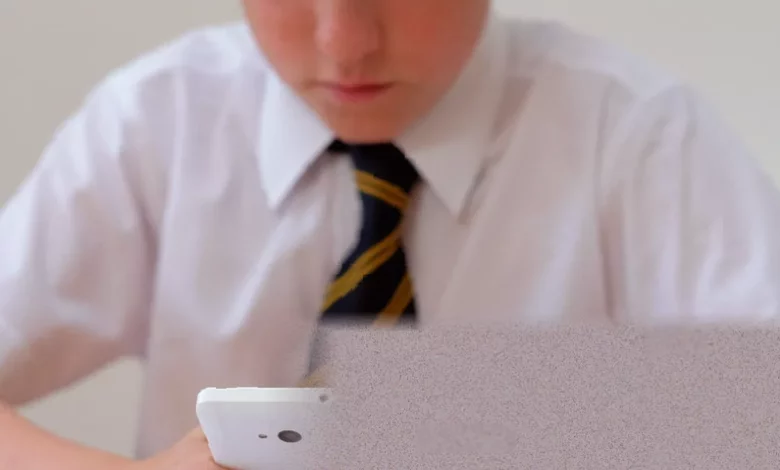
Medical professionals have united behind an urgent call for government action on children’s social media use, with the Academy of Medical Royal Colleges comparing the issue to the historic battles over smoking and seatbelt legislation. In a powerful submission to the government’s consultation – which closes tonight – the academy warns that clinicians across every branch of medicine are witnessing daily harm to young people, from anxiety and body image problems to injuries sustained through non-fatal strangulation.
‘Game-changer’ promised as consultation ends
Prime Minister Sir Keir Starmer has pledged that the government will impose a crackdown on teenagers’ social media use “very quickly” after the “Growing Up In The Online World” consultation closes at midnight. Speaking during a visit to a nursery in East Sussex, he said: “The question now is not whether we do something, we are going to act. I’m absolutely clear that this needs to be something where there’s a game changer.” Starmer did not specify which of the options under consideration – which range from an Australia-style ban for under‑16s to restrictions on “risky” design features such as infinite scrolling and autoplay – the government would choose, but stressed that powers taken earlier this year allow ministers to act without fresh primary legislation.
Downing Street declined to elaborate on what Starmer meant by “game-changer”. A No 10 spokesperson said: “He was referring to the fact that this demands a big response. It is a big issue. It is an issue that is growing, and the risks are growing.”
The medical case: a profession united
The Academy of Medical Royal Colleges has published its submission to the consultation, and it is striking in both its breadth and its urgency. Jeanette Dickson, the academy’s chair, writes in the foreword: “There can be few issues which have united clinicians so resoundingly in recent years as the impact that unfettered exposure to tech and devices is currently having on children and young people’s health. It ranks alongside smoking and wearing seatbelts in cars as a unifying force for the medical profession.”
She acknowledges that some may argue about correlation rather than direct causation, but insists that “there is an overwhelming consensus that excessive screen time can harm children and young people and we need to call this out unflinchingly rather than passively wait for someone else to prove causation.”
Describing a meeting the academy held last year, Dickson said: “By any measure, it was an extraordinary meeting not just because of the moving personal testimony of the many clinicians attending, but because it gave participants a glimpse of the cross‑specialty reach and sheer scale of the problem. Then, as now, it seemed not a single branch of medicine was immune from the issue.” She listed GPs dealing with rising adolescent anxiety and body image issues, emergency department doctors treating teenagers with loss of vision or hearing – symptoms of non‑fatal strangulation – and paediatricians, psychiatrists, optometrists, and obstetricians all reporting daily harm.
The academy’s submission does not make a specific recommendation for a ban, arguing that it is for the government to decide the precise measures. But it calls for clinicians to receive better guidance on managing the consequences of screen use and presents compelling evidence of the problem’s scale: four out of ten GPs say they see young people with medical problems linked to screen use multiple times a week.
In its conclusion, the academy directly challenges the government’s record of inaction. “From the family of four sat in a pizza restaurant not speaking to each other because they are ‘on their phones’ to the toddler screaming in the GP’s surgery as its worried parent tries to prise it away from its iPad in readiness for a physical examination, to an anxious teenager simply too scared to go to school – the signs of an entire generation’s inability to cope without being permanently hooked up to a digital world are part of our everyday experience.” It notes that successive governments have “made an art form of inaction, carefully filing ‘meaningful’ reform in the ‘too difficult’ box,” and warns that the harm is “immediate, documented, and happening at scale.”
Wes Streeting, the former health secretary who is effectively running a leadership campaign, has backed the push for action. In an interview on the Today programme, he compared social media giants to the tobacco industry, accusing them of suppressing evidence of harm and “addicting” children through deliberate design features. Streeting said that while in cabinet he argued unsuccessfully for tougher measures and suggested Starmer had been “behind the curve” on the issue. “Frankly, legislators, regulators, have been asleep at the wheel on this,” he said. Streeting also claimed he had the 81 Labour MPs needed to launch a leadership challenge but was holding back to allow Andy Burnham to return to parliament in the Makerfield by-election.
“Locker-room banter” is a pathetic excuse for blatant misogyny from a grown man.
Reform could have called out the overt sexism and condemned it. Instead, they framed it as an “establishment hit job”.
Tells you everything you need to know about them. 🦖 https://t.co/oblTXCcDLN
— Luke Charters MP (@lukejcr) May 26, 2026
The Conservatives, meanwhile, have sought to claim credit. Shadow education secretary Laura Trott said: “Just months ago Labour said a social‑media ban wasn’t on the table. But the Conservatives refused to let Labour get away with doing nothing. Kemi Badenoch has secured this consultation by forcing the issue – and Keir Starmer only gave in because he risked losing a Commons vote.”
Scottish independence and SNP turmoil
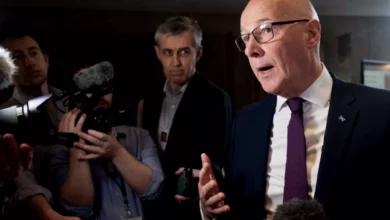
In a separate political development, First Minister John Swinney has told MSPs that Scots will “resoundingly” back independence if given a second referendum. Speaking ahead of a debate on an SNP motion calling for the UK government to grant Holyrood the power to organise its own vote, Swinney described independence as “a golden opportunity” and said the debate was “the start of a process” that could change Westminster’s mind. The UK government has said it will not agree to another referendum.
The SNP’s position comes against the backdrop of the Peter Murrell embezzlement scandal. Murrell, the former party chief executive and estranged husband of Nicola Sturgeon, has admitted stealing more than £400,000 from the SNP to spend on luxury goods. Starmer said those at the top of the SNP must explain why they did not realise what was happening. “I think anybody looking at what’s happening up in Scotland will be baffled that those at the top of the SNP say they didn’t know anything about what was going on,” he said. Sturgeon and Swinney – who was Sturgeon’s deputy – have both said they were unaware of Murrell’s activities. Swinney said he was “gutted” to learn how money donated by party members had been used.
Reform UK candidate under fire over social media posts
The Reform UK candidate for the Makerfield by-election, Robert Kenyon, faces mounting controversy over a series of past social media posts unearthed by campaign group Hope Not Hate. The group said it discovered a deleted X account belonging to Kenyon that featured “creepy comments about women” and conspiracy theories about Covid. One post supported a sexually explicit remark about Carol Vorderman, prompting the broadcaster to demand an apology. “I want an apology from Rob Kenyon, to me, and to all the other people he’s abused online,” she told the Mirror.
Further posts on an online rugby forum, reported by the Independent, included sexist messages such as “women can’t ref, drive or give directions” and “I’m sexist, sorry but I am.” The i newspaper also reported that Kenyon expressed strong anti-abortion views, claiming women had abortions for “vanity purposes” and used them as a “secondary form of contraception.”
Reform UK has largely defended Kenyon. Asked by the Independent about the rugby forum comments, a party spokesperson described them as “locker room banter”. On the abortion remarks, Reform UK said Kenyon was entitled to his views and that abortion policy has always been a conscience matter for MPs. Reform MP Danny Kruger told the BBC’s Today programme that the posts were “inappropriate” but argued they were “private” comments made by “an ordinary man”. Vorderman rejected that characterisation, calling Kenyon “a cowardly man”.
Labour party chair Anna Turley said Nigel Farage must explain why he is “happy to have a sexist as a candidate”. Labour MP Luke Charters described the “locker room banter” defence as a “pathetic excuse for blatant misogyny”.
The by-election, scheduled for 18 June, also sees Labour’s Andy Burnham attempting to return to parliament. The Green Party has announced Sarah Wakefield as its candidate, replacing Chris Kennedy who withdrew after conspiracy theory posts emerged. Some senior Greens have suggested the party should not run a full campaign against Burnham if he commits to including proportional representation in Labour’s next manifesto – a position Burnham has supported but has not offered as a specific deal. Wakefield said it was “vital in a democracy that voters are given a choice”.