Long-awaited official evaluations have revealed that the majority of England’s smart motorway schemes have delivered poor or very poor value for money, according to assessments by the government agency that built them, as published by The Guardian.
National Highways has published 16 post-opening project evaluations, known as “popes”, with 11 of the schemes receiving a financial assessment over a five-year period since opening. Only two of those 11 were rated positively, with the rest deemed poor or very poor value. The Department for Transport had held back some of these reports since their completion in 2023.
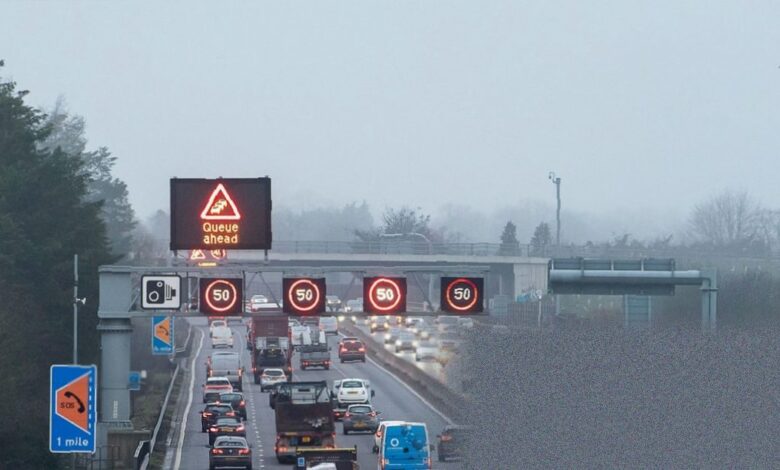
The assessed schemes, which cost a total of £2.3 billion at 2010 prices, involved converting the hard shoulder into a live lane on stretches of the M1, M4, M6 and M25. Smart motorways were rolled out from 2013 to increase capacity relatively cheaply, using electronic overhead signs to manage traffic and close lanes in emergencies.
In a foreword to the reports, National Highways chief customer officer Elliot Shaw stated the schemes were on course to deliver benefits but would not deliver all originally expected benefits within the 60-year appraisal period. He cited lower traffic growth than expected since the 2008 financial crisis and traffic on some sections not travelling as quickly as forecast as affecting value for money. However, the evaluations argued that other sections would have been unable to cope with increased traffic volumes without the upgrades.
Safety record and public concern
The reports showed a mixed safety record. There was a slight increase in the numbers killed or seriously injured on the M3 and on the M1 between junctions 29 and 42. National Highways said nearly all schemes had met their safety objectives, but it has since carried out further work including adding 150 more emergency areas and improving technology to detect stopped vehicles.
Surveys show many motorists fear driving on smart motorways, with a number of fatal collisions occurring after breakdowns. Official statistics maintain that smart motorways are relatively safe, particularly after a series of works since 2020 to add more emergency laybys and improve monitoring. Recent AA polling found 47% of drivers felt anxious or nervous using them.
Contrasting example and reactions
One scheme exceeded original projections for economic benefits and improved safety: the stretch between junctions 16 to 23 of the M25. This was widened and turned into a “controlled motorway”, retaining the hard shoulder while adding gantries and monitoring technology. It was rated high value for money due to faster journey times and an improved safety record.
The AA said this showed controlled motorways should be the standard bearer for motorway improvements. AA president Edmund King called the smart motorway programme a “catastrophic waste of time, money and effort”, stating that many schemes have slower journeys, cause traffic jams, cost the economy and worsened the safety record. He added that drivers were increasingly fearful and called for the return of the hard shoulder.
Chris Todd, director of Transport Action Network, said the reports displayed a remarkable lack of curiosity over how the danger has increased from vehicles stopped in live running lanes and that they raised more questions than they answered.
A National Highways spokesperson said its latest analysis continues to show that overall, smart motorways remain its safest roads, providing much-needed extra capacity to reduce congestion and lower carbon emissions. A Department for Transport spokesperson said the reports show that smart motorways can make journeys reliable and increase road capacity so more vehicles can travel safely.