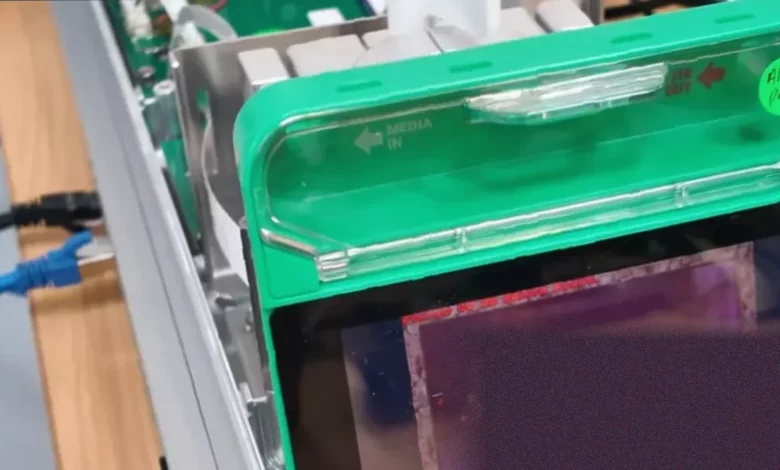
In a Melbourne laboratory, a clump of human brain cells smaller than a 50p piece is making life-or-death decisions in the demonic corridors of the video game Doom. This is not science fiction, but the latest demonstration from Cortical Labs, which has built what it calls the world’s first commercially available biological computer. The company’s breakthrough challenges fundamental assumptions about computing, intelligence, and the future relationship between silicon and living tissue.
The system, known as the CL1, uses approximately 200,000 living human neurons to play the iconic 1990s shooter. According to Cortical Labs CEO and founder Hon Weng Chong, the cells are his own, derived not from brain tissue but from a 10ml blood donation. Using Nobel Prize-winning technology pioneered by Professor Shinya Yamanaka, white blood cells from the sample were reprogrammed into induced pluripotent stem cells (iPSCs)—biological building blocks that were then multiplied and coaxed into becoming neurons.
These neurons are cultured on a glass chip studded with a microelectrode array. “Electricity is the common language between neurons and the computer system,” Chong explained, enabling a two-way interface. To play Doom, the game state is captured, converted into numerical signals, and sent to the neurons—a process called encoding. The neurons then fire electrical outputs, which are decoded into actions like moving or shooting within the game.
“At first it didn’t know how to move, aim or even shoot,” said Sean Cole, the 24-year-old AI graduate who wrote the code for the experiment. “Then it would shoot the first two enemies and stop – almost as if it was preserving itself. So it’s definitely learning.” Cortical Labs describes this as “goal-directed learning,” though the precise mechanisms remain unclear. The company’s Chief Scientific Officer, Brett Kagan, has stated the neuronal networks are not conscious.
The Second Life of a Fly
Meanwhile, on the other side of the Pacific, a different frontier is being explored. In San Francisco, biotechnology firm Eon Systems has not connected a computer to a brain, but has placed a brain inside a computer. The company has created a digital simulation of a fruit fly’s entire brain, connected it to a virtual body, and watched as it began to walk, groom, and feed without any explicit programming.
This virtual insect’s behaviour emerges directly from its mapped neural architecture, challenging a core tenet of modern artificial intelligence: that intelligence must be acquired through training. “The brain was scanned using electron microscopy,” said Eon Systems CEO Michael Andregg. “Our head of engineering led a project to emulate that brain, and now we’ve placed the emulated brain back into a body, so it can wander around a virtual world.”
The simulation is built upon one of neuroscience’s landmark achievements: the complete connectome of the fruit fly (*Drosophila melanogaster*), mapped in exquisite detail by the FlyWire Consortium. This wiring diagram of roughly 139,255 neurons and 50 million synapses, published in *Nature*, provides the blueprint. Eon Systems’ model uses this data to run a simplified simulation of signal flow within the fly’s neural circuits.
Some experts have expressed skepticism about the company’s claims, calling for more rigorous validation against real-world biological data. Nevertheless, the virtual fly, with its 87-joint physics-based body, represents a staggering technical feat. Andregg suggests such brain emulation could one day allow humans to “flourish in a world with superintelligence,” though he acknowledges the current simulation lacks high-fidelity senses like complex smell.
Beyond the Game: Medicine, Machines and Moravec’s Paradox
While playing vintage video games captures headlines, the real-world applications steering this research are profoundly practical. For Cortical Labs, the future lies in biomedicine. “People are looking at it from biomedical research angles, for disease modelling,” said Chong. The biological computers could be used to test drugs for conditions like epilepsy on human neurons grown outside the body, accelerating drug discovery, enabling personalised medicine, and potentially reducing reliance on animal testing.
Both companies also see potential in robotics and artificial intelligence, addressing a famous conundrum known as Moravec’s Paradox. This principle, articulated by Hans Moravec, observes that tasks humans find effortless—like motor control and navigating unpredictable environments—are incredibly difficult for computers, while complex calculation is relatively easy for machines.
Chong believes biological systems could power robots and drones that need to handle the messy real world. Similarly, the innate behavioural wiring demonstrated by Eon Systems’ virtual fly suggests that embedding such biological intelligence into machines could solve problems that baffle conventional AI.
The ethical landscape surrounding this technology is complex and actively debated. Cortical Labs states it has engaged with bioethicists and emphasizes its systems are not sentient. However, the broader field of brain-computer interfaces (BCIs) raises significant concerns cited in research briefings, including issues of neural privacy, autonomy, personhood, and the potential for coercion or unauthorized data access. The prospect of one day connecting such technology to human brains, as alluded to by researchers, amplifies these ethical questions considerably.
For now, the work remains in the realm of foundational research. Eon Systems has stated an ambitious goal of emulating a mouse brain within two years, though this timeline is met with caution by observers. Cortical Labs continues to explore the learning limits of its DishBrain system. Together, these parallel experiments—one pushing a brain into a computer, the other plugging a computer into brain cells—are redrawing the boundaries of computation, proving that sometimes, the most advanced processing power doesn’t come from a factory, but from a petri dish.